Taking targetted slurry spreading up another level at Gurteen College
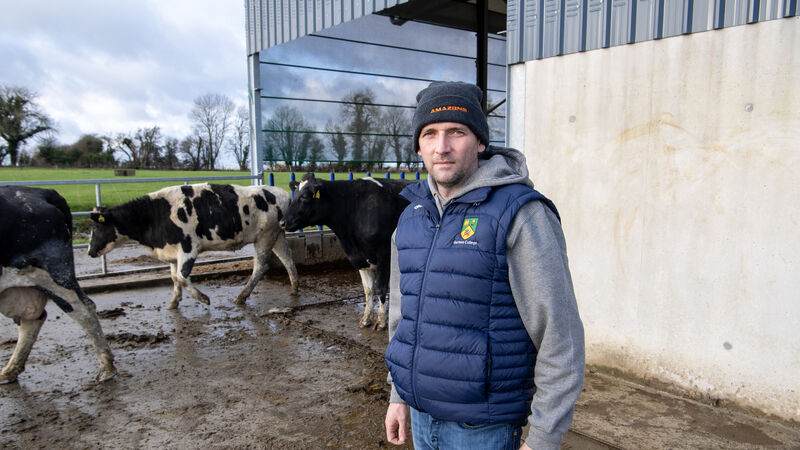
Ken Flynn, lecturer and farm manager at Gurteen Agricultural College. Picture: Dan Linehan
We have considered slurry to be a valuable source of nutrients for a long time now and would have always said that we spent time planning our slurry application to make the most effective use of it.
However, when the price of fertiliser skyrocketed, we spent twice as much time planning our slurry application for the year and it was at that moment I realised that even though we thought we were doing great work planning our slurry application there was still much room for improvement.
Through long-term planning and yard development, we are in the lucky position that we are very rarely under pressure for slurry storage, which gives the added benefit of applying slurry when we want to, rather than being forced to spread because tanks are full.Â
Each year, we aim to go out in February. On our bare paddocks, we apply 2,000 gallons per acre, then as the cows graze the heavier covers, we try to follow them with the same application. So ground conditions allowing, all paddocks get 2,000 gallons of slurry either before or after the first grazing. However, there are always some areas that are too wet to spread.
We very quickly realised that this was caused by years of avoiding the wet paddocks with the slurry tanker and always applying slurry to the dry paddocks, so now, when ground conditions allow, we prioritise those paddocks with low indexes.Â
Then, after first-cut silage, slurry stocks are usually getting low, and we will prioritise the silage ground with the poorer soil analysis.
This year, we have started to get our slurry tested so we can establish nutrient values for it. The slurry sample has to be taken when the tank is mixed and the easiest place to get a sample is from the back of the tanker, so unfortunately, that means the slurry is spread before we have the results for it.
But that’s ok, we are in this for the long haul; we will then use the test results to build a picture of what P and K values we can put on each of the different tanks.
Some slurry is more 'watered down' than others. Some is from sheds that house beef cattle on high-concentrate diets, others from dry cows, others are from sucklers or weanlings, and they all produce different results.Â
We have been spreading with a trailing shoe for three years now, and we are definitely seeing a difference, better nutrient uptake by the plant, less taint to the grass when cows are grazing and reduced odour. We have a turbo EVO pump on our tanker, which has a macerator in it.
The slurry passes through this macerator while filling and emptying, so the slurry is chopped twice before it reaches the distribution head on the trailing shoe. Between this and being careful about good mixing of the slurry and trying not to allow too many forging objects into the slurry tanks, we find blockages in the trailing shoe aren’t an issue.