Farmers could 'be in big trouble' due to creosote ban, industry warns
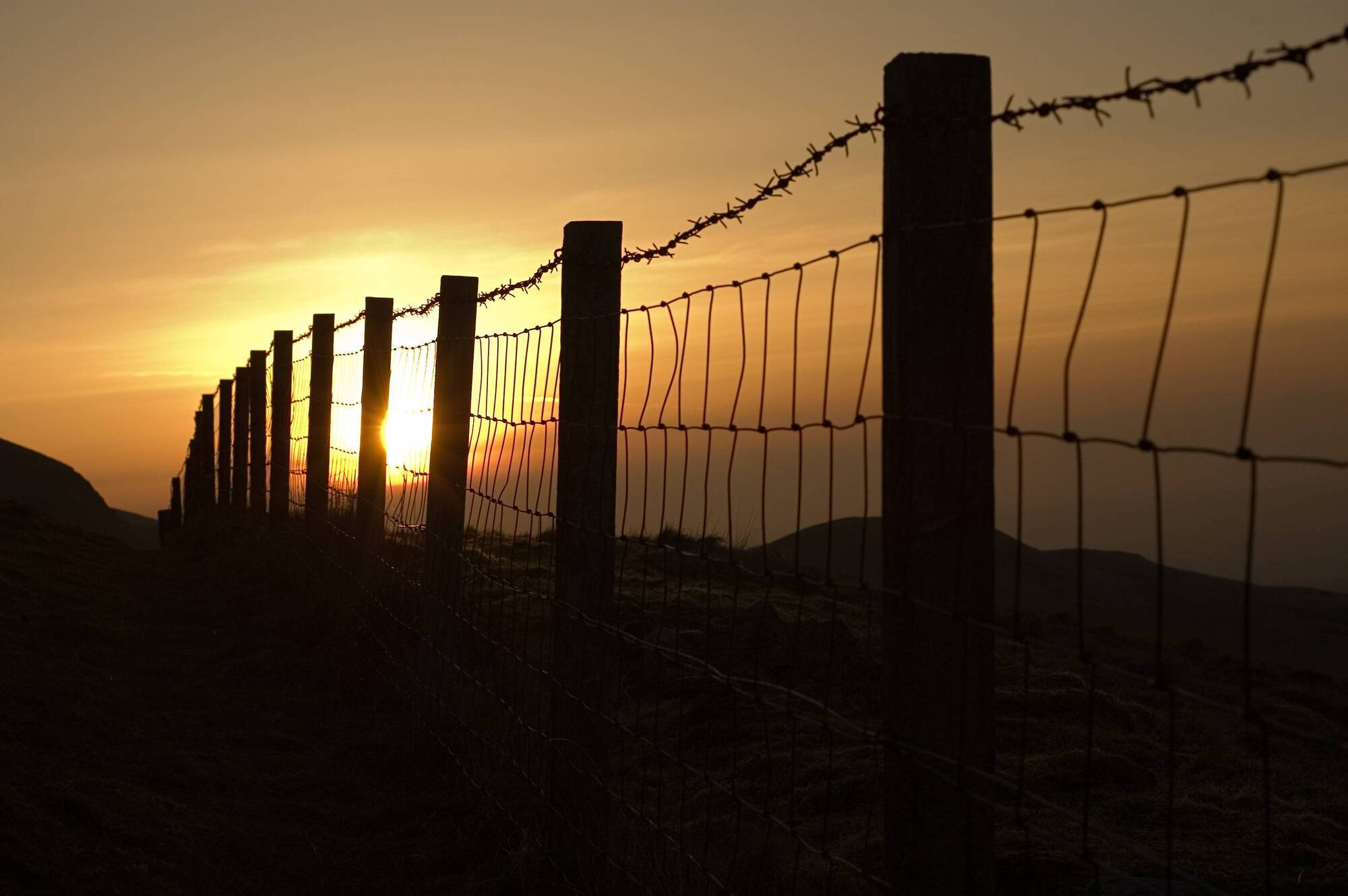
April 30 is the final date for selling timber treated with the preservative creosote except for railway sleepers and telecommunication poles.
Farmers could "be in big trouble" with a huge demand for timber expected but the stock not existing to satisfy the market, industry has warned.
James Geoghegan, who runs a company that imports and distributes creosote fencing materials, said that after the European importing ban comes in, he has "no replacement product lined up for the Irish market", with other importers in the same boat, he warned.
April 30 is the final date for selling timber treated with the preservative creosote except for railway sleepers and telecommunication poles.
"There is new treatment coming on line but it is not there yet in the quantities required to fulfil the market demands. As we stand at the moment, co-ops and contractors are running out of material," Mr Geoghegan told a recent meeting of the Oireachtas Joint Committee on Agriculture, Food and the Marine.
"With the demand on fencing this year due to the new agri-climate rural environment scheme [ACRES] and the new Targeted Agricultural Modernisation Scheme [TAMS] grants that are coming out, there will be a huge demand on timber and the stock is not going to be there to satisfy the market.
With 46,000 farmers taking part in ACRES, Mr Geoghegan warned that the "minute they begin, the first thing every farmer will have to do is to use quite a lot of fencing to fence off the environmental areas and all the drains and rivers".
"That is going to create an extra pull on fencing compared to other years. It will take a lot of fencing to do that," he told the committee.
With the ban on creosote for the equine sector, he continued, "there is absolutely no replacement" for fencing.
"There is a new TAMS grant out now for horse fencing. Basically horses will just eat the timber and the tanalised type treatments. We need to get creosote held in production, definitely for the horse fencing and for cattle and sheep fencing, until we have enough product to satisfy the market," Mr Geoghegan stressed.
Mr Geoghegan said that the company that supplies him said it would have a product ready by now, but it does not.
"As of April this year, I will not have stakes to sell in my business. I have tried a few other suppliers and the volume is not there on the European market," he explained.
"At the minute, we literally do not know what to do. I have had phone calls from another importer last week asking me had I spare stakes to give him and where was I going to get stakes.
"As it stands, we do not know what we will do. We supply a lot of stakes."
Richard O'Connor of PDM, a supplier of pressure creosoted timber products, told the committee that the Department of Agriculture has engaged with stakeholders with respect to the risk with creosote because it is a derogated product and has been for many years.
"It has always been the case in the sector that we would have known in time that creosote would have to be banned," Mr O'Connor said.
"The issue we have is that, under the Biocidal Products Regulation across Europe, it is a very considerable level of investment that chemical companies need to go through to get a product approved as an alternative to creosote.
Mr O'Connor told the committee that the issue all creosote-treating businesses have across Europe is the technologies that they have been using are relatively old.
Creosote is a well-established product, and it goes back over 100 years, Mr O'Connor said.
In addition, he told the committee that with the approvals of the two new oils, "there has not been sufficient time" to go through the regulatory process for treaters like PDM.
"Because they are only available and approved relatively recently, we are only beginning to get an understanding of what it will take to treat those chemicals to the industrial emissions standards required by the Environmental Protection Agency," Mr O'Connor explained.
"It is the same issue right across Europe for those treaters which are choosing to stay in creosote or to move beyond creosote into the new oil. All of them have to go through the same process. That does not happen in six months. That is a much longer process.
"The technologies used to treat today are very different to the technologies that exist in most creosote producers, including PDM, which have been treating for the past 45 or 50 years. The technologies are different and they require significant capital investment."
He said that the business was officially told in October 2022 by the Department of Agriculture of the ban on creosote stakes.
"From our perspective, having a 180-day period from the end of October 2022 up to the end of April 2023 to consider the transition that we need to make is far short of the time required to go through that process," Mr O'Connor said.
"On top of that, post-pandemic, in upgrading new facilities, the lead time on the infrastructure needed to build a new plant is significant. From planning and commissioning to end-game is a minimum of 18 months to get a new plant in place if we were to start the process tomorrow."
Padraig McConn, who has a timber sales business, told the committee that he is looking for an extension on the ban for a year or two "until the proper treatments are available and we can get the product we want for the farmer that will last the test of time".
Agriculture committee chairman Jackie Cahill said that the committee will write to the Minister for Agriculture on the number of issues raised by industry at the meeting.
"If we cannot operate our schemes with a certified product, it will change the landscape significantly," Mr Cahill commented.
"We will contact the minister and ask him how he is going to keep the fencing industry going during this transition period.
"There is definitely a logjam in the system and significant issues will be experienced during the transition to the banning of creosote."