Over half of national forest estate in private ownership, mainly farmers
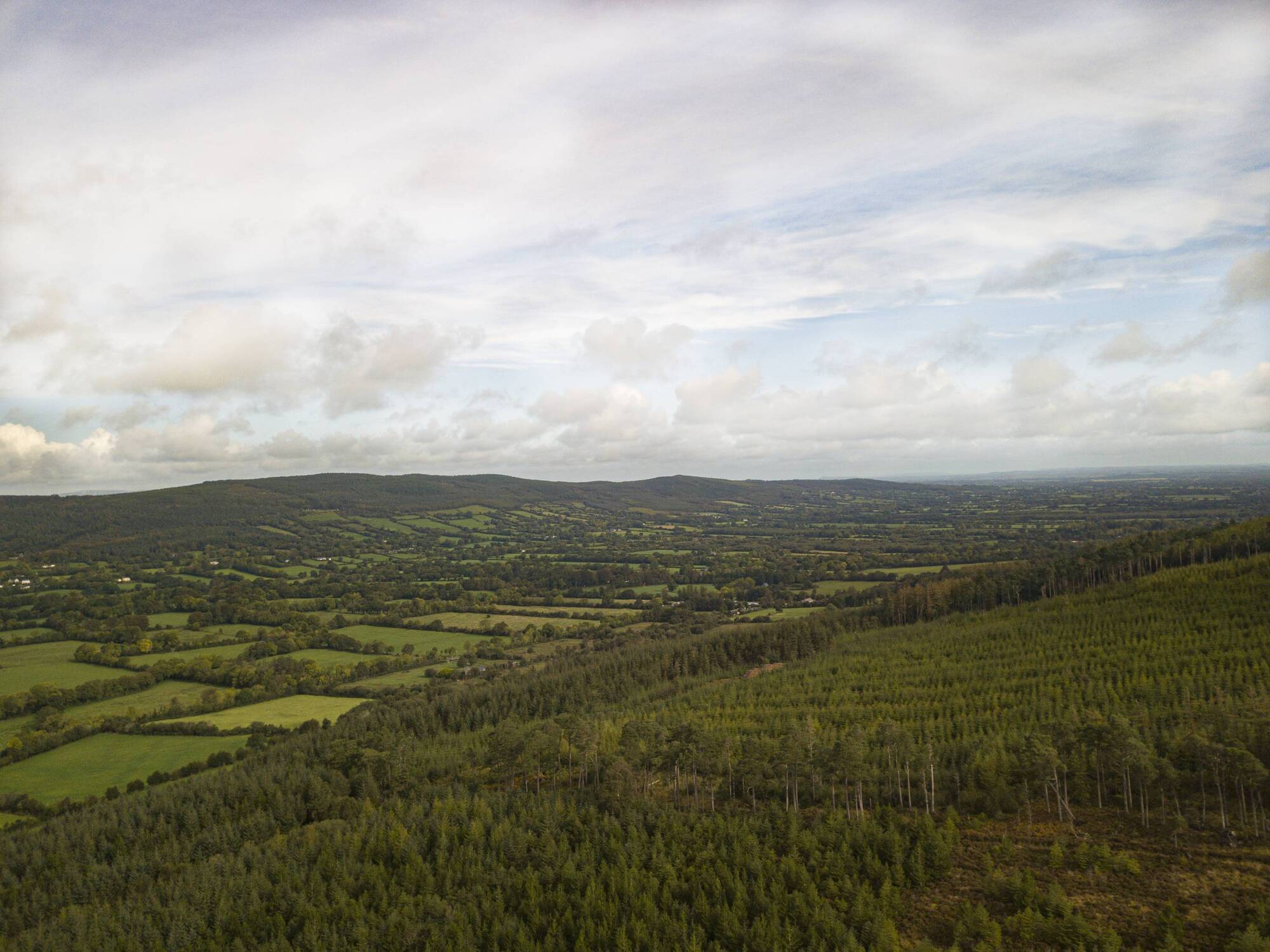
Leitrim is the county with the highest percentage of forest cover (20.1%), while Cork has the largest forest area (92,471 hectares).
For the first time, private forest owners, mainly farmers, now own approximately 50.9% of the national forest estate with the remainder in public ownership, mainly Coillte, Department of Agriculture figures published on Monday show.
The share of private forests in the national forest estate has increased by over 7.9% since 2006, with 411,484 hectares now in private ownership, compared to 397,364 hectares in public ownership.
Leitrim is the county with the highest percentage of forest cover (20.1%), while Cork has the largest forest area (92,471 hectares).
The total forest area has increased from 697,842 hectares in 2006 to 808,848 hectares in 2022.
The increase in area is a result of afforestation and natural development of semi-natural forests. Between 2006 and 2022, semi-natural forests were responsible for one-third (33.1%) of the new forest areas captured.
Broadleaf tree species now account for nearly one-third (30.6%) of the stocked forest area while conifer species are the dominant species present, representing 69.4%.
The share of broadleaf species has increased nationally by 5.9% between 2006 and 2022.
Minister of State at the Department of Agriculture Pippa Hackett has announced the publication of the main findings of Ireland’s fourth National Forest Inventory (NFI).
The NFI provides up-to-date information about the extent and changing nature of Ireland's forests and is undertaken every five years, and this is the fourth inventory to be published.
Overall, the national forest estate is still expanding and has now reached 11.6% of the total land area, with a wide variety of forest types present, Ms Hackett said.
"The increase in area is a result of afforestation and the natural development of semi-natural forests on areas such as those previously used for industrial peat extraction," she explained.
Ms Hackett added that the new €1.3bn Forestry Programme "shows our commitment to growing the forest estate with a target of 18% cover by 2050".
"This is the biggest and largest funded forestry programme ever introduced by an Irish government, and it has been designed to emphasise close to nature forestry and to ensure farmers will be its primary beneficiaries," she said.
"Farmers will receive premiums for 20 years in the new Forestry Programme, and the premiums themselves will be up to 66% higher than the previous programme."
The total growing stock volume of Irish forests is over 142m cubic metres, an increase of over 25.5m since 2017.
The balance between increment and fellings is an "important indicator" as it describes the sustainability of wood production over time, the current availability of wood and the potential for the future, the department said.
Gross annual volume increment between 2017 and 2022 was 10m cubic metres per year, while over the same period, the mean annual standing volume felled was 4.1m cubic metres per year.
Other key findings published include that the age profile of forests is increasing with 39.6% of stocked forests being less than 20 years of age and 30.4% between the ages of 21 and 30 years.
Since 2017, 39,640 hectares of forests were thinned for the first time, which is a positive for wood mobilisation. The area thinned between 2017 and 2022 has increased by 8% while the area clearfelled has decreased by 42% over the same period.
Forests play an important role in mitigating climate change by sequestering and storing atmospheric carbon dioxide, and the results indicate that the national forest estate is an important sink for carbon, at 323.5m tonnes of carbon.
Irish forests are also a rich resource of biodiversity providing important and abundant habitats for many species, with nearly one-third of Ireland’s forests having four or more tree species present.
In addition, large quantities of deadwood are present within the forest, with 10.2m cubic metres of deadwood present.
Overall, the forest estate appears healthy in Ireland.
While nearly two-thirds (63.2%) of stocked forest areas displayed signs of forest damage present, the severity of the damage was primarily low to moderate. Damage caused by animals, competing vegetation, exposure and nutrient deficiency were the most common damage.