Farmers urged to take bee-friendly actions on their land
In Ireland, while it is "very biodiversity rich" Ms Wilson said, the decline must be tackled "as it is a huge problem", and "we depend so much on it".
Farmers are being urged to take bee-friendly actions on their land, as there is the "worrying" continual decline in pollinator numbers in Ireland.
Ruth Wilson of the National Biodiversity Data Centre told Friday's Teagasc Signpost webinar that "small actions" can make a big difference overall, and if everyone implements them across the landscape, "that's just so beneficial".
In Ireland, while it is "very biodiversity rich" Ms Wilson said, the decline must be tackled "as it is a huge problem", and "we depend so much on it".
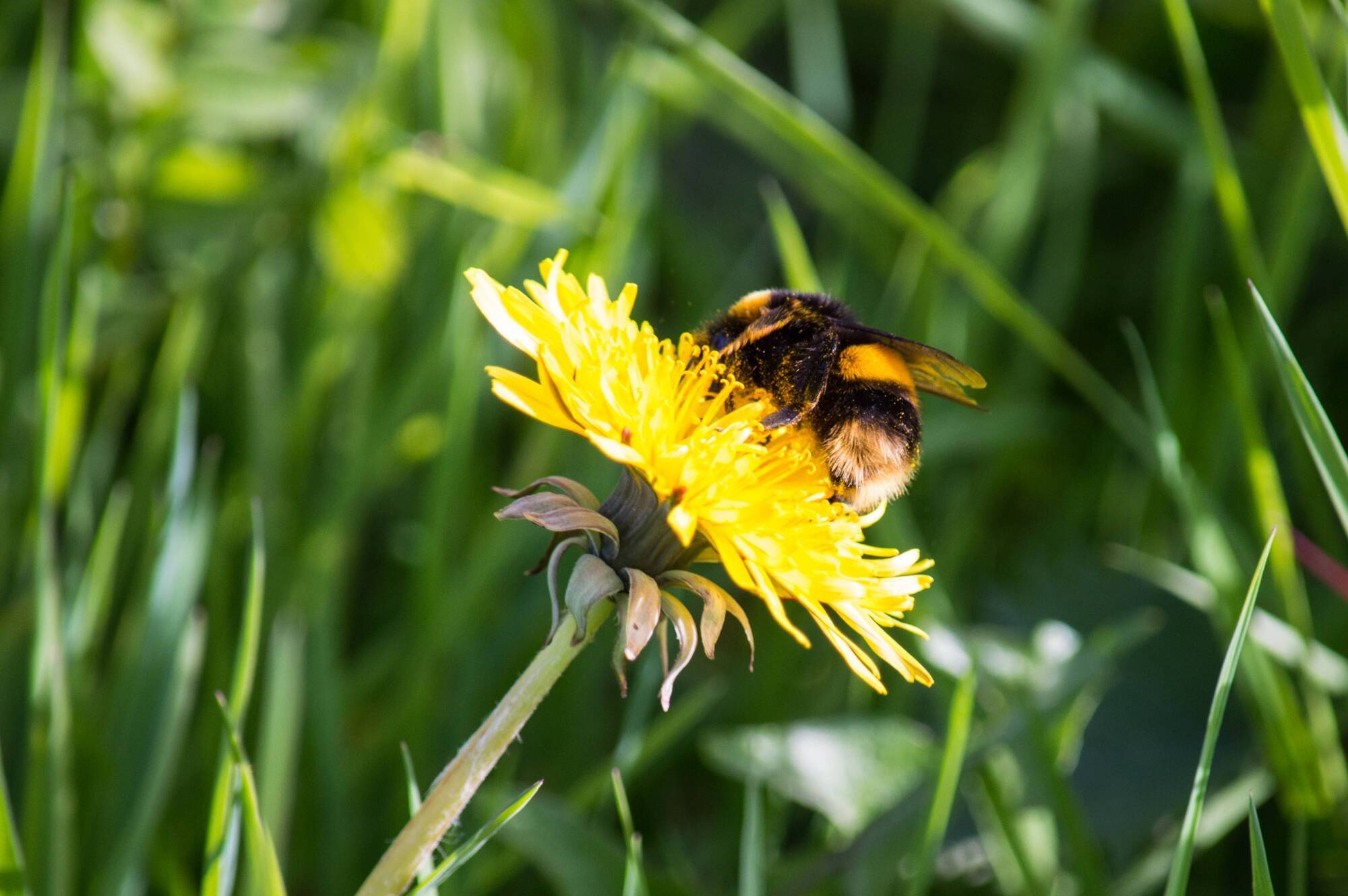
On the island of Ireland, there is one managed pollinator - the honeybee - and over 100 different types of wild bee, Ms Wilson outlined.
20% of them are bumblebees and 80% are solitary bees.
One-third of these wild bee species are threatened with extinction.
The All-Ireland Pollinator Plan is supported by over 100 governmental and non-governmental organisations that have pledged to deliver actions in managing the landscape in a more pollinator-friendly way and create a network of diverse and flower-rich habitats.
According to the National Biodiversity Data Centre 'Farmland: actions to help pollinators' guide, published under the All-Ireland Pollinator Plan, traditional farming was "very pollinator-friendly because it was naturally flower-rich".
"There were hay meadows, annual flowers in cereal crops, more wildflowers along lanes and in field corners due to less spraying, more flowers in hedgerows due to less mechanisation and we grew more of our own fruits and vegetables," the guide reads.
"In the past 50 years, advances in farming have reduced the amount of flowers and it is inevitable that we now have fewer bees."
The All-Ireland Pollinator Plan is "not about returning to days of old or reversing progress", but instead, finding new ways "to provide enough food for our pollinators in the modern farmed landscape".
The main actions for 'bee-friendly farming' are:
•Maintaining native flowering hedgerows;
•Allowing wildflowers to grow around the farm;
•Providing nesting places for wild bees;
•Minimising artificial fertiliser use;
•Reducing pesticide inputs.
When it comes to hedgerows, farmers are advised to allow their hedgerows to flower, and to have at least one whitethorn/hawthorn in each hedgerow to grow into a mature flowering tree.
Farmers should also plant some pollinator-friendly trees to grow as individual mature specimens around the farm.
Farmers should ensure there are always some wildflowers flowering in non-farmed areas from spring right through to autumn, according to the guide.
There should also be some nesting habitat for bumblebees, mining solitary bees, and cavity-nesting solitary bees created and maintained on the farm.
Fertiliser should only be used where required and farmers should not spread unnecessarily in awkward corners, turning circles, buffer strips, the guide advises.
Farmers should also ensure accuracy in fertiliser spreading and avoid spreading close to the base of hedges or hedgerow margins – fertiliser here prevents the growth of pollinator-friendly wildflowers.
Also, clovers, peas/beans, or other herbal leys should be used in some areas of the farm instead of chemical fertilisers.
With herbicides, farmers should avoid spraying close to the base of hedgerows, the guide outlines.
If necessary, these areas should be strimmed/mowed instead, and if possible the grass should be removed.
Spraying on non-farmed areas where wildflowers are or could grow should be avoided, and where weed control is necessary, farmers should pull or use selective spot treatment where possible.
Spraying pollinator nesting sites such as soil banks or stone walls should also be avoided.
In addition, farmers should reduce the number and frequency of pesticide applications in accordance with an appropriate integrated pest management strategy, according to the farmland guide.
Farmers should spray pesticides only in calm weather and use low-drift nozzles to avoid pesticide drift onto wildlife areas and to reduce costs.
They should not spray when bees and other insects are most active, which is during the middle of the day.
Teagasc's Catherine Keena highlighted during the webinar that for progress to be made in farming, "we need the general public to understand why the farmer is leaving the margin to grow, rather than spraying it or having it as a lawn, understand it's not a lazy farmer".
"I've always found that farmers do what they think others want them to do," she added.
Ms Keena said that when it comes to financially supporting farmers to protect and improve biodiversity on their land, the new agri-environmental scheme ACRES "covers so many farmers and farmland".
"I'd be very happy with the actions, in particular the move towards the grass margins, fencing off the margins along hedges," she explained.
"I don't know how popular it will turn out to be, I'm a big advocate of it.
"Fencing off the margins and fencing off the watercourses, just leaving space to nature and then managing with cutting."