Commission warns of 'scaremongering' over restoration plans
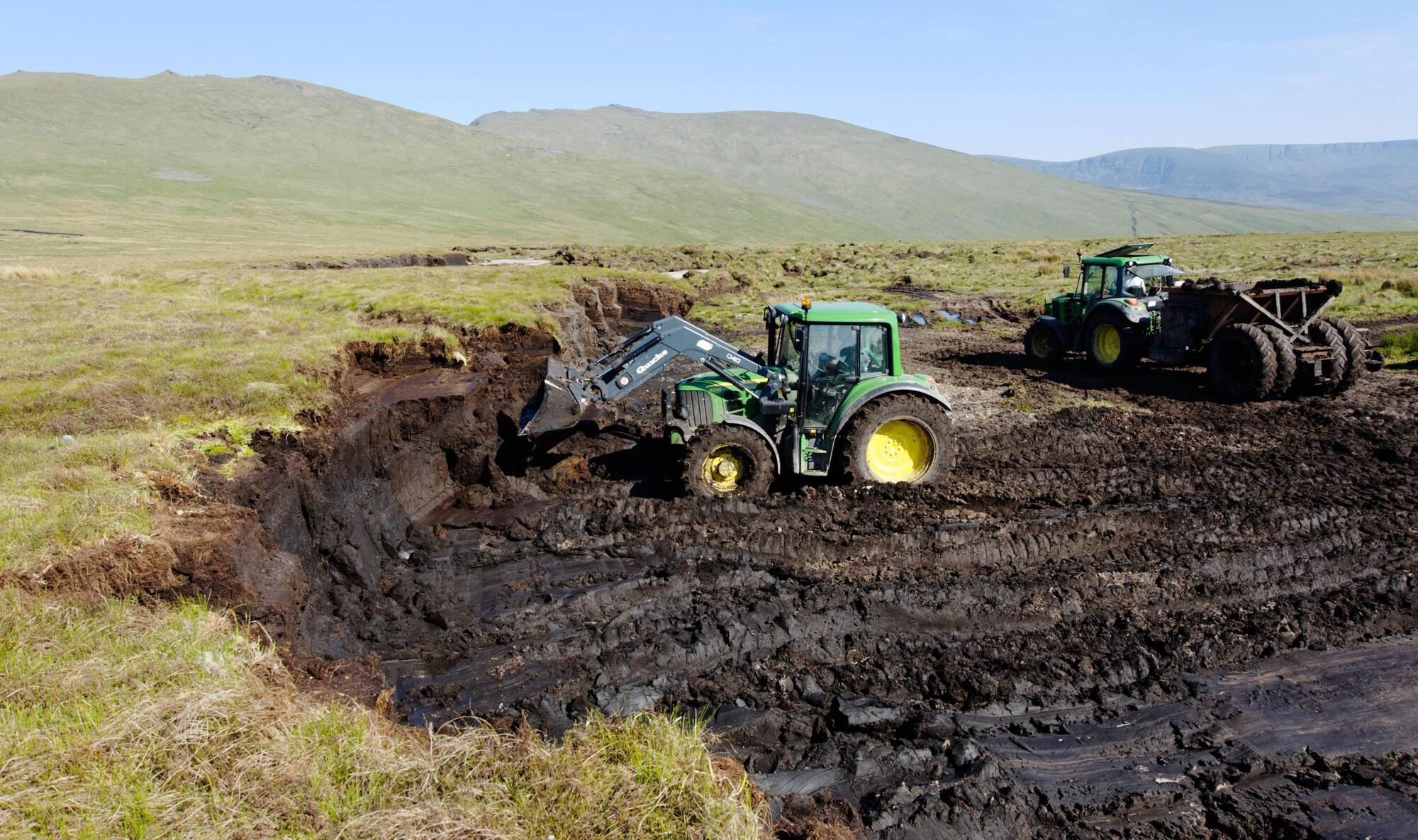
It's estimated that 3% of EU agricultural lands is on drained peatland in agricultural use, but 25% of agricultural emissions come from this land.
A top European Commission official has assured an Oireachtas committee there is no reason for scaremongering among rural communities in Ireland over the proposed nature restoration law.
Dr Humberto Delgado Rosa, director for biodiversity in the Directorate-General for Environment, said there is widespread overall public support for the measures from the European Green Deal.
But that does not preclude the possibility that support for these measures is not evenly distributed. It is very obvious that on several issues there is a rural-urban divide, especially in some areas of Europe.
“This is, of course, a cause for concern. We need to broach views and achieve consensus, particularly on things that are relevant to rural communities, which is not necessarily where most voters are.
“An understanding of the divide between more urban society and more rural society is needed. We understand that these proposals can be used for scaremongering among rural communities when there is no reason for it.
“That is one kind of scaremongering, but if you dig into our proposals, you see these are not their aims at all. They aim to bring society towards a better world with no one left behind,” he said.
Dr Delgado Rossa, who remotely addressed the two-hour meeting of the Joint Committee on Agriculture, Food and the Marine, said there is a global biodiversity crisis with close links to climate.
He said the overarching object includes restoration measures to cover 20% of EU’s land and sea by 2030, and the putting in place of measures for all ecosystems in need of restoration by 2050.
Dealing with the agricultural ecosystem targets, he said there are some types of grasslands, forests and peatlands that are protected habitats in themselves.
They are covered under the previous articles of the birds and habitats directives. Provisions for ecosystems not previously protected require an increasing trend in some indicators until a certain satisfactory level can be achieved.
Examples of these are a grassland butterfly index, organic carbon in mineral soils, the sharing of agricultural land with landscape features and a specific target to enhance the farmland bird index by 2030, 2040 and 2050.
In addition, there is a specific target on an issue that he knew was sensitive and relevant for Ireland -drained peatlands and their agricultural use.
When there are requirements for climate policy to reduce emissions, it is a good choice to go for peatlands and their agricultural use.
What we are proposing is restoration measures of at least 30% by 2030, 50% by 2040, and 70% by 2050, of which a quarter by 2030 and a half by 2040 and 2050 will be rewetted.
However, we do have many flexibility clauses within it from the sensitivity of addressing agricultural land, including options to work on other kinds of peatland, such as peat exhaustion sites,” he said.
Dr Delgado Rosa said the Commission’s impact assessment, based on several scientific studies, concluded there are costs for restoration, but these are outweighed by the benefits.
“We get €8 for each €1 invested in restoration, but this is an underestimation because some ecosystem services are not easily measurable."
In some specific ecosystems, it can go as far as €1 delivering €32 in benefits. Examples include reversing the decline in pollinators, which provides better production in some crops.
Increasing biodiversity in forests makes them more resilient to climate change. They will burn less and have fewer outbreaks of bark beetle. They are less affected by droughts, so production also benefits.
There will be a particular impact on marine ecosystems where fish stocks are allowed to get more habitat and more protection. Fish grow bigger, lay more eggs, and fisheries benefit, he said.
Dr Delgado Rosa said up to €100bn is available for biodiversity in the EU’s current general financial framework, which amounts to up to €14 bn per year from several sources.
More than €20bn should be unlocked for biodiversity every year until 2030 as part of the Green Deal.
“This comes together with the specific biodiversity target we have for the multi-annual financial framework. This amounts to 7.5% of the budget dedicated to biodiversity from 2024. It will be 10% from 2026,” he said.
Senator Paul Daly said Ireland is unique in the amount of drained peatland it has in agricultural use compared with other areas.
Dr Delgado Rosa said one should remember that what is proposed for agricultural ecosystems in general entails some changes to practices.
But this change is wholly compatible with maintaining farming and even benefiting productivity from the angle of what nature can give back in the context of pollinators, soil, nutrients, water.
The targets being proposed are also fully coherent and aligned with other targets in the EU's biodiversity strategy for 2030.
“Much of what was proposed and planned by member states in their CAP strategic plans through the ecosystem schemes and rural development measures are already in the same line as what the restoration in agricultural land would require,” he said.
Senator Daly said Dr Delgado Rosa had stated that Ireland could meet its targets completely from non-agricultural land or peatland.
The Director replied: “The 2030 targets for sure, but I cannot be too certain about the 2050 targets.
"The figures, however, do seem to be compatible with an Irish option to address this requirement elsewhere.
"Perhaps a mix is the best approach. Ireland will know better when to restore land,” he said.