Survey: Half of Irish dairy farmers worried about fodder
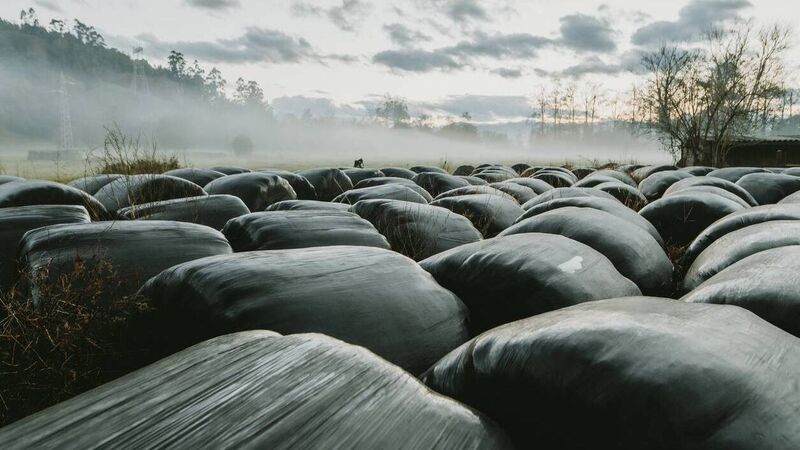
The milk processor warned suppliers that challenges could arise if grazing dates are pushed back by bad weather.
About half of the milk suppliers who took part in the recent Tirlán Fodder Update Survey considered themselves to be tight for fodder or in deficit.
However, Tirlán noted that the results may not be fully representative, because a larger proportion of suppliers worried about a fodder shortage may have taken part.
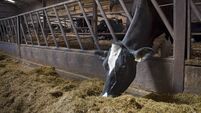
However, the milk processor warned suppliers worried about their fodder reserves that challenges will arise if the grazing start date is pushed out by bad weather, requiring an extended housing period, or rehousing, which would reduce milk production, if limited amounts or poor quality fodder had to be fed to early lactation cows.
Those currently feeding silage at normal rates would be at the greatest risk. Of those that considered themselves tight for fodder or in deficit, one-third were feeding as normal, one-third were sourcing fodder elsewhere, and one-third were stretching their available fodder.
These areas had a more severe summer drought than the rest of Ireland, leaving farmers with a lower-than-average feed reserve (107% compared to a national average of 119%, according to the Teagasc survey in September). The Teagasc survey indicated 50% of farms in these regions had used more than 10% of their winter feed during the summer, to make up for grass shortage in the drought.
The Tirlán Fodder Update Survey was sent to all 5,000 milk suppliers on January 6, to get an indication of current fodder availability on farms within the Tirlán area. Responses to the online survey were received from only 650 farmers, across 17 counties.
The results showed regional differences in feed supply, with winter feed supplies having tightened in the east and south. The border and midlands regions were in the strongest position, having been less affected by summer drought.
About half of those that responded to the online survey were in a good position, with surplus fodder, the other half considered themselves to be tight for fodder or in deficit.
Of those with a surplus, about 75% of those said they had more than 20 days of surplus feed.
Based on the responses, Tirlán suppliers in Kilkenny, Waterford, and Wexford had the greatest fodder challenge.
If cows need to be rehoused in March or April due to poor grazing conditions, or limited grass growth, low fodder availability would have an impact on early lactation cows’ production and fertility.
Tirlán staff urged suppliers to first check the quality of their silage. Knowing the dry matter would allow correct silage allocations to all stock.
Feeding mature cows 3kg of concentrates with ad-lib silage would reduce daily forage intakes only by 5-10%, and might cause excess body condition gain during the dry period.
The daily silage allowance must be restricted if using concentrates or straights to stretch fodder supplies. If silage is restricted, 3kg of concentrate can reduce daily silage feeding by 20-25%.
Every kilo of concentrate fed can replace 4-6kg of silage (fresh weight), depending on the silage dry matter content.
Straw along the feeding barrier would help to satisfy cows' need for rumen fill. Straw is good value for money and is widely available. A kilogram of straw can save about 4-6 kg of silage fresh weight. However, supplementation with concentrates would be needed to replace the energy value of the reduced silage; 1kg of concentrate plus 1kg of straw is equivalent to medium-quality silage. A combination of 1kg of straw and 2kg of a balanced concentrate could spare 12 to 15kg of fresh-weight silage.
When limiting silage intakes, adequate feeding space must be available, and a good supply of fresh water must be ensured.
Straw and cereals have lower levels of minerals, compared to grass silage; therefore, a higher feeding rate of dry cow minerals will be needed.
Ensure the diet is sufficient in protein, as straw and straights tend to be low in protein. Dry cow diets should provide 12-14% crude protein.
Getting stock out to grass earlier, or reducing stock numbers, will help save silage.
A tight fodder situation was also indicated in the south-west by the Teagasc fodder survey in September, which indicated 25-30% of dairy farms in the region had a "tight", or marginal feed supply (80-100% of normal requirements).
At the time, more than 60% of farmers in the survey nationally reported prices of over €45 for baled silage, regardless of quality. This points to the difficulty of sourcing fodder outside the farm.
The Teagasc survey last September showed the strongest fodder position in the border and northwest regions (Connacht, Ulster, and Longford), which were less affected by summer drought. Only 2% there said they had less than 80% of their winter feed in stock, compared to 11% in the southwest (Cork, Kerry, Limerick, Clare), 15% in the southeast (Tipperary, Waterford, Kilkenny, Wexford, Carlow), and 19% in the midlands-east (Laois, Offaly, Kildare, Westmeath, Meath, Louth, Dublin, Wicklow).