NZ to set agricultural emissions prices in early 2023
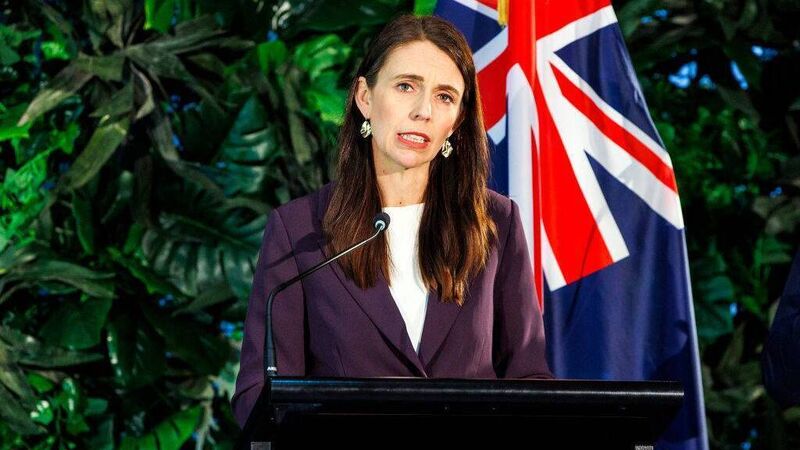
New Zealand Prime Minster Jacinda Ardern pictured in November 2022. Picture: Dave Rowland/Getty Images
A Government promise to keep emissions pricing low was the main new development, as the New Zealand government reported before Christmas on its progress towards the world's first livestock burp tax.
An agri-food industry grouping working with the government on the tax said the pricing system for methane and nitrous oxide from farms "is moving in the right direction", but "there is still work to do on the detail".
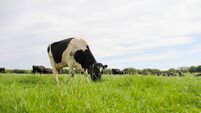
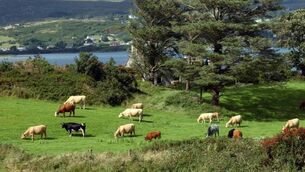
However, some farmer organisations still oppose the tax on emissions from the nation's six million cows and 26 million sheep.
The government said final policy decisions will be made on the agricultural emissions pricing system in early 2023, followed by legislation to give effect to those decisions.
It will be closely watched around the world as it takes shape, because other countries with big livestock industries may yet adopt similar policies.
Announcing the latest developments, Prime Minister Jacinda Ardern said: "Our shared goal is supporting farmers to grow their exports, reduce emissions, and maintain our agricultural sector's international competitive edge."
"With or without the government's proposals, New Zealand needs to be at the front of the queue to stay competitive in a market that is demanding sustainably produced products," she said.
“Tesco, the biggest buyer of New Zealand products in Britain, wants all their products to be environmentally accredited and reach net zero across their entire supply chain by 2050".
“And Fonterra has warned farmers it risks losing customers and facing trade barriers if it doesn’t meet sustainability expectations, prompting the co-operative to look at setting a target for reducing emissions across its supply chain".
The proposed emissions pricing is based on a farm-level split-gas levy designed by key representatives of the agriculture sector. Without this levy, agricultural emissions would be dealt with through the New Zealand Emissions Trading Scheme.
"After listening to farmers and growers through our recent consultation, and engaging over recent months with industry leaders, today we have taken the next steps in establishing a proposed farm-level emissions reduction system as an alternative to the ETS backstop,” said Prime Minister Ardern.
“The most important thing is getting an emission reduction system set up that lasts. We are working hard alongside the agriculture sector to strike the balance between building good levels of sector buy-in, while also ensuring the system is robust and meets our emissions reductions goals".
The levy is designed specifically to be practical to implement for the agriculture sector, and to be most effective at reducing emissions in line with New Zealand’s targets, while maintaining a viable and productive agriculture sector.
It would price biogenic methane and nitrous oxide emissions (including from fertiliser) separately. It is proposed that "relatively low, unique prices could be set initially for both, for five years, based on set criteria". Payments would be available to reward the uptake of incentives and eligible sequestration (removals).
At the minimum, sequestration from riverside plantings and from increases in carbon from indigenous forest linked to specific management interventions will be included in ley calculation from 2025.
Revenue from the levy would be recycled back into mitigating agricultural emissions and operating the levy system.
The agricultural industry has welcomed the latest amendments that levy prices should be ‘the lowest possible to achieve outcomes’ and fixed for a five-year period to give farmers certainty, and a commitment in principle to recognise all categories of "scientifically robust" sequestration.
The industry will work to ensure the farm-level levy is up and running by 2025, in order to avoid an interim processor-level levy.
DairyNZ also said the latest changes to the Government’s emissions pricing plan are a step in the right direction and acknowledge some of the sector’s concerns, but there are still some important issues to be resolved, to address all farmer concerns.
“Farmers are already facing huge cost pressures with rising interest rates and on-farm inflation driven by feed, fuel and chemical prices. Emissions pricing is going to add yet another cost, so it's important we continue work to achieve emissions reductions in a fair, practical and equitable way,” said DairyNZ chair Jim van der Poel.
"We would never accept an emissions pricing system that would put our farmers or rural communities at risk.”
“DairyNZ has real concerns that, because of delays in the process, there will not be enough time to implement the scheme before the Government’s intended start date of January 1, 2025, and that, as a result, farmers may end up in a processor-level system through no fault of their own,” said Mr van der Poel.
The Government confirmed New Zealand's Climate Change Commission will be required to consider scientific developments in 2024, such as a new, more advanced metric for measuring methane emissions.
The agriculture industry welcomed this; it said the current Paris Agreement metric overstates the warming impact of methane emissions by three to four times when emissions are stable, as they are in New Zealand.
Andrew Hoggard, president of New Zealand's Federated Farmers, has criticised the government's "unrealistic timelines" for the levy.
New Zealand is committed to the Paris Agreement limit set for global warming of well below 2.0 degrees Celsius, and preferably below 1.5 degrees.