Farmers say no financial commitment from Government to meet emission targets
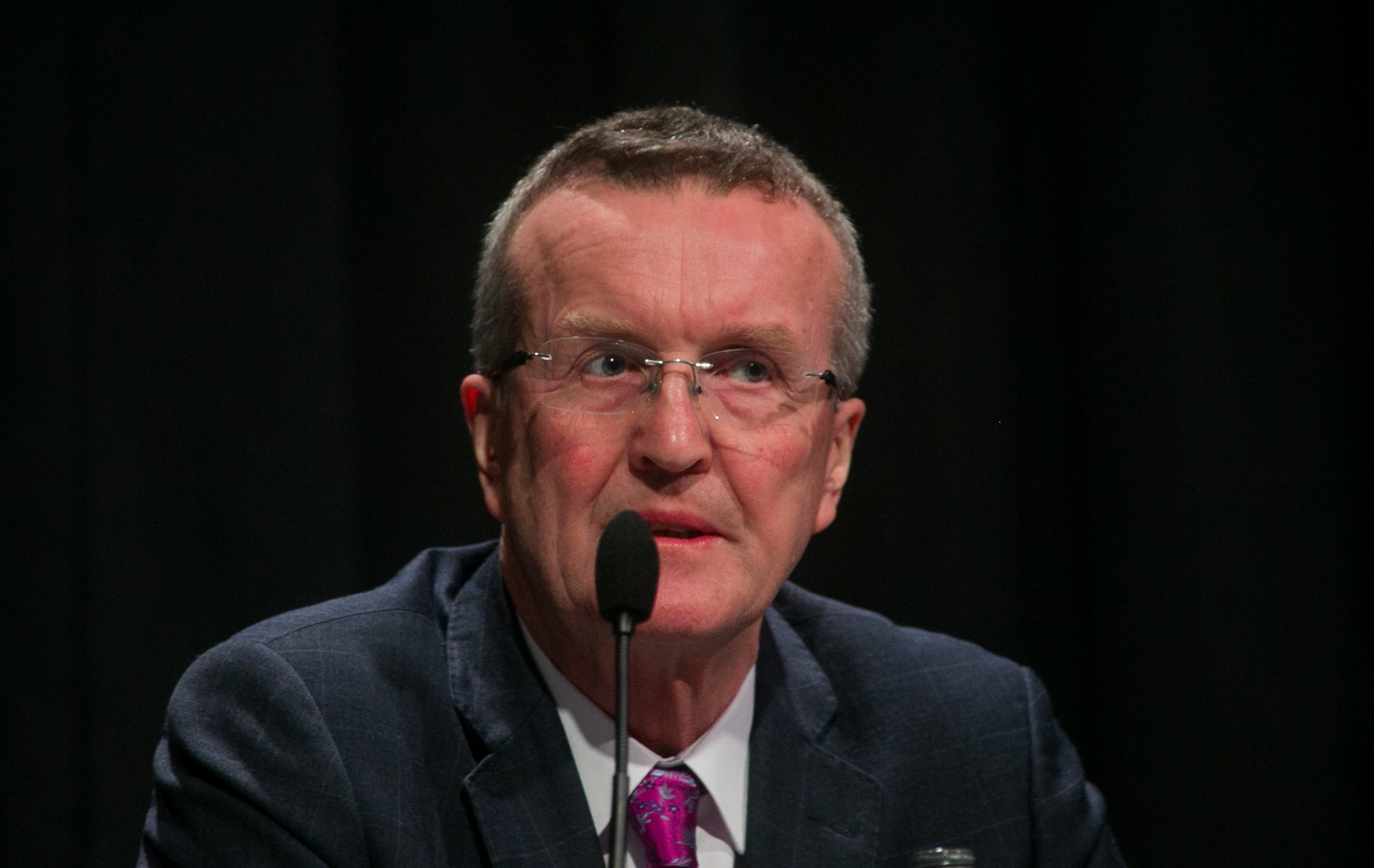
IFA President Tim Cullinan: 'Like so many other aspects of the Government’s climate policy, people are asking: where’s the funding?'
Farmers feel there is "little by way of financial commitment" from the Government to achieve the necessary climate targets for the agricultural sector.
The Irish Farmers' Association farming and climate summit taking place in Limerick today heard that the sector "will not shirk our responsibility when it comes to climate action" when it comes to achieving an emissions ceiling for 2030 that is 25% lower than 2018.
However, IFA President Tim Cullinan said low-income sectors like beef and sheep farming will need financial support to meet the targets set down. "Like so many other aspects of the Government’s climate policy, people are asking: where’s the funding?" he said at a packed Thomond Park.
"Some in Government have pointed to CAP funding as an example of financial support for climate targets. “However, what they fail to point out is that CAP funding to agriculture in real terms has fallen by around 20% over the last 15 years."
He said farming cannot "become the sacrificial lamb" where cutting agricultural activity is seen as "a fast-track solution" to reducing overall national emissions.
Mr Cullinan pointed to an increase in the use of protected urea and the increase in slurry spreading using low emissions techniques as proof that the farming sector can change practices to reduce emissions.
"This proves that farmers will step up when given the opportunity, along with appropriate support and advice," he said. "Despite the narrative some choose to portray, Irish farmers are ready, willing and able to step up and play their part to help Ireland achieve its climate change ambitions."
Mr Cullinan also told the conference that policies which lead to a cut in food production at a time of massive food security concerns were foolish in the extreme.
"It will lead to an increase in overall emissions, with production moving to more carbon-intensive parts of the world. We need to focus on reducing emissions not on reducing output."
Mr Cullinan noted that agri-food imports of food from Brazil into the EU increased by 47% in 2022.
"The recent change of Government in Brazil is likely to see political pressure at EU level to push on with the EU/Mercosur trade deal," he said, calling on Government to take into account the risk of carbon leakage in climate policies, to avoid "production moving to countries with a more lax environment policy".
"The consequences are already clear. Imports from Brazil are rocketing up leading to an increase in global emissions." Mr Cullinan said.
"We will work to reduce emissions, but not by reducing output and cutting our member's incomes - just to see global emissions increasing."
This was echoed by food economist Ciaran Fitzgerald who told the conference there was too much focus on reducing livestock numbers rather than reducing emissions.
He said Irish farming and food production is significantly ahead of measurement and emissions reduction capability compared to its competitors; and that "ideological" thinking around reducing livestock and changing production models undermines science, and ultimately buy-in.