New vet school could be based in Cork
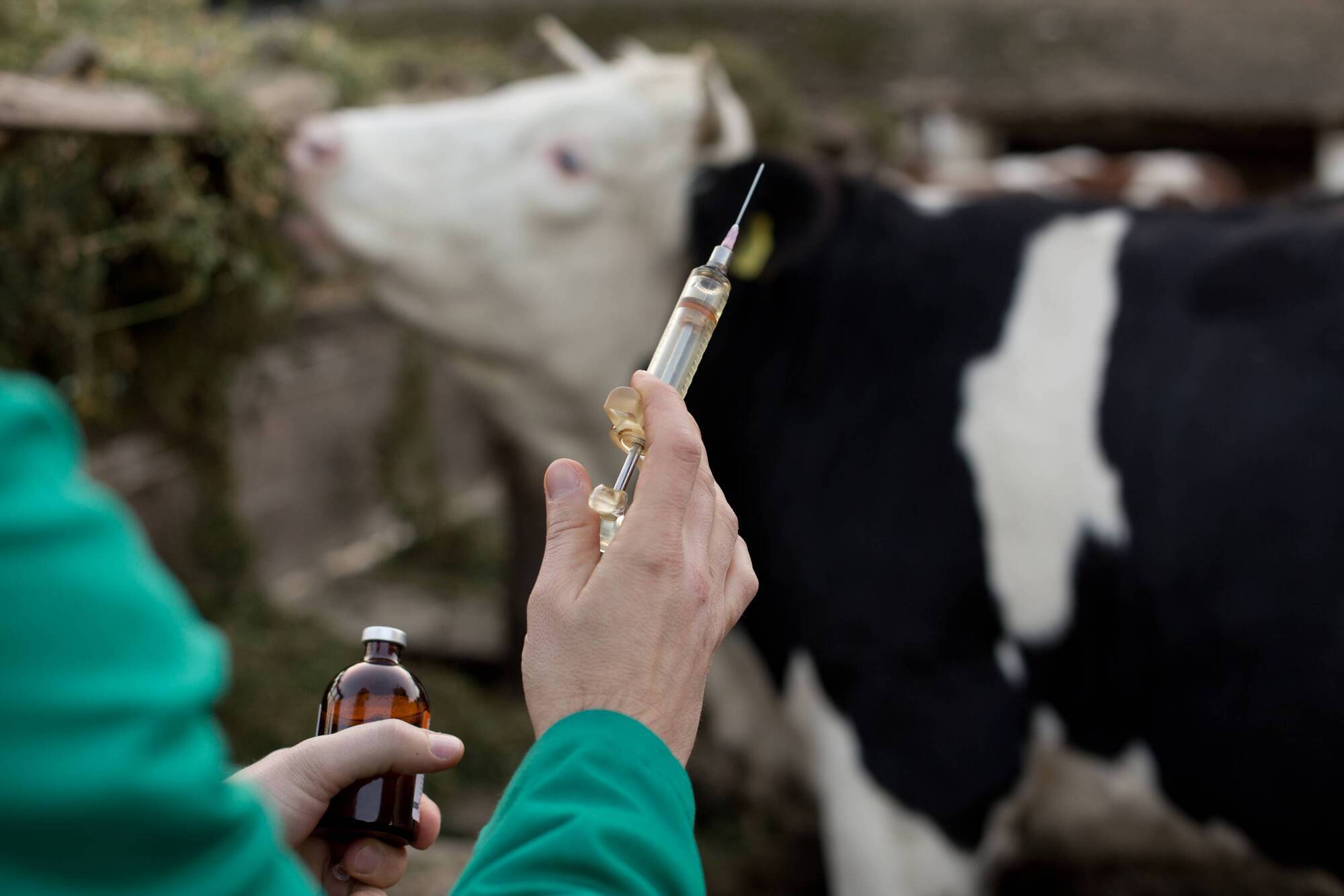
Close up of veterinarian hand holding syringe and bottle on farm with cow in background
A second veterinary school is required in the State - and it should be located in Cork, the Senate was told before the Christmas recess.
Senator Tim Lombard told the Upper House the existing school at University College Dublin has been in place for more than 100 years and has done a "phenomenal" job over that time.
He said the veterinary industry has served society competently over that time, but the approach concerning how many veterinarians there are in the State must be examined.
"Unfortunately, as well, our vets are getting older. The age demographic of our population of vets has changed significantly in the last two decades.
"We must change our approach in many ways in this area, therefore, and try to get more vets into the system,” he said.
Senator Lombard said 82 places were allocated to study veterinary medicine in 2021. Under the Central Applications Office (CAO) process, ultimately, 601 points were required to get a place on the course.
“That is a significant threshold. The course was chosen by 581 people as their first choice. This shows the interest that exists. We had 500 disappointed applicants," he said.
There is significant interest, particularly among younger people, in studying veterinary medicine. The capacity for the number of places required does not exist now.
Because of this lack of capacity, 70 students are now doing first-year veterinary medicine in Poland, while another 30 are undertaking such studies in Hungary.
“We do not have the figures for England and Scotland. Overall, however, we have hundreds of students studying this course abroad.
This alone shows the need for a second veterinary school here. We must explore thoroughly how we can accommodate this potential in the sector,” he said.
Senator Lombard said Ireland offering only 82 places to study veterinary medicine is a significant barrier to the development of the industry.
“More people will be attracted to the small animal practices than to the larger ones, and this will have a significant knock-on effect on our credibility as the premier food-producing nation in the world,” he said.
Stressing that there is potential in the system to have a second veterinary school, Senator Lombard particularly mentioned Munster, where there are many bovine, pig and horse units.
“A second veterinary school there would be a counterbalance to what we have in the UCD model. We must have movement on this new college,” he said.
Noting that University College Cork has great potential in this regard, Senator Lombard said it should be considered as the location. He realised the University of Limerick is also interested.
Looking at County Cork alone, he said the figures in this context are frighteningly large. There are nearly 13,500 farmers in the county. Of these, 4,500 are in dairy farming, while there are also pig and poultry units.
Equally, the cluster of veterinary practices in the county could cater for the practical work required in training vets.
Places like Riverview Veterinary Group and Abbeyville Veterinary Hospital, for example, have the potential to be a part of this endeavour when it comes to veterinary practices.
Minister of State Dara Calleary said the Department of Further and Higher Education, Research, Innovation and Science does not place a quota on the number of places on veterinary medicine courses offered by higher education institutions.
As such, the number of places provided each year is determined by the institutions themselves in line with their capacity.
The Higher Education Authority recently sought expressions of interest from higher education institutions interested in building capacity in dentistry, pharmacy, medicine, nursing and veterinary from the academic year 2024-25 or 2025-26.
This process was designed to respond swiftly to national skills needs. Expressions of interest were sought from institutions with the capability to expand existing courses or offer new programmes in these areas.
The HEA, with the support of the Department, will shortlist expressions that show evidence that an institution has the potential to build capacity in the identified discipline in the specified timeframe.
He said the HEA has informed the Department that 39 expressions of interest have been received across the five disciplines.
Of these, 20 have proposed the delivery of new courses, and 19 are proposing to expand on existing courses in the selected disciplines.
Overall, responses represent a rapid, nationwide engagement with the call, with expressions of interest in developing new courses in the areas of pharmacy and veterinary from all four provinces.
The HEA is currently reviewing applications with a view to moving to the second stage of the assessment process, which will involve a review by an expert panel.
Applications are due by Monday, January 16. He understood the HEA has been in contact with the relevant institutions to advise them of the next steps.
Senator Lombard said UCD, in the middle of Dublin city, provides veterinary courses for Ireland. But the actual demographics, particularly for the bovine population, show that the majority are in Munster.
“We need a geographical spread of placements when it comes to veterinary colleges. I would be concerned if the Department was looking just to expand,” he said.
Minister Calleary said Ministers of State Simon Harris and Niall Collins have made clear that planning for current and future public sector skill needs, including those in veterinary medicine, is a priority.