Ireland is a “long way” from self-sufficiency when it comes to producing feed grains, Teagasc’s head of crops knowledge transfer Michael Hennessy has said.
Speaking on a recent Teagasc Signpost webinar about the contribution tillage can make to climate resilience in the country, Mr Hennessy said that Ireland produces around 2m tonnes of feed grains, and there is a requirement for over another 2m — “so we’re a long way from producing all of that”.
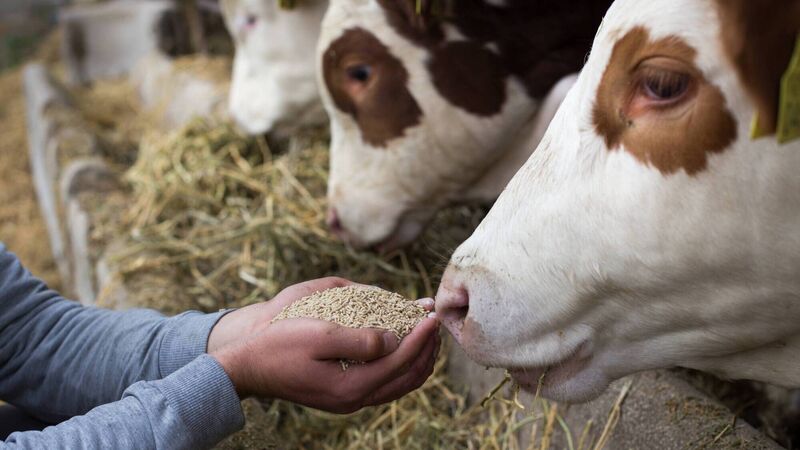
Mr Hennessy highlighted how Ireland’s tillage sector produces “low [emissions] grains in the country which can help the livestock industry” by displacing some of the imports coming into the agriculture system, to make it more resilient.
“There is a huge amount of grain being imported; that grain is being imported from over 60 countries,” Mr Hennessy said.
“Because it comes from 60 countries, we really don’t have an idea where exactly it comes from in lots of cases because it is certainly not on the label that a farmer would see in terms of the various ingredients in some of these rations.
“It does come back to labelling, it does come back to farmers knowing what they’re putting in and making a conscious decision to choose Irish, rather than choosing imported.”
Teagasc National Farm Survey data has shown that almost half of all farmers agree that their economic future depends on their willingness to reduce greenhouse gas emissions, Mr Hennessy told the webinar, “so that’s a really good starting point”.
Teagasc has done research on the impact on winter milk carbon footprint where imported feed was replaced with native feed.
The carbon footprint of milk was reduced by 32%, with a slightly lower yield (2%) but that the research shows “that deficit can be made up from a little bit more balancing”.
If that reduction can happen in dairy, “it can certainly happen in pigs or poultry as well”, Mr Hennessy added.
Replacing imports
The Irish Grain Growers Group chair Bobby Miller told the Irish Examiner that in the short-term, while Ireland “may not have the capacity to be self-sufficient” when it comes to producing livestock feed, “there is definitely plenty of potential to focus on agri-sectors that have a higher carbon footprint, to help those reduce their carbon footprint”.
“Irish grain needs to be promoted similar to Irish beef and dairy and lamb, we need to get into that space,” Mr Miller said. “If we start setting goals of replacing imports, we need to promote Irish grain in the first place, that’s a good starting point.
“Another starting point would be to have processing facilities to add value to the grain we have and use the by-products of primary production for the feed industry.
“The weak point I recognise is actually processing, the customer is there, the raw material is there, it’s actually getting the processing up and running for that particular part of the industry,” Mr Miller added.
Plant-based protein
Mr Hennessy also said that Ireland can take advantage of the demand for more crops not just for animal feed, but for the likes of peas and beans for non-meat-based alternatives.
“There is huge potential for that, and that’s certainly an area that we would be targeting to try and increase,” he said.
“There is a huge recognition and a huge increase in plant-based protein being used out there but we need to get it in the form that companies want to use it in.
“So there’s a bit of processing needed in that, and from an Irish point of view, we don’t have that processing capacity as it stands. That’s something that we’re working hard on in research.
“There is the guts of €20m being put into research at the moment in that particular area, and using some of the technologies that are being employed in harvesting protein from milk, similar processes can be used so we can upscale some of those proteins to really go for some of those high-value markets.”