Agri-food Climate Research centre to be virtual

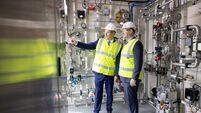
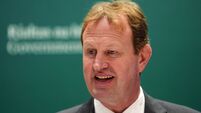
Pat Dillon speaking at the launch of the Teagasc Climate Action Strategy
A new National Centre for Agri-food Research and Innovation will be established to accelerate the development of new technologies to help Irish agriculture meet its government-set goal of lowering emissions by 25% by 2030.
The new “virtual centre” will not have any physical buildings and will instead be connected digitally, where it will co-ordinate climate research and innovation programmes and accelerate efforts to bring ‘almost ready’ and ‘early-stage’ technologies required for adoption at farm level to fruition.
It will support research which addresses emissions reduction and carbon offsetting and will provide a central independent focal point in Ireland for the co-ordination and dissemination of agricultural climate change research and innovation to all stakeholders, including wider society.
It forms the third element of Teagasc’s new Climate Action Strategy, unveiled at its facility in Ashtown on Thursday.
The new centre will co-ordinate current activities, along with new planned areas of activity across the ‘Urgent Areas of Work’ set out in the strategy.
Professor Frank O’Mara explained it will also provide visible leadership, nationally and internationally in the area of agri-food climate research as well as better facilitating collaborations between institutions.
Professor Pat Dillon, Director of Research, outlined the eight urgent actions that Teagasc plans to accelerate its research, advisory and education activity in. These included methane emissions, reducing nitrogen emissions, capturing carbon, enhancing biodiversity, increasing diversification, enhancing adaption, creating a circular food system and supporting policy decisions.
Work at the centre will be supported by a €12.7m investment in labs and facilities in Johnstown Castle as well as the NASCO – the new National Agric Soil Carbon Observatory – which will draw in data from a network of 30 flux towers spread across Ireland to measure emissions in the field.
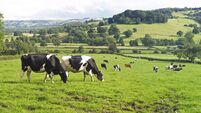
Other investments included the purchasing of 36 ‘Greenfeeds’ – feeding machines that can measure cattle emissions at pasture – in partnership with the ICBF and UCD.
The announcement comes ahead of the government’s first Climate Action Plan, which will set out the actions each sector will need to take to meet its 2030 targets - for agriculture, it’s likely this will be heavily informed by scientific bodies such as Teagasc.
However, given the scale of the challenge, especially given that on-farm carbon sequestration is not yet counted towards agriculture’s national targets, it could be bumpy road ahead.
“These budgets will challenge the sector like never before,” Agriculture Minister Charlie McConalogue told attendees at the launch.
“I have no doubt that research is key to unlocking the technologies that will be needed to drive down our emissions over the coming years and further improve the sustainability of our sector.
“…Teagasc, through developing and then disseminating cutting-edge research, will ensure that agriculture meets its ambitious and challenging climate targets before the end of the decade.
“Putting it bluntly. We cannot do it without you. We are on a journey to reach a target of a 25% reduction in our emissions before the end of the decade.” However, Mr McConalogue said that the government was committed to delivering for farm families and promised of a “brighter, more sustainable future”.