Signpost: Tim looks back on 2022 - just how far as he come in a year?
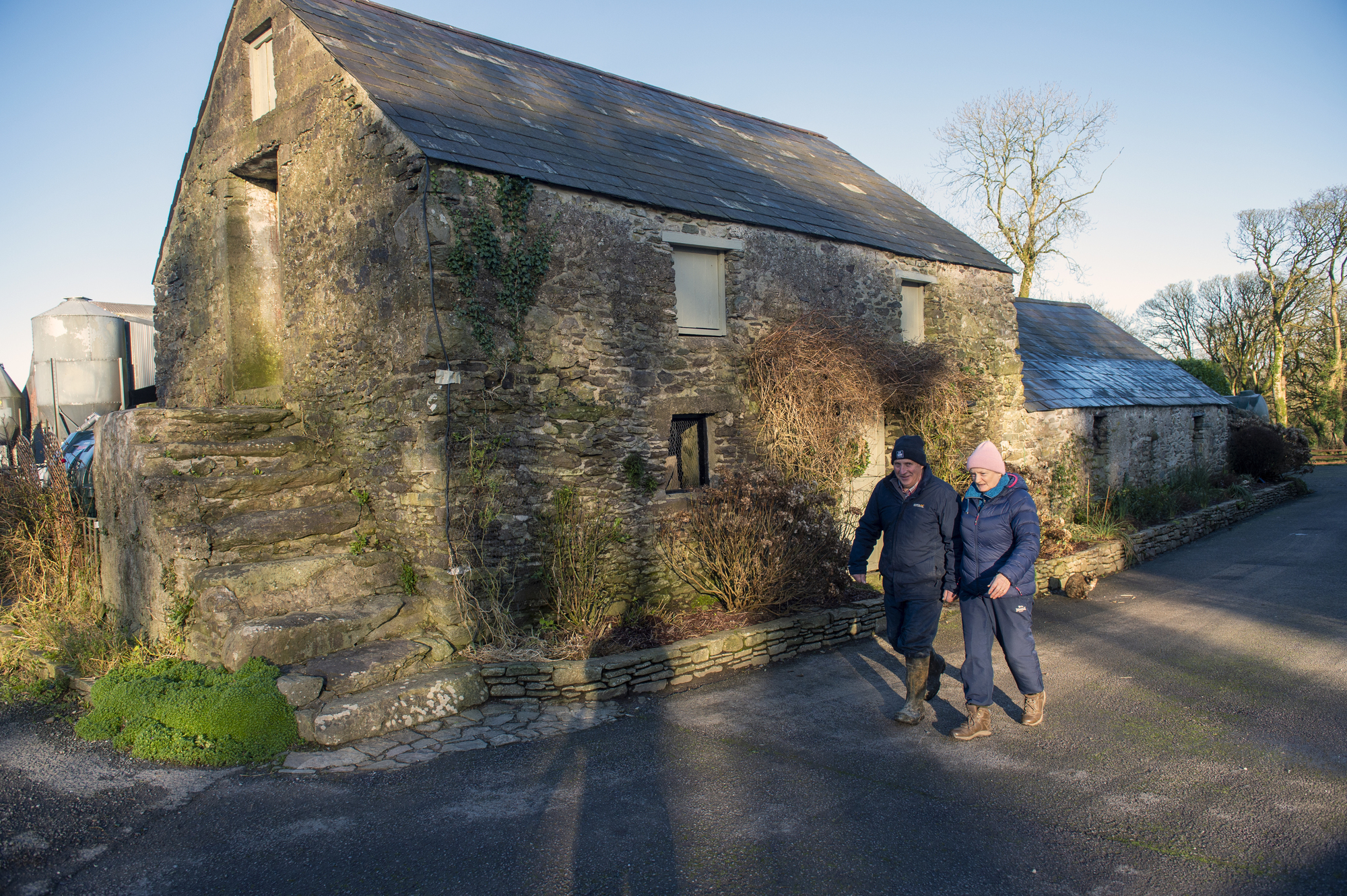
Tim and Mary Leader walking past a pre famine farm building from 1836 on their dairy farm at Glenleigh Upper, Kilcourney Rathcool, Co Cork. Picture Dan Linehan
I have shared what's been happening on the farm for the past 11 months and this month I thought it would be useful to look back over the year and see what progress I have made.
I don’t have my carbon emissions for 2022 yet, but I will get this information in the second quarter of 2023, and that will be the real test of progress – did I reduce my total emissions?
I am optimistic that emissions are going in the right direction on the farm. I have reduced my total chemical nitrogen (N) use on the farm, and I have continued to use protected urea and low nitrate compounds which also have low emissions.
My chemical nitrogen use for 2022 is 195kg N per hectare, compared to 228kg chemical N in 2021, and I have managed to hold grass growth for the year.
Overall grass growth for 2022 is 12.2t DM per hectare, compared to 11.8t DM per hectare for 2021. It was an extremely difficult5t year to manage grass right throughout all the seasons, but we managed to hold grass growth.
We used slightly less protected urea this year compared to last year (50% versus 73% of total N used applied as protected urea). We needed to build P & K index on the farm, and we had to use compound. We used 18-6-12 which is a low nitrates fertiliser, so the emissions are low from it.
It is recommended to use 18-6-12 in conjunction with protected urea. Up until this year, we had no P allowance, so with the additional P allowance, we set about sorting out the index issue. We used about 25t of 18-6-12 this year.
I now have 23% of the milking platform with white clover in the sward. It's hard to tell what percentage of the sward is clover, but I will make this call next April or May with my Teagasc advisors to decide if there’s enough clover for me to cut back nitrogen.
I also have red clover on the outside blocks.
I am signed up to the Signpost Genotyping Project. I am sampling all the cows this autumn and next spring the calves will be sampled too. I will have a full profile for the herd, and it will be interesting to see what impact this has on the EBI of the herd.
Speaking of the EBI, I have received by herd profile including the carbon sub-index. My EBI is gone from €169 to €184, with a carbon sub-index of €7 - which is the national average. In-calf heifers are €220 and this year’s calves are €235. I am very happy with both.
It has been a pleasure for Mary and me to write these articles each month and share what's been happening on our farm. We would like to thank you for reading the updates.

BLACK FRIDAY
Already a subscriber? Sign in