Consumer trends and demands change yearly, but the love for the staple turkey dinner on Christmas Day remains strong in Ireland.
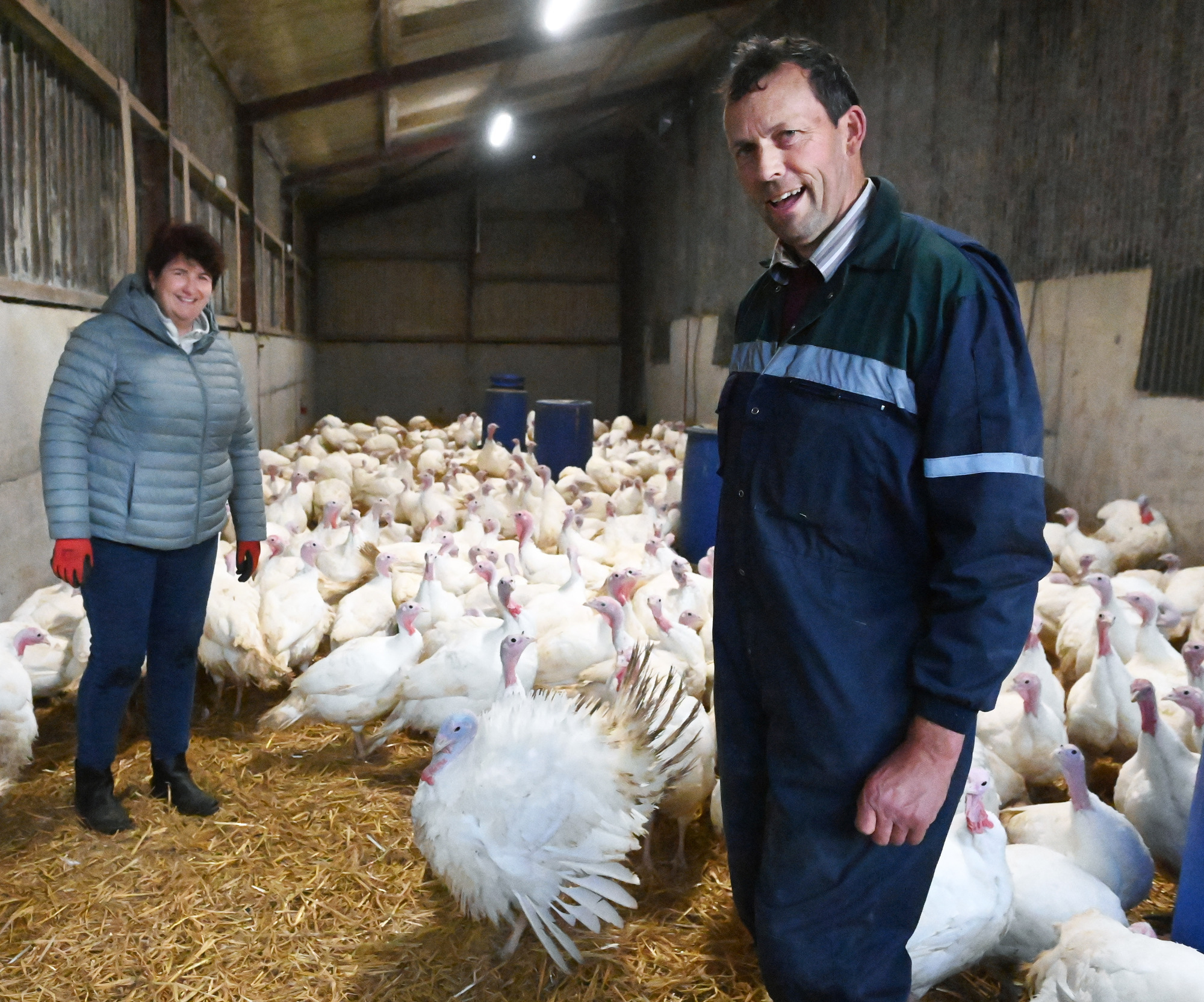
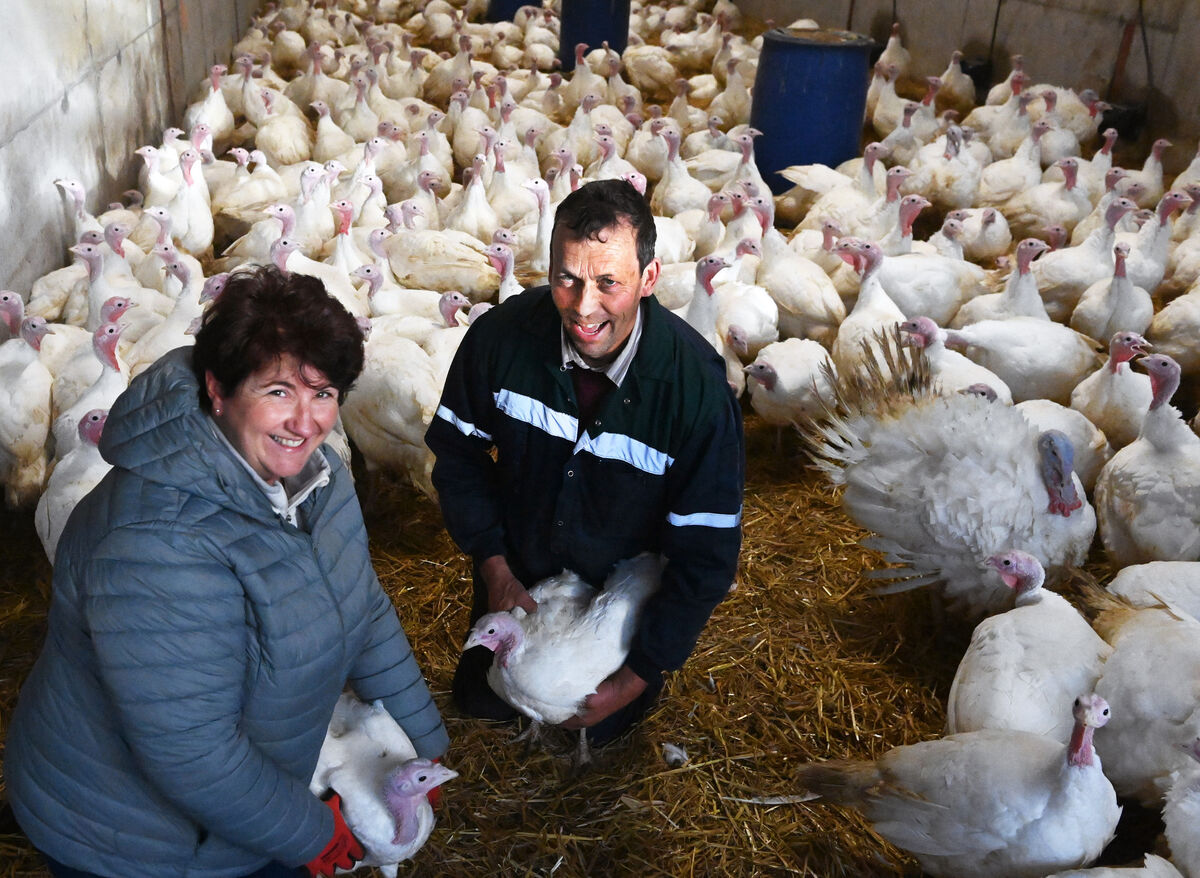
Denise Healy, who is based in Carrignavar in Co Cork, will supply 1,000 turkeys for households to enjoy this Christmas — but the preparation from her side starts well in advance of the festive season.
It has been a challenging year for poultry keepers with squeezed margins and as many face into their busiest period, they have to adjust their ways in order to further keep their flocks safe from disease.
Poultry farmers have been making the headlines in force in the past few weeks not only as a result of Christmas approaching, but because of the outbreaks of bird flu on turkey farms in Co Monaghan, and with all flock keepers across the country ordered to house all birds due to the risk.
“In order to protect my flock they’re all in, it is very concerning because there are so many wild birds around, you just have to be super careful,” Ms Healy told the Irish Examiner.

“There’s nothing we can do about it, it’s just one of these things — you have to take it on the chin. I am definitely going 110% by what the department is saying.
“With the last couple of years it’s becoming more prominent around Christmas time; I am concerned about it because I’m only a small producer compared to the other bigger main producers, so it just means a lot to me if my flock was depopulated, it’s a big loss of income for me when you’re dependent on it.”
And while the last few weeks brought about changes for poultry farmers, it’s still business as usual for Healy’s Free Range Turkeys, which kicked off its Christmas prep in the summer, when Ms Healy got her chicks delivered in July.
“In the past, I used to get my chicks in as day-olds, and there’s a lot of caring and minding of them,” she explained.
“But I found a new supplier in Northern Ireland, Galloway Turkeys, and they rear them to about four weeks for me, so they take the hard work out of it.
“They deliver them down to me at about four weeks old, I then leave them housed for two weeks, and once they hit the six-week mark, they’re usually out in grass then until almost December 1 if possible.
“I do lock them in by night only because I have a fear of the foxes getting them so once it starts to get dark in the evening, we turn on the lights in the house and they all make their way in so by the time it’s fully dark, if you go out into the field there isn’t one out there, they all know where the straw bedding is and they just like to go in and lie down on the straw.”
Ms Healy has a license for processing them at home — “so everything is done on the farm; from start to finish I know exactly what I have so I can stand over everything — which is great”.

And at Christmas time to help out with this, the farm tries “to get as much local help as possible, even though I’ve noticed through the last couple of years, it’s getting harder and harder”.
“Gone is the day I used to have all my neighbours and young kids around the area that would come in and look for the extra pocket money at Christmas time,” she said.
“Now, I approach schools, transition year students mainly, to see if they would be interested because they finish school a little bit earlier for Christmas holidays, it’s giving kids the option if they’d like to earn the extra bit of money at Christmas time.
“In an ideal situation, if you had 15 to 20 people a day you would have it done in no time.”
The processing period is short — from December 6 to 16.
“For the oven readying then, I need about 15 people on board just with cleaning out, packaging, and sorting the orders out, and then there’s one person on the road delivering just to butchers only.”
Turkey collection days for home orders are December 23 and 24, “where we have all my regular customers coming”.
“It’s a fantastic buzz about, meeting everyone, you might only meet them once a year and you have a chat.”
The farm supplies three butchers in the English Market in Cork City, another butcher in Ballincollig, one in Mitchelstown, and one in Tullamore.
“I used to supply a lot more outside of Cork — I’m cutting down on the outside Cork and I’m concentrating more on my home orders because they are becoming a stronger sale for me as opposed to the butchers,” she explained.
“I could sell double the amount I do if I had them but you have to have a cut-off point and there’s no point in getting too big and becoming a mass producer and losing the personal touch and I will never do that.
“And I will never compete with any of the supermarkets, I’m a standalone business, what you see is what you get, and what I charge is a fair price for what I’m giving and I will never apologise for what I charge.”
With Ms Healy putting in a provisional order for her chicks in February based on what sold well the Christmas before, she said that the majority of people are “gone from the traditional huge turkey they’d be eating for a week”.
“They want exactly what they need and maybe a little bit for the following day, because the meat is after getting quite expensive, people are becoming a little bit more savvy with their money so now they’re ordering what they actually need and want,” she explained.
“I try to guide people that way as well as opposed to them saying ‘oh I want a 20-pound turkey’ and they feeding two people, I say ‘well how many people are for dinner, and how long would you like it for, would you like it for Christmas night and would you like it for the following day?
“And then you gauge what a person needs.”
According to Ms Healy, “there’s a trend every year, it’s never straightforward” and “everyone wants a picture-perfect turkey”, with consumer demands often “depending on what celebrity chef is cooking on television”.
As much as possible, she tries to sell the turkey as a whole, “as opposed to just a fad going through”.
Ms Healy carries out the “tradition” of dry plucking her turkeys, letting them cool down naturally and hang to gain a bit of flavour.
She fears this tradition “will be lost if we don’t try and keep it as best we can”.
“I know a lot of much smaller producers are just getting out of it, the tradition is going to be lost down the line if people don’t keep plucking turkeys,” she said.
“What will end up happening is small producers won’t have a license and will have to get them processed in a different way to what I do.
“There aren’t too many in Ireland left that do dry plucking, so it is a unique selling point that I have because a lot of the processors would be sending them away to be wet plucked which you can do in mass numbers.”
She urges people to shop local as much as it is feasible for them this Christmas, because “it’s always nice to know where your meat, from start to finish, is coming from”.

Cancel anytime