Testing soil should be priority for 2023
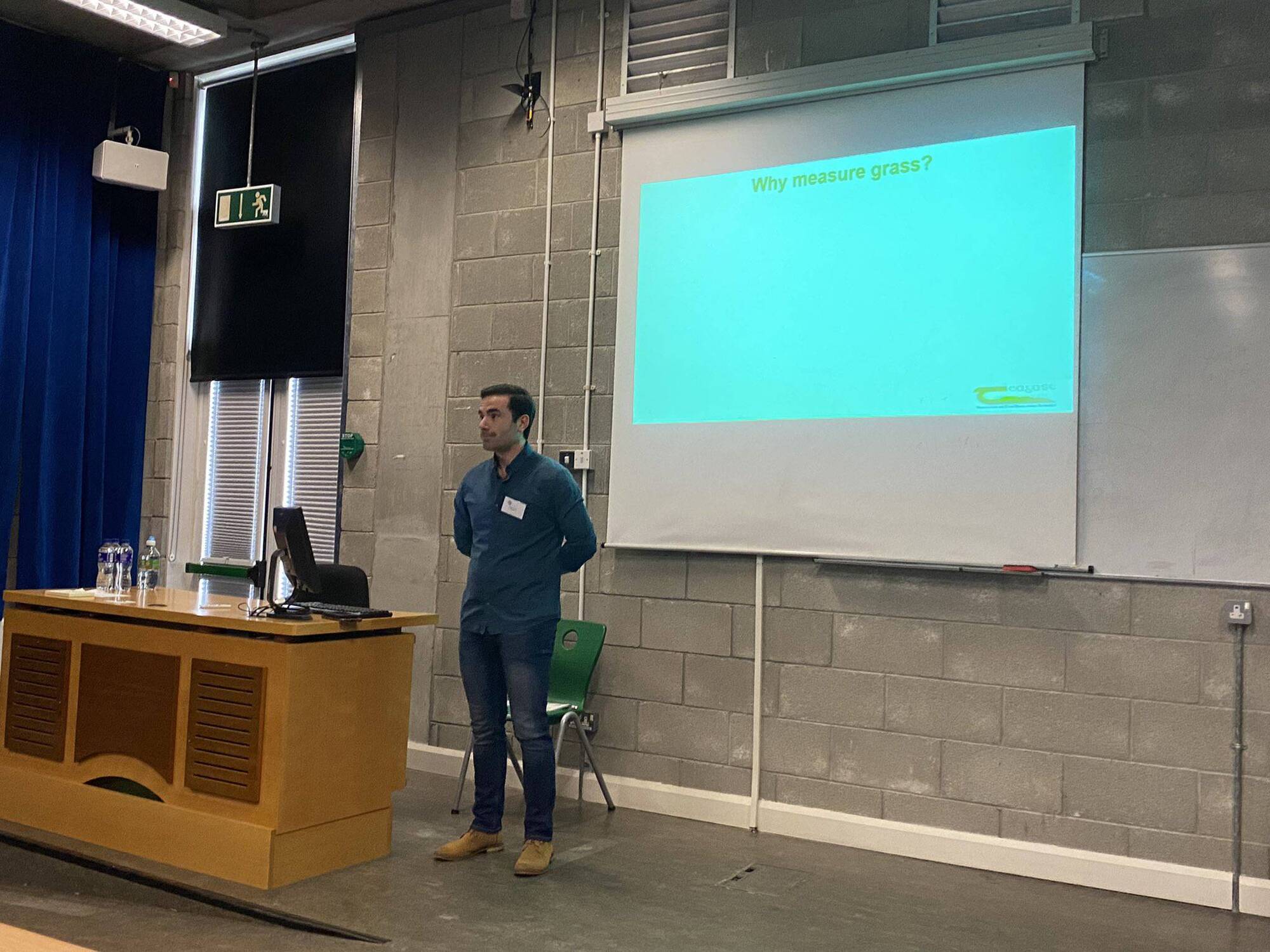
Dr Mike Egan takes a seminar on grassland management at the Dairy Women Ireland conference in Thurles on Saturday (November 26).
Soil testing should be top of every farmer’s to-do list this winter to avoid risking long-lasting damage to their soil fertility, one of Ireland’s top grassland experts has urged.
Speaking during a seminar on grassland management at the inaugural Dairy Women Ireland conference, Michael Egan, grassland research officer at Teagasc at Moorepark, warned that farms would not be able to go two years in a row without spreading phosphorous (P) and potassium (K) without damaging soils.
“If there were very little P and K spread this year, it would be a very bad decision if you didn’t apply Ps and Ks this year,” he said.
“If you go two years without applying those, we will see a sharp drop in terms of soil fertility, and in the long term, that would be much worse.
“If we look at the last time fertiliser prices spiked, in ’09, soil fertility nationally dropped, and it took a long time to get it back up again, so we can’t afford to let our soil fertility drop.”
Mr Egan explained that soil testing should be “top of the list” for those looking ahead to 2023.
“You should aim to do that by the end of the year as it gets very busy in the labs in January,” he said.
“Wait for about three months after your last application of slurry or fertiliser. So if you last applied organic in early October, you’d be talking about soil testing just before or after Christmas.”
Once a baseline has been established, showing where the farm sits in terms of its soil fertility, Mr Egan explained it was important that a plan was put in place to act on that information.
“Once you have got your soil fertility report, look to see what you need, and utilise your slurry and farmyard manure as much as possible first, and then make up the rest with bought-in fertiliser,” he said.
“Most of the co-ops and fertiliser companies will help you to do this, what you want to do is put a fertiliser plan in terms of how much phosphorous you need, how much potassium and try to make as best use as possible of your slurry as possible - slurry is a great source of nutrients on-farm.”
However, he stressed that it was not one-size-fits-all.
“You should adjust your nitrogen application strategy based on your stocking rates and demands. There are guidelines in terms of how much fertiliser should be required by certain days, but if you are at a lower stocking rate, then you won’t need the same level – so adjust that based on the Teagasc Green Book.”
He explained that despite nitrogen fertiliser use being down nationally by about 14%, excluding the period of drought in the summer, grass production this year was roughly on par with 2021.
“If there were very little Ps and Ks spread this year, that will be an issue next year on farms,” he said. “We won’t be able to go two years without spreading nutrients on the farm – that’s why it’s important to soil test and then make a plan.
“If spread nothing this year, there will be a decline in soil fertility. In terms of how to act on that, and every farm will be different, the advice for your farm will have to be based on your soil test. Spread compounds where it’s needed – not everywhere, but only where they are needed.”
The benefits of white and red clover were also highlighted.
“If there is clover on the farm, take advantage of that in terms of cutting back your fertiliser in the summer months to take advantage of that,” Mr Egan said.
“If you don’t have any, make a plan now to start putting it in. If you will be reseeding next year, make a plan to include clover in your seed mix.
“If you have one or two paddocks that have some level of clover at the moment, try and manage them accordingly in the spring so that the clover increases and you can get the advantage from the clover next year.
“If you’re coming from a base of zero try to start somewhere. Next year is definitely the one to pick.”