Young farmers now a rare breed, warns Macra president
22/09/2021
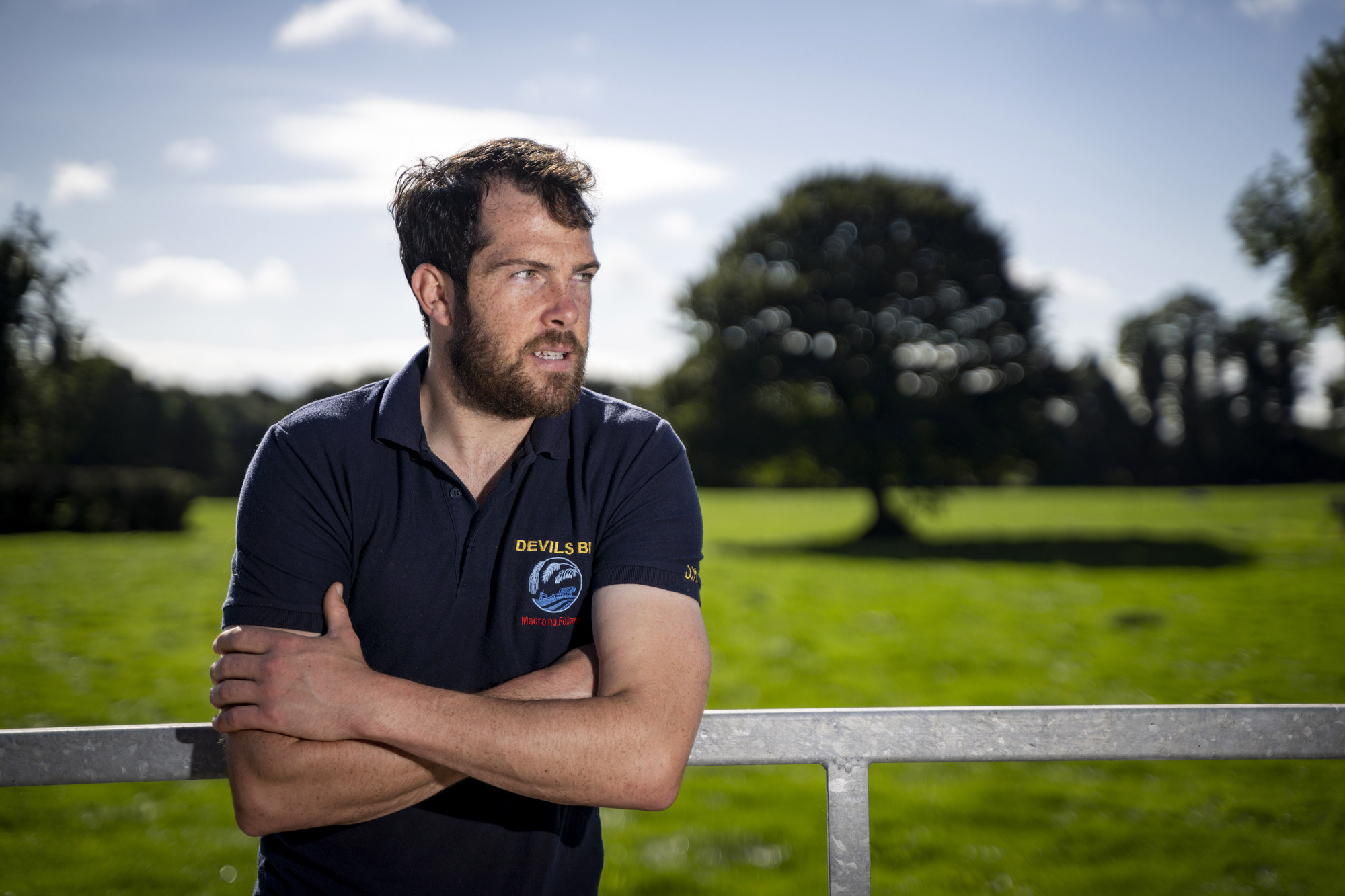
Irish farmers will shortly be an "extinct species" due to their age profile of only 5% under 35, warned Macra na Feirme national president John Keane.
Mr Keane said a rural Ireland without farming is a realistic proposition if the deteriorating age profile continues unabated.
"The lack of supports for young entrant farmers is tantamount to actively restricting access for new entrants to the industry. If we continue on this path, we will in effect clear the land," said the leader of 10,000-strong organisation, which advocates for young people to play an active role in making rural Ireland an attractive place to live and work.
"The land will go back to being unproductive. Allowing land to go fallow will increase our risk of food insecurity and not ensure that food is produced in the most sustainable way possible", he added.
Keane said the percentage of farmers under 35 stood at 13% 20 years ago. The ageing of farmers has been most pronounced in disadvantaged areas, especially uplands and peat soils. These areas have an estimated 41% aged over 65, compared to 30% overall (based on 2016 figures).
Cattle farmers are 39% over 65, compared to an average of only 15% of dairy farmers.
Warning that the proportion of young farmers entering farming is waning, the Macra president said cross-governmental remedial action is needed to develop a future for young farmers.
He was addressing the Oireachtas Committee on Agriculture, Food and the Marine, along with Macra chief executive Mike Curran and agricultural affairs chair Liam Hanrahan.
The Macra delegation called for installation aid and affordable access to unsecured finance and other incentives for young farmers.
Mr Keane said Ireland is the only member state that has not used EU installation aid or business start-up measures to help young people access farming careers, and they are also missing from the new CAP which starts in January.
Such measures can help young farmers overcome barriers such as access to land and finance; support and knowledge transfer; the possibility of a good lifestyle with financial security; the ever-changing policy environment; lack of investment for farm development; and lack of support for multiple generations on family farms.
Young farmers are also deterred by "the constant push for reduction of production, and restriction". And there is a lack of national investment and creation of pathways to areas young farmers are interested in, such as energy production; anaerobic digestion; agri-tourism; nitrogen efficiency systems; and organic farming.
"As young farmers, we have an ambition and target to engage in the practices that are needed from an environmental point of view, and to adopt the practices that will lead to higher economic returns, but will also be beneficial to the environment", said Mr Keane.
One of Macra's proposals to help young farming entrants is that a landowner who leases his property out to a farmer under the age of 35 is rewarded financially for this, and the young farmer is required to implement environmental measures.
Meanwhile, young farmers find themselves coming up against EU state aid limits for incentives such as tax reliefs to encourage the leasing of land and stock relief. EU rules limit claimants to €70,000 over a lifetime, for agricultural tax reliefs. "We are finding now, with the way the value of land is going, the prices of stock, etc, that our farmers are likely to reach that threshold and surpass it as time goes on", warned Mr Keane.
However, he welcomed the possibility of a new Strategic Banking Corporation of Ireland fund, which may be announced in mid-2023, offering credit ring-fenced for business owners under a certain age and for young farmers.
Mr Keane acknowledged the role of the land mobility service that Macra na Feirme started in 2015, through which about 60,000 acres have been transferred, with the help of support from FBD, dairy co-ops, and the Department of Agriculture, Food and the Marine. It links older farmers with younger farmers and with farmers who have no access to land.
However, long-term CAP funding for the land mobility service proposed by Macra was rejected by the DAFM, even though the European Commission recommended it as a model for facilitating land mobility in other European countries.
"Our Department of Agriculture, Food and the Marine chose not to include it in our CAP strategic plan. That was a glaring omission from our side of things in terms of supporting land mobility", the Macra president concluded.
Macra chief executive Mike Curran added: "If we were to leave farming as it is going and continue to exclude young farmers from coming into the industry, we are not far away from 30% aged over 70 at this stage, and we are four years away from that becoming 30% over 75."

BLACK FRIDAY
Already a subscriber? Sign in