Cork-based farm becomes first in Ireland to feed methane-reducing supplement
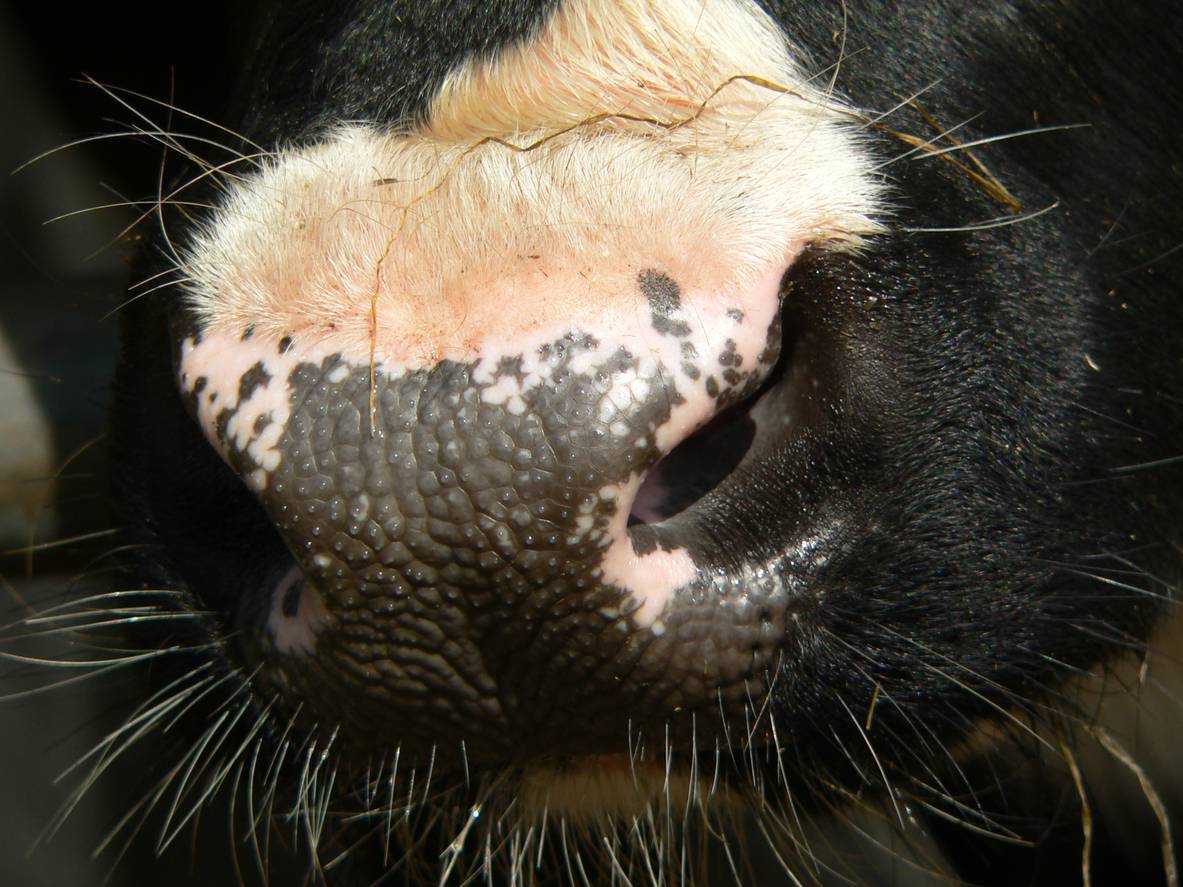
The supplement will be fed as part of a grass-silage based diet formulated by a ruminant nutritionist.
Cork-based farm becomes first in Ireland to feed methane-reducing supplement

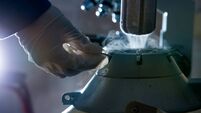
More than 52 peer-reviewed studies have been carried out on Bovaer since 2010, which promises to reduce livestock methane emissions by at least 30%. File picture.

A Cork dairy herd has become the first commercial farm in Ireland to feed a methane-reducing supplement branded as a “game changer” for agriculture.

More than 52 peer-reviewed studies have been carried out on Bovaer since 2010, which promises to reduce livestock methane emissions by at least 30%.

Trials on confined beef farms overseas, however, have found reductions of between 60 and 90%.

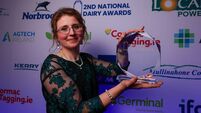
DSM won overall champion at the National Dairy Show’s Innovation Awards for the supplement.

Unlike many of the other potential methods of reducing methane emissions, DSM claims Bovaer will not reduce milk production, with dairy farmers Peter and Paula Hynes from Aherla, Co Cork, now the first commercial farmers on the island to use it.

The supplement will be fed as part of a grass-silage based diet formulated by a ruminant nutritionist, at a rate of 165g at 0.8% based on 24kg of dry matter intake a day.

Jason Meade, John Flynn and Adrian Packington from DSM pictured with Peter Hynes, the first commercial farmer in Ireland to feed Bovaer to his stock.

Peter Hynes explained: “I started looking into this around three months ago, I wanted to see if it did what it claimed because it sounded like the stuff of fantasy.

“When I got down into the detail, I was disappointed that we, as farmers, weren’t properly informed about the potential of it. I know there is a lot of work which must still be done on getting it to work on a grass-based system, but there are still a lot of farmers that could be getting that 30% reduction.

“At the moment, there are 30,000 cows in Europe being fed this – and we’re just a small Cork farm trying to do our bit.” 

At this stage, because there is no scheme to incentivise the use of the supplement, the Hynes family farm will have to pick up the tab, which works out at €7 a cow per month.

It doesn’t sound like much, but tallied up, it’d add an extra €8,400 a year to the feed bill of a 100-cow farm.

As a result, the family will start with a batch of 20 high-yielding cows.

However, Paula Hynes said she would like to see some backing.

“At COP 26, a lot of world leaders signed up to reduce methane emissions as fast as possible – Ireland signed up to that too. This product is available. It makes sense. So why isn’t it being supported by the Government?” she said.

John Flynn, business development manager for DSM in Ireland, said work was ongoing with processors, some of which are considering running feeding pilots for the supplement this winter.

“That’s so they can see for themselves that the addition of the additive into the dairy feed has no negative impact on production, milk quality or animal behaviour," he said.

"Scientists have developed a formula to determine with 95% accuracy the level of methane emissions reduction which can be achieved so that, a nutritionist can calculate the reduction without needing specialist equipment."

More in this section

Farming

Newsletter

Keep up-to-date with all the latest developments in Farming with our weekly newsletter.

Cookie Policy Privacy Policy Brand Safety FAQ Help Contact Us Terms and Conditions

© Examiner Echo Group Limited