Reputation of fixed milk schemes ‘damaged’
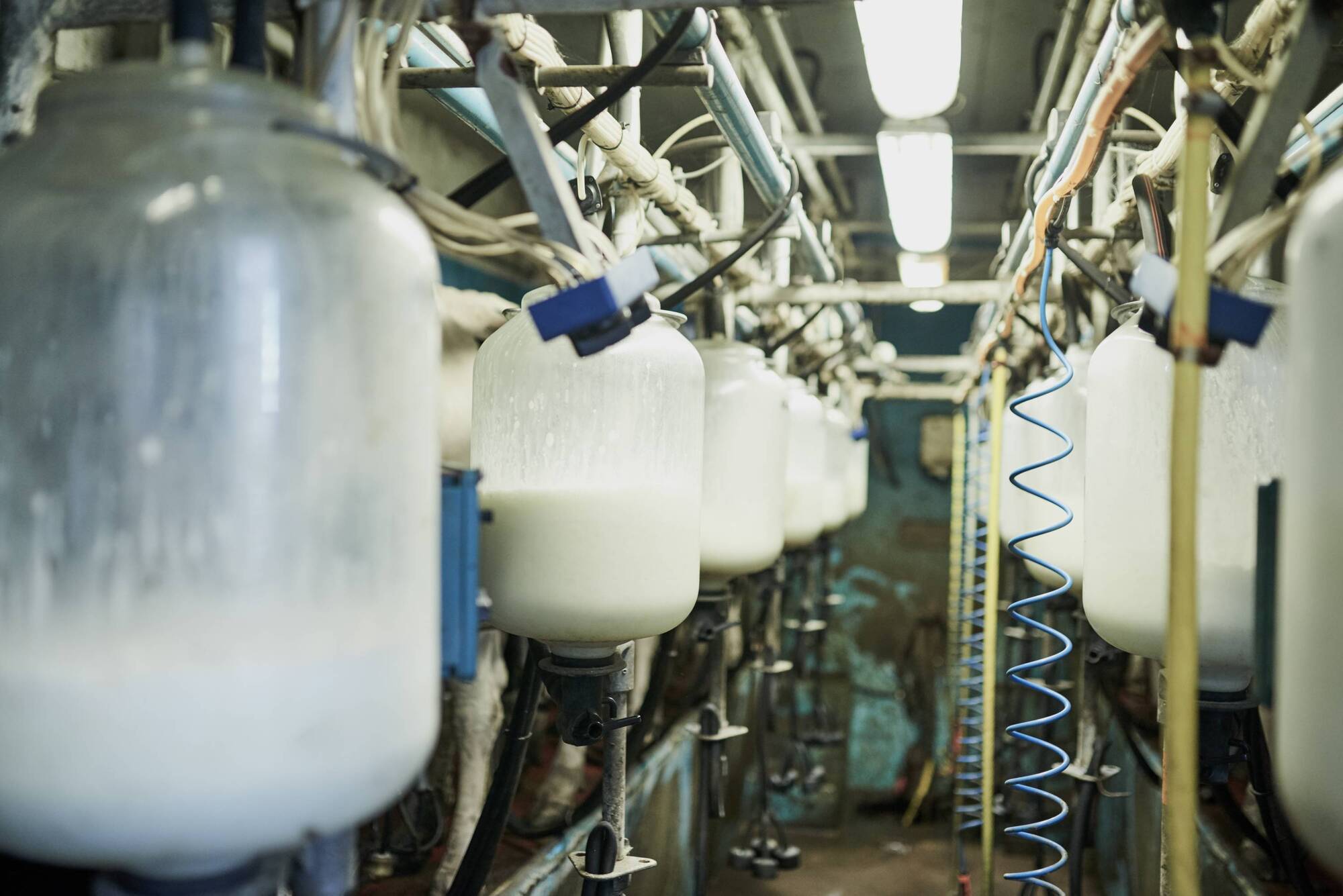
“People who are locked in for 70%, 80%, the majority of these people had huge borrowings."
Reputation of fixed milk schemes ‘damaged’

Fixed milk price schemes had been “very good for peace of mind”, and people locked in such high amounts “because dairy markets are volatile”.

The reputation of fixed milk price schemes has been “hugely damaged”.

Speaking during a panel discussion on milk price fixing and wise investments for economic sustainability at the National Dairy Show, farmer John O’Callaghan said that currently, “I don’t think there’s anybody who would walk into fixed price because the price of milk is so high at the moment”

“It’s only when it’s at rock bottom do people think about it,” he said.

“People who are locked in for 70%, 80%, the majority of these people had huge borrowings, and all of a sudden they see how much [they’re] losing out on would have covered all of their repayments easily.

“And that’s a huge pill to swallow.”

Peace of mind

Mr O’Callaghan added that fixed milk price schemes had been “very good for peace of mind”, and that people locked in such high amounts “because dairy markets are volatile”.

He said that farmers’ biggest problem “is the margin”, with input costs being so high.

AIB agri advisor Michael Murphy addressed the concern out there that “banks advised and recommended” farmers fix a portion of their milk.

“From our point of view, if a farmer comes to us and says ‘I’m thinking of fixing a portion of our milk’, it’s something we look at in the context of that risk profile,” Mr Murphy said.

“The bank’s role here is to manage risk as best we can.

“We can give an opinion, but we would never stipulate or make something conditional on a farmer, that’s a business decision.”

He added that farmers went into fixed price schemes “with the best of intentions, they were there to manage the risk, nobody ever foresaw where we were ultimately going to go with milk prices”.

“If we can get some kind of a system [with] margin protection, I think that would probably make it more appealing,” Mr Murphy said.

“Would anybody fix in the morning? We’ve heard horror stories, people losing out on money.

“But again, 32c/L or 33c/L was a good price to get, the problem is inputs.”
Robust sector

Meanwhile, Mr Murphy also told the event that despite “huge investment” over the last number of years on Irish farms, “the rate of payback is outpacing that”.

“Despite all the investment that’s going on, it’s very robust and in a healthy state from a leverage point of view, it comes back to farmers and their willingness to pay off debt as fast as they can, it’s a good trait,” he said.

“Overall, what we’re seeing is demand is good for investment despite all the increase in costs, and the outlook into next year is quite stable so we’re confident with where we are, it’s in a good space.”

He said that AIB is “hugely positive” towards the Irish dairy sector.

“It’s a very robust sector,” he said.

“Are there challenges? Of course there are, we all know that – nitrates, sustainability, all these challenges are coming down the track.

“We factor all this into a proposal, we are factoring in stresses and what-if scenarios.”

He added that there is a “perception out there about growth, expansion, more cows, and that that’s the only way to grow your income”.

“We don’t necessarily agree with that.”

“From our point of view, a key consideration we look at is farmers’ ability to manage grass.

“A key advantage we have in this country is grass, so we look at farms and how they’re investing in grass.

“We look at your health performance, herd management, grass management, all these factors feed in.”

Expansion

Farmer John O’Callaghan added that “back along, everybody was thinking about expansion and getting bigger and so on”.

“I think the costs are all so high people are holding tough, especially with nitrates, they’re thinking ‘am I going to be cutting back in numbers?’ and so on,” Mr Murphy explained.

“We chose to go down the road of robotic milking, and what we found is that we actually reduced the numbers of cows but have the same amount of milk, if not more.”

He said they got more efficient in what they had on the farm rather than expanding in numbers, and while they had the repayments to make on this new equipment, “the extra amount of milk we got” is significantly contributing to covering the costs.

“I think people are looking at outside factors as well, lifestyle, it’s getting harder and harder to get labour, so they’re looking at all these things as much as expansion and the cow themselves so they can be more efficient,” Mr O’Callaghan said.

“They’re also looking at where they can save on costs, whether it’ll be through solar energy or any of these things.

“I think probably the energy area is where people may invest in going forward, being more efficient in what they have, and perhaps going down the road of robotic milking or something like that.

“The idea of expansion, I’m not sure if it’s going to happen anymore,” according to Mr O’Callaghan.

More in this section

Farming

Newsletter

Keep up-to-date with all the latest developments in Farming with our weekly newsletter.

Cookie Policy Privacy Policy Brand Safety FAQ Help Contact Us Terms and Conditions

© Examiner Echo Group Limited