'Rapid Response Team' to monitor agricultural input costs
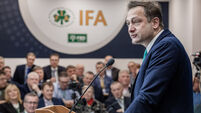
Minister for Agriculture, Charlie McConalogue said fertiliser merchants have indicated there are currently adequate supplies of fertiliser in Ireland. File picture: Conor Ó Mearáin
A Rapid Response Team has been established within the Department of Agriculture, Food and the Marine to actively monitor the impact of rising input costs in the farming and agri-food sectors.
Minister Charlie McConalogue told Clare TD Joe Carey in a written reply to a recent Dáil question that the team is headed by the Department’s Secretary General Brendan Gleeson.
Earlier this year, the minister established the National Fodder and Food Security Committee and tasked it with preparing a response to the emerging crisis in feed, fodder, fertiliser and other inputs. It was also asked to develop contingency plans and advice to assist farmers in managing their farm enterprises.
Mr McConalogue said fertiliser merchants have indicated there are currently adequate supplies of fertiliser in Ireland.
“However, there may be issues with the availability of certain products at times, and importers are active in securing alternative supply lines where necessary. Fertiliser affordability and availability is one of the biggest challenges facing our farmers at present,” he said.
The minister said there are sufficient supplies of animal feed at present, and importers are actively competing on the global market to ensure that supply continues uninterrupted. Animal feedstocks and imports are being monitored on a regular basis by the department.
Since the invasion of Ukraine, he said he had announced a number of measures valued at €91m to assist the agri-food sector. These included a €56m Fodder Support Scheme, €20m in two packages for the pig sector, €12m for the tillage sector and €3m for the horticulture sector.
Mr McConalogue explained that €15.8m of these supports for the pig and horticulture sectors are funded from the European Union's exceptional package for farmers most impacted by the crisis. He assured Deputy Carey was acutely aware of the challenges over the cost of inputs and doing business.
“Over the past year, significant price rises have occurred primarily in the energy sector, with natural gas and oil prices reaching record highs.
“These price rises have significant implications across all sectors, including the agri-food sector,” he said, noting that these price rises have been amplified by the impacts of Russia’s illegal war in Ukraine.
Mr McConalogue said 2021 was a strong year for family farm incomes which were up by 26% to over €34,000. “Teagasc has forecast that a decline in 2022 is now highly likely, as output price increases will fail to offset the rise in production costs," he said.
Significantly higher production costs will be a feature across all sectors in 2022, with higher fertiliser, feed and fuel prices leading to an increase in agriculture input costs.
“The current market outlook for output prices is uncertain, with significant upward pressure apparent, but this is unlikely to cover the additional input costs for many farmers.
“I meet with stakeholders on an ongoing basis to discuss the impact of the Ukraine crisis on Irish agriculture and supply chains,” he said.
IFA National Grain Committee Chair, Kieran McEvoy, has meanwhile called for the introduction of a fodder crop incentive scheme for tillage and sheep farmers.
With favourable weather in July, progress on winter barley is now running seven to 10 days ahead of a typical year.
Mr McEvoy explained that while this offered the opportunity for tillage farmers to sow forage crops at an optimal time, a financial contribution towards sowing and fertiliser costs is urgently needed to offset establishment costs.