New rates announced for organic farms
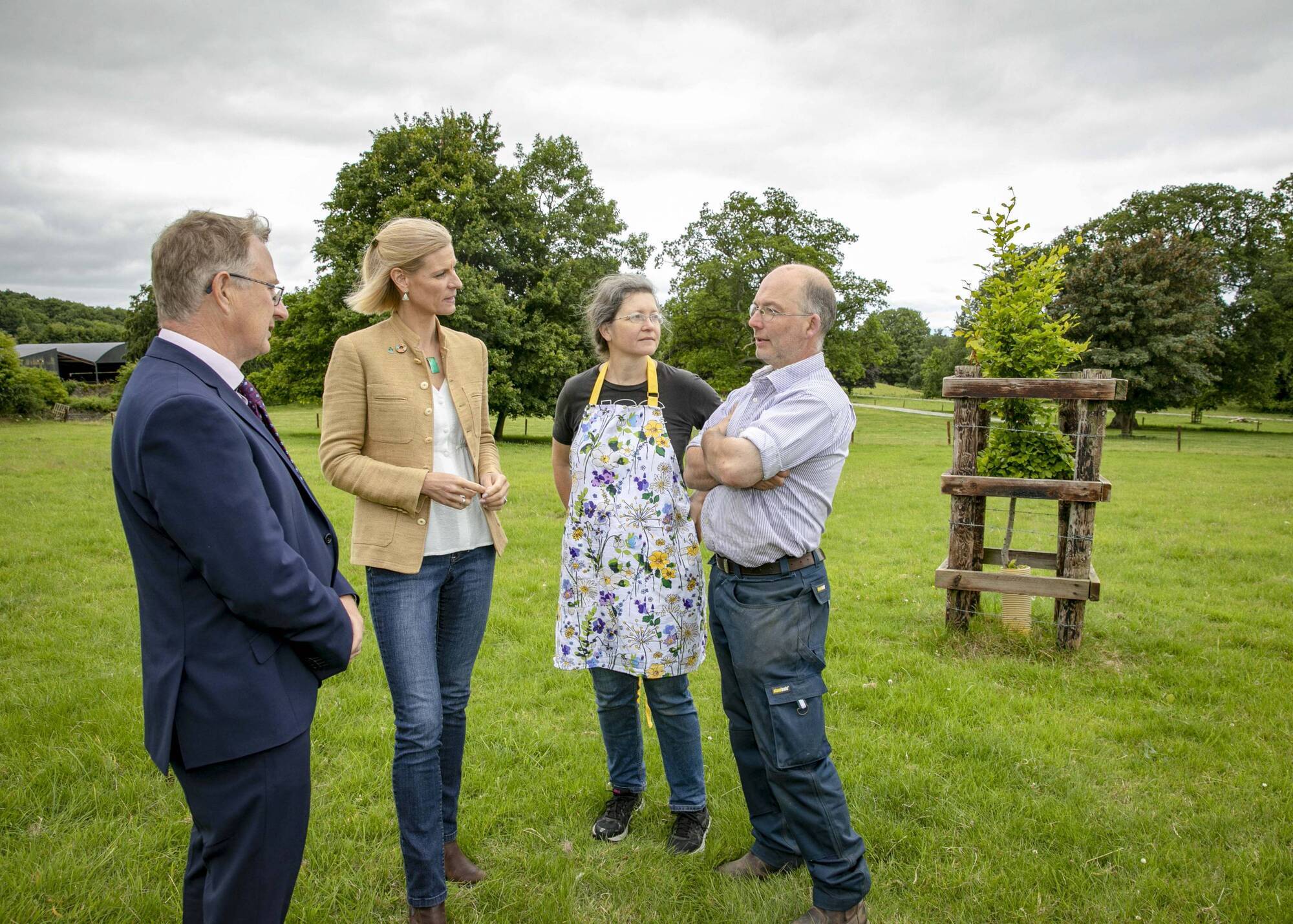
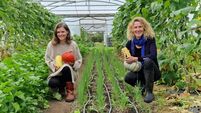
At today's announcement was Teagasc director Frank O’Mara; Minister of State at the Department of Agriculture, Food and the Marine Pippa Hackett; and Ali Duck and Dominic Leonard of Castlewood Organic Farm, Durrow, Co Laois. Picture: Fennell Photography
Higher payment rates for converting to organic farming have been announced.
These enhanced rates, subject to approval by the European Commission as part of ongoing discussions on approval of Ireland’s CAP Strategic Plan, could see drystock farmers getting €300 per hectare for up to 70 hectares during the two years of conversion, and €250/ha for years three to five of the scheme.
For dairy farmers, payments of €350 per hectare to make the switch to organics on 70 hectares or less can be expected, followed by €300 per hectare for the remaining years on the scheme.
Rates for tillage farmers will be €320 per hectare during the two-year conversion period, and €270 per hectare thereafter.
Horticulture farmers will see payments of €800 if they join the scheme, and are in line to receive €600 per hectare once converted.
Meanwhile, for lands over 70 hectares, the payment during conversion will be €60 per hectare, and €30 per hectare after that.
The new rates would apply from 2023.
Participation payment
In announcing these new rates, Minister of State at the Department of Agriculture, Food, and the Marine Pippa Hackett said that the budget proposed for the Organic Farming Scheme is a five-fold increase on what was previously available.
“Feedback from the CAP consultative committee, the reconvened Organic Strategy Forum, and interested stakeholders has made it clear that enhanced payment rates are needed to support farmers converting to and maintaining organic farming,” Ms Hackett said.
“Organic farmers incur additional expenses on an annual basis, such as attending training and constantly upskilling themselves in soil health and animal management.”
In recognition of these costs, Ms Hackett is proposing an annual participation payment which will be €2,000 in the first year of conversion and €1,400 a year thereafter.
“This will support farmers as we achieve the targets set out in the Programme for Government of farming 330,000 hectares organically,” she added.
“I am confident that these new rates will entice in many new farmers to organic farming and I would encourage every farmer to consider it, and be ready for when the new scheme opens this autumn.”
Meanwhile, Gillian Westbrook, Irish Organic Association chief executive said that an “attractive and reliable” scheme can play a “pivotal role” in supporting farmers.
“Alongside the Organic Farming Scheme, it is essential that the further development of Ireland’s organic policy leaves no stone unturned,” Ms Westbrook said.
“The Irish Organic Association will continue to work with Government and other interested stakeholders to stimulate all key policy levers, from developing new markets and supply chains in Ireland and with our partners across Europe, and a strong agricultural knowledge and innovation system for organics, to ensuring meaningful prioritisation under relevant CAP supports and other policies.”
Teagasc director Frank O’Mara said the body is increasing staff in the team providing organic advice, through the recruitment of a number of additional advisers and a specialist.