The agri invention that couples Italian design with Irish practicality
The agri invention that couples Italian design with Irish practicality

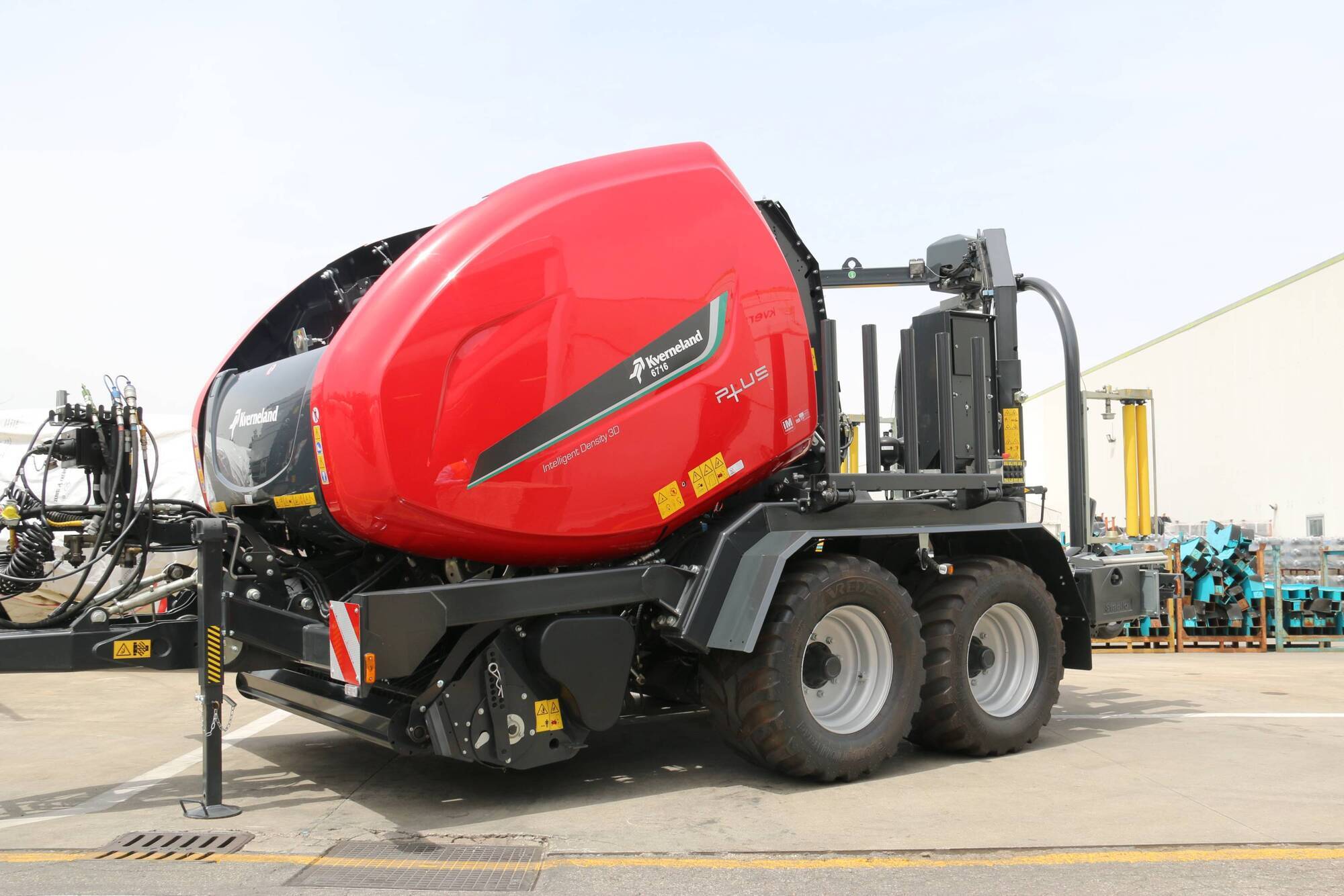
Kverneland's FastBale system pictured at the factory in Ravenna, Italy

Nicknamed the “Ferrari of balers” – Kverneland's FastBale system has a big reputation to live up to.

The non-stop baler-wrapper combination includes a 10-roller front chamber and 18-roller main chamber, with some shared rollers in between and wraps at up to 45RPM.


But while the Irish Examiner saw the FastBale coming out of the factory at its home in Ravenna, the Italian beauty can trace its origins back to an Irish farm workshop, where it was invented by agricultural engineer Seamus Varley.

Mr Varley was helping out with his family’s contracting business and changing a roll of netting when he realised the space over the rotor could be used to add another chamber to eliminate the stop-starting element of baling. 

It was the start of a 10-year development process that saw Varley spend countless hours tinkering with the design with the help of Kverneland’s team in Ravenna, Italy.

As Kverneland’s baler market was less developed in Ireland at the time, it was decided to develop and first launch the model in Italy under the Vicon label. However, today a few earlier adopters have already brought the first FastBale machines to Ireland.

The non-stop technology is also used in other Kverneland balers

The non-stop technology has also been used for other balers in the range.

Because there is also no stopping and starting, there is less wear and tear on the machine.

Sales reps claim a contractor making 400 bales could also expect to save an average of an hour and 40 minutes.

Luc Souquet, Kverneland’s Product Manager for Bale Equipment, explained the ambition behind the new generation of balers was to simplify farmers’ lives – especially for the driver.

“We did that with automation,” he said.

“Our TIM [Tractor Implementation Management system] is cross-branded so any brand of implement can work with any brand of TIM-ready tractor. The technology allows the implement to control certain tractor functions.

“In the case of the baler, it actually saves eight operations per bale out of 10. So the only thing the driver has to worry about is steering above the swards and restarting the tractor after bale ejection.

“In a long day of 500 bales, it saves around 4,000 operations for the driver – checking on the terminal or operating something in the cab.

“We control the RPM for the PTO – during the binding and bale ejection, we lower it. We control the hydraulic valve for tailgate open and close and we control the forward speed also to pause it during the binding time.

“It’s all about comfort for the operator first and foremost. It’s also a help, of course, in improving productivity over long days. And it’s also reducing the wear and tear and fuel consumption during binding and ejection because we are reducing the RPM.

“It’s basically lowering the operation cost of operating the machine.”

Two machines in one

The FastBale takes that a step further – also wrapping the bales within the same chamber.

There’s no stopping and starting between bales and wraps perpendicular to the film.

Speaking to the Irish Examiner, Mr Souquet explained: “The FastBale is very different than any standalone baler. It has the capability to bale nonstop. IN a standard baler. You have to stop the tractor going forward during the binding and baling.

“It saves between 15 to 18 seconds per bale – that’s a 25% increase in productivity from time-saving alone.

“Then there is also the productivity increase from combining the two chambers in one machine, which makes the nonstop possible.

“We make a ‘pre-bale’ [a miniature, extremely compact bale] in the first chamber. When it’s full, we transfer that to the second chamber where the bale is finished. So we have a double compression, and that allows higher density.”

It’s estimated that depending on the conditions, up to an extra 8% gain in bale density is possible as a result of the innovation.

“If you take the additional 8% in density along with the 25% reduction in time, then you are 30-35% above the standard baler,” Mr Souquet said.

The machine, which is capable of using either net binding or film, has three advantages: Firstly, better constraint of the bale – meaning it keeps its shape better; secondly, a better air-tight seal because the machine wraps perpendicular to the direction the bale is binded in, and finally, where film is used instead of net, the waste can go in the same bin together, rather than having to be separated.

The biggest drawback appears to be the cost - around €137,000 off the rack.

“Yes, you spend more money but you have a lot of comfort, then you have the productivity gain too. You really have to think of it as two machines in one,” Mr Souquet said.

“The machine is really well received by the farmers who have tried it.”

x

More in this section

Farming

Newsletter

Keep up-to-date with all the latest developments in Farming with our weekly newsletter.

Cookie Policy Privacy Policy Brand Safety FAQ Help Contact Us Terms and Conditions

© Examiner Echo Group Limited