Update: Foot-and-mouth ruled out on UK farm
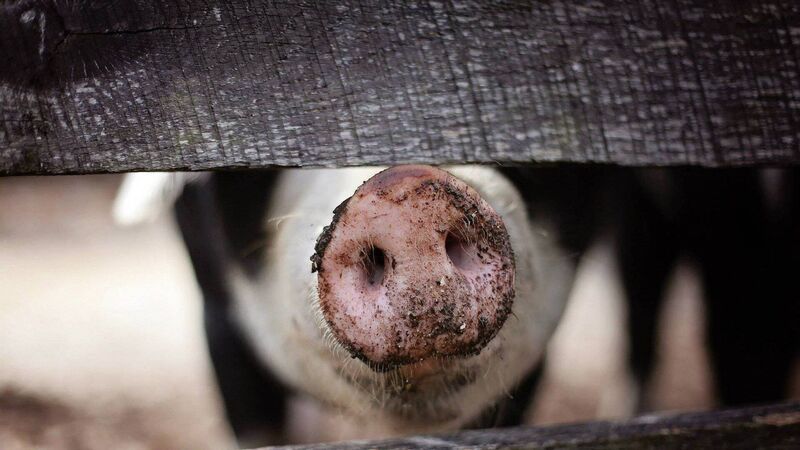
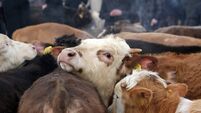
Foot and mouth disease affects cloven-hoofed animals including cattle, sheep and pigs.
Following reports of a possible case of foot-and-mouth disease on a pig farm in the UK, the Department for Environment, Food and Rural Affairs (Defra) has ruled out the presence of the disease.
A spokesperson told the Irish Examiner that investigations into other possible diseases continue.
A temporary control zone had been declared on Thursday night due to a suspected case of the disease, and samples were collected for testing.
Defra said that following suspicion of vesicular disease in pigs, and as a precaution to prevent the spread of disease, a 10km temporary control zone had been declared around the farm near Feltwell, Kings Lynn and West Norfolk, Norfolk, England.
The spokesperson said that testing undertaken at the Pirbright Institute allowed Defra to rule out foot-and-mouth on this premise in Norfolk.
However, there is still an ongoing investigation into other vesicular diseases of pigs. Further testing is being conducted to rule out their presence.
"In line with our disease prevention response plan, we have retained restrictions on pigs in the area until the further testing is complete," the Defra spokesperson said.
"Animal and Plant Health Agency will inform nearby premises of the developments in this case."
The Irish Farmers' Association (IFA) said earlier today that the suspected case was a concern for Ireland.
IFA animal health chairman TJ Maher said that it is "critical" that the Minister for Agriculture Charlie McConalogue and his officials "are in close contact with their counterparts in Northern Ireland" should a case have been confirmed.
"We must have an all-island approach to keeping the disease off the island," he added.
Foot-and-mouth disease affects cloven-hoofed animals including cattle, sheep, and pigs. However, it does not affect humans.
The last outbreak in Great Britain was in 2007.
The disease is a notifiable animal disease there and, if it is suspected, it must be reported immediately by calling the Defra Rural Services Helpline.
No one can move any susceptible animal in or out of a temporary control zone, except where the movement is through the zone without stopping, or is necessary to complete a journey started before the creation of the zone.
These measures were in force since 10pm on Thursday, June 23.
Restrictions have been retained on pigs in the area until the further testing is complete.
Foot-and-mouth is highly infectious, and animals can catch the virus through direct contact with an infected animal, Defra said.
The disease can also pass indirectly through equipment, vehicles, people, clothes, mud, bedding, and any other item that has been in contact with infected animals.
The virus is present in the fluid of the blisters that animals develop. It can also be found in their saliva, urine, dung, milk and exhaled air before signs of the disease appear.
According to Defra, pigs rarely develop mouth blisters as a result of foot-and-mouth disease, with lameness being the main sign of the disease.
Signs of the disease in pigs include sudden lameness, which may spread quickly among the herd; loudly squealing from pain; tendency to lie down and unwillingness to move; and reluctance to feed.
Sometimes blisters do appear on the upper hedge of the hoof where the skin and horn meet, snout, and tongue.
People can help prevent the disease by being familiar with the clinical signs so that it can be reported immediately if suspected, and by practising strict biosecurity on their premises.
If a suspicion of foot-and-mouth disease is reported, Animal and Plant Health Agency vets will investigate.
If the disease is confirmed, the outbreak will be controlled in line with the contingency plan for exotic notifiable diseases and the foot-and-mouth disease control strategy for Great Britain.