What will New Zealand's new livestock 'burp tax' mean for farmers?
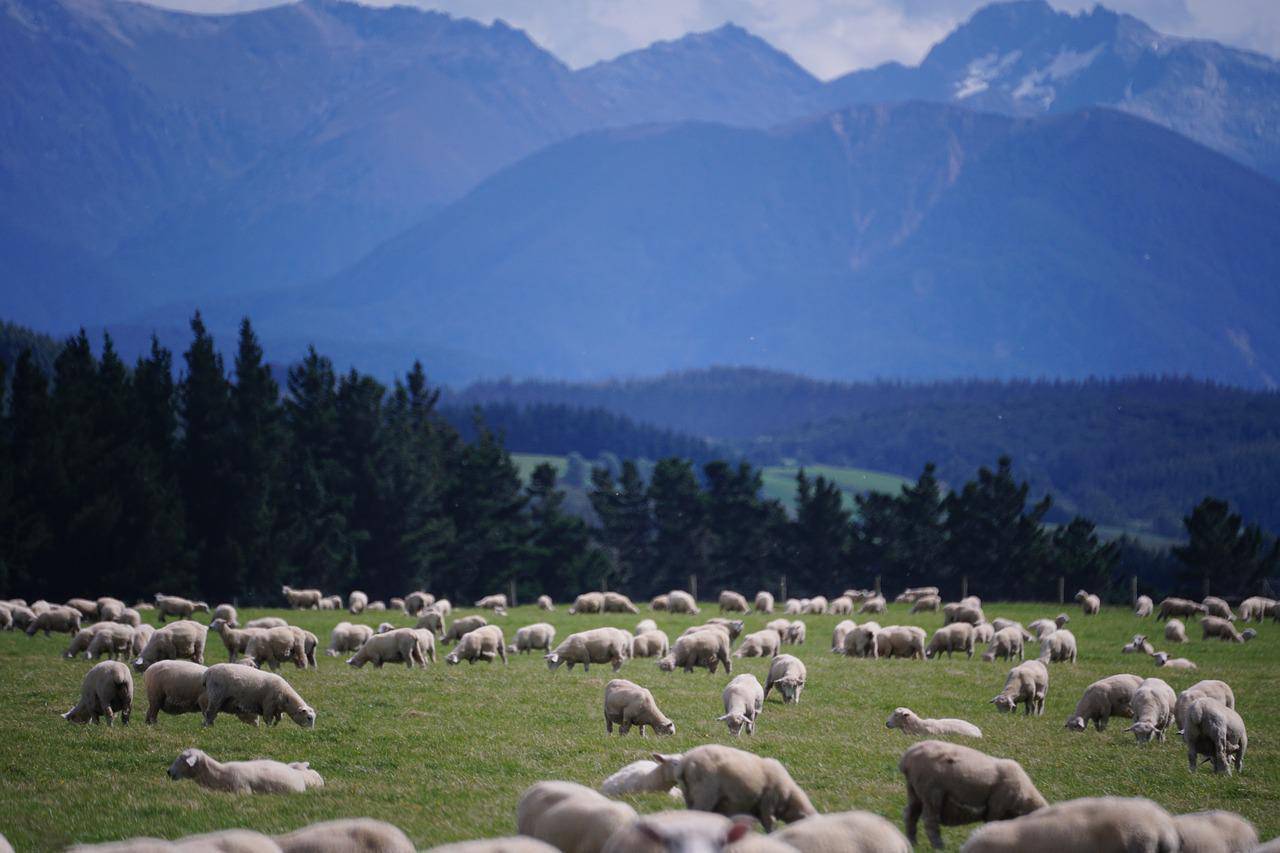
New Zealand sheep farm
New Zealand's livestock emissions levy could have the potential to be copied in Ireland if it proves successful. But what exactly is involved?
Admittedly, there has been no talk here of such a levy. However, there are so many parallels between Ireland and the land down under, that many farmers locally are paying close attention.
The politics of climate in New Zealand are similar to Ireland's. Making the hard decisions is a government made up of a major political party (Labour), which had an overall majority win in the 2020 general election) in a co-operation agreement with the Green Party.
Green Party co-leaders James Shaw and Marama Davidson secured ministerial posts, with Shaw installed as Minister of Climate Change.
As in Ireland, agriculture is a major source of emissions. Here, agriculture has about 35% of the emissions which cause global warming, in New Zealand, livestock alone generate about half of the country's greenhouse gas emissions.
The government, led by Prime Minister Jacinda Arden, says it was elected to take action on climate change, and its aim for agriculture and other primary industries is to be environmentally sustainable and globally competitive, offering the more climate-friendly produce that export markets start to demand.
Minister Shaw is under intense pressure from Green Party members to deliver on climate change, the party's core reason for being in politics and in the Government. Progress has been slow, for which Shaw blames his Labour colleagues in government.
Shaw has said it is entirely possible for farming to be both profitable and have lower emissions. He has praised the Silver Fern Farms meat company for their success with a net-zero beef product in the US market.
As in Ireland, there are diametrically opposed factions in the New Zealand climate debate, with polar opposite views. On one side are farmers, who say they are the most efficient in the world, with the lowest emissions per kg of product. On the far side are environmentalists.
In the middle is the Government, and another parallel with Ireland is that the Government tries to bring the primary sector, including agriculture, on board for its climate plans (it is happy to delegate difficult farming emissions decisions to farmers).
That is why it has allowed an agricultural sector partnership to develop a way to pay for their emissions. What they have come up with includes the flatulence tax on livestock, as part of an agricultural emissions pricing system alternative to the already-legislated entry of agriculture into the country's Emissions Trading Scheme (ETS).
If the partnership's recommendations to the Government are not accepted, agriculture may have to go in the scheme, which the industry says would be disastrous for farmers.
As it stands, the fossil fuel-derived ETS would undervalue on-farm sequestration, and wouldn’t recognise methane’s different warming impact. The ETS carbon price could keep rising, reducing farming viability, especially for sheep and beef farming.
By the end of 2022, the Government will decide how emissions from agriculture are priced. Advising it will be the Climate Change Commission.
Agricultural emissions are legislated to enter the ETS by 2025. The Government can bring them in sooner if it believes the agriculture partnership has made insufficient progress in preparing the farming sector for its farm-level emissions pricing (flatulence tax).
The initially proposed flatulence tax for 2025 is for methane.
It is expected to cost farmers ; and 32.5c to 43.4c for every beef and dairy cow. Deer and goat farmers will also be taxed.
There will be a separate price for nitrous oxide. Farmers would calculate their individual methane and nitrous oxide emissions based on what they’re doing on-farm, not based on national averages.
Farmers can get credit for their sequestration (compared to a 1990 baseline), and for using technologies and practices that reduce emissions.
The partnership pushed for the price to be as low as possible while achieving emission reductions.
The tax money raised will go back into research and development for further agricultural emissions reductions.
The Government is considering these recommendations, and public consultation is also expected later this year.
Already, the Green Party said this agricultural sector partnership plan "raised more questions than answers", and it’s not clear if or how it will reduce emissions to meet targets for a safe climate.
Meanwhile, many agriculture industry lobbyists welcomed Minister Shaw's first Emissions Reduction Plan, while environmentalists were furious, particularly about €428m from the Emissions Trading Scheme for research to help farmers reduce methane emissions.
Political commentators say governments tend to believe that "what's good for farmers is good for New Zealand" (because farm and food produce accounts for 82% of exports, and 11.2% of GDP).
Nevertheless, it seems to be on the way to being the first nation in the world to force its farmers to pay for their emissions, as part of the government's commitment to net-zero by 2050.
New Zealand has ended new offshore oil and gas exploration, upgraded schools and hospitals to run on clean energy, made it easier to buy electric cars.
With the country recently hit by multiple floods, severe storms, droughts and wildfires, the pressure is on for climate action, and agriculture has to carry its share of the load.