Agriculture minister pleaded with ‘to do something' for those who can't grow own fodder
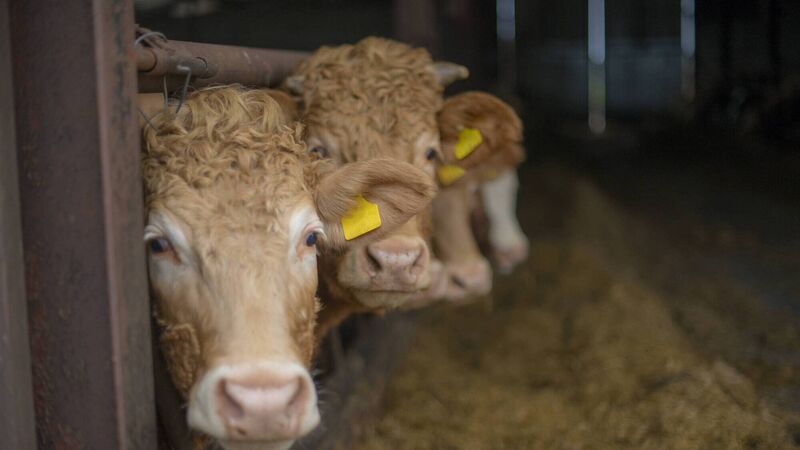
Agriculture Minister Charlie McConalogue said scheme for growing silage 'will be a really important support' to encourage farmers to grow
Agriculture minister pleaded with ‘to do something' for those who can't grow own fodder

Farmers are 'under savage pressure' with the increased costs of fertiliser, fuel and electricity, Danny Healy-Rae said.

Independent TD for Kerry Danny Healy-Rae has pleaded with the agriculture minister “to do something for the farmers” who cannot grow their own fodder.

He told the Dáil that farmers are “under savage pressure” with the increased costs of fertiliser, fuel, and electricity, and welcomes the €1,000 on up to 10 hectares to support farmers to cut hay and silage this year, and “while it is not an awful lot, it is a lot in a way”.


“There are many farmers in east and south Kerry who do not cut their own fodder on their own land because the land is not suitable,” Mr Healy-Rae said.

Agriculture Minister Charlie McConalogue said "we cannot do everything but we are working hard to understand the challenges there".

"I have been engaged closely with the fertiliser suppliers to ensure security of supply. They have worked very hard to ensure that is the case," Mr McConalogue added.

Mr McConalogue said the scheme for growing silage “will be a really important support” to encourage farmers to grow.

“It applies to beef farmers, sheep farmers, and those with tillage land who grow fodder,” he continued.

“It will be paid in the latter part of the year. It is not possible to pay it in advance.

"Knowing that support will be there gives confidence to the sector to make preparations to grow the grass, grow the fodder, and will help to cover the cost of that.”

Concerns over beef supply

Meanwhile, Fianna Fáil TD Jackie Cahill raised concerns in the Dáil related to beef supply for the winter months.

“We have built up contracts around the world for beef on the basis of a 12-month supply,” Mr Cahill said.

“With the concentration on cereals this winter, farmers will be extremely reluctant to feed cattle in sheds and the supply of beef for those hard-won contracts around the world will be under pressure."

Mr McConalogue said there would be an "important relationship between processors and farmers in preparing for next winter and making sure farmers are well supported to produce beef next winter".

Beef chairman of the Irish Cattle and Sheep Farmers' Association Edmund Graham has called on the meat industry to begin negotiations with their customers that will deliver at least €7.50/kg for beef for winter finishing systems.

He said the ICSA was "putting retailers and processors on notice" that the escalation of costs means that "anything less will be a complete loss-making venture, on the assumption that ration is around €500/tonne".

“ICSA has been analysing figures for winter finishing and the results are a big wake up call," Mr Graham said. 

"We see dairy farmers getting well in excess of 50c/L for low-cost summer milk. 

"It now needs to be acknowledged that winter finishing is by far and away the highest cost system of farming, and it is also the highest risk. 

The beef industry cannot expect to continue its current model and expect farmers to take all the risk. 

"ICSA is now calling on beef processors to make plans for guaranteeing minimum prices for winter finishing, which should be linked to cattle ration price.”

The ICSA's view is that price is €7.50/kg "on the assumption that ration is €500/tonne and if ration goes higher, there should be additional increments on the beef price". 

"The reality is that store prices are substantially higher than last year and rising on a weekly basis," Mr Graham continued.

"Store producers also need higher prices to cope with escalating costs but this all feeds into the economics of winter finishing.”

The ICSA in recent days has also said that unless processors "up their prices" for organic cattle, there is "little hope of enticing livestock farmers to switch to organics".

"It is more expensive to produce organic beef, due to lower volume of farm output, and farmers need to have confidence when they go to sell their produce that this will be taken into consideration," organics chairman Fergal Byrne said. 

"There is absolutely no incentive for farmers to go to the extra expense of producing organically when those producing conventionally are getting paid more.”

More in this section

Farming

Newsletter

Keep up-to-date with all the latest developments in Farming with our weekly newsletter.

Cookie Policy Privacy Policy Brand Safety FAQ Help Contact Us Terms and Conditions

© Examiner Echo Group Limited