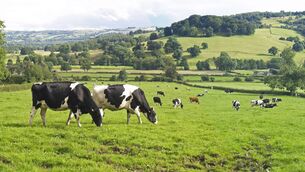
150-cow farms to be included in proposed EU Emissions Directive
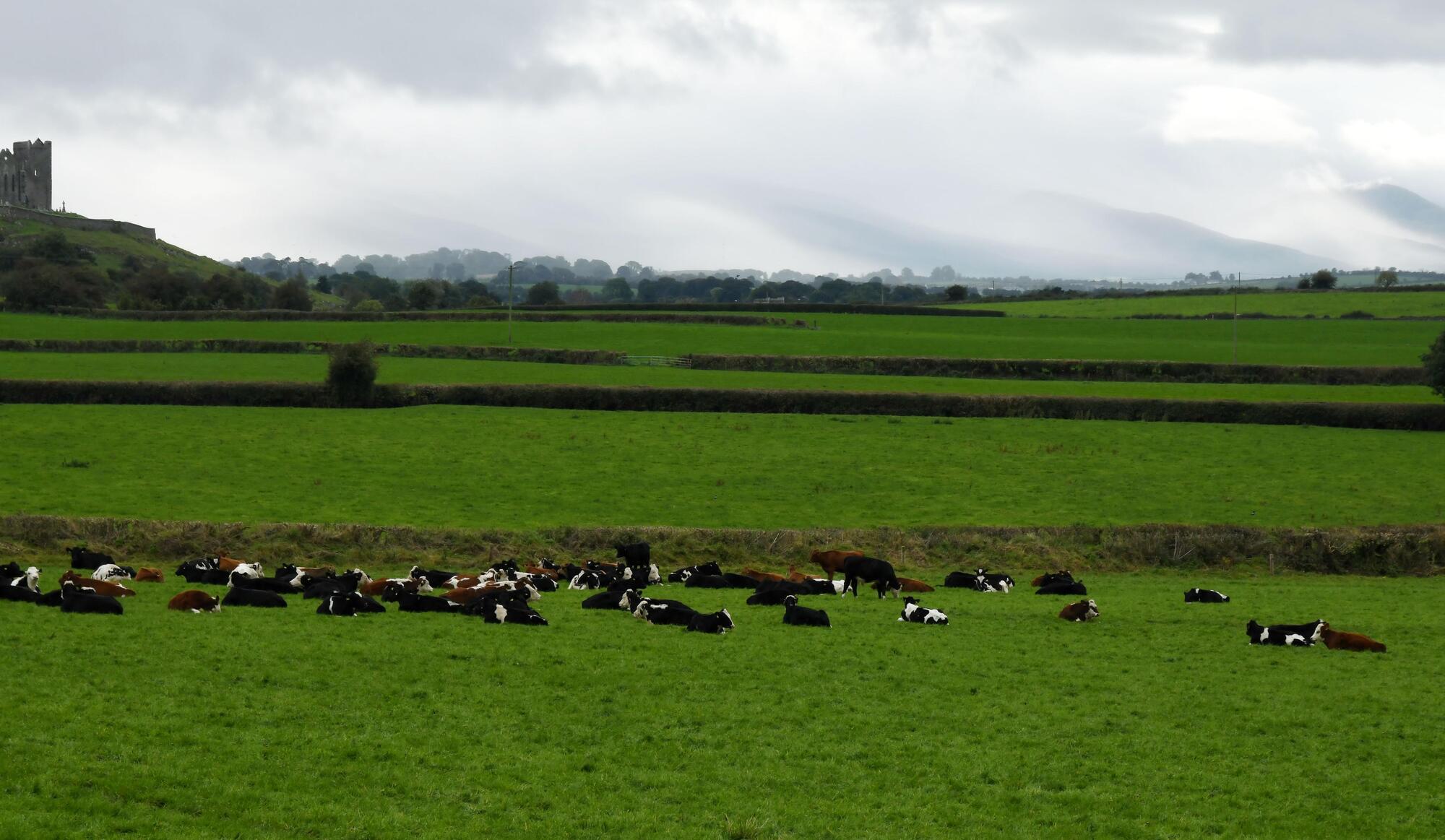
IFA President Tim Cullinan said: “It’s outrageous to be including livestock grazing in fields within the scope of this directive." File photo: Denis Minihane
It will be 2027 at the earliest before 165,000 additional EU farms (out of a 10.5 million total) must operate under industrial emissions permits, if this European Commission proposal is approved by the European Parliament and by the EU Council.
The proposal includes the largest 13% of Europe's livestock commercial farms in the Industrial Emissions Directive, which currently covers 30,000 large industrial plants and around 20,000 large poultry and pig farms.
Industrial operators and farmers newly brought under the Directive will have respectively four years and three-and-a-half years to become compliant with emissions limits.
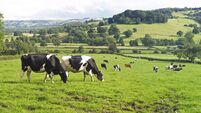
The new sectors proposed for Directive coverage could include cattle farms for the first time, and all farms with over 150 livestock units (equivalent to 150 adult cows, 375 calves, 10,000 laying hens, 500 pigs, or 300 sows). IFA President Tim Cullinan said the proposal is completely over the top and must be binned.
“It’s outrageous to be including livestock grazing in fields within the scope of this directive, as well as drastically cutting the limits on the pig and poultry sectors,” he said. “We have a food security crisis and the Commission is focusing on making food production more difficult.”
ICMSA President Pat McCormack said the proposal showed the extent of the disconnect between bureaucratic abstraction and reality. "This is the latest and possibly most counter-productive of a long, long, line of damaging and destructive ideas that don’t solve anything and make things worse," he said.
He said family farms would be left struggling to meet this latest layer of regulatory costs (an industrial emissions permit would cost €2,400 per year per farm).
Executive Vice-President for the European Green Deal, Frans Timmermans, said: “By 2050, economic activity in the European Union should no longer pollute our air, water and the wider environment. Today's proposals will enable important reductions of harmful emissions coming from industrial installations and Europe's largest livestock farms.
The 13% of Europe's commercial farms to be covered by the directive are estimated to be responsible for 60% of the EU's livestock emissions of ammonia and 43% of methane. The health benefits of this extended coverage are estimated by the EU at more than €5.5 billion per year.
Member States will have 18 months to transpose the directive into national legislation if the proposal is adopted by the European Parliament and by the Council.
The EU says the directive reduced emissions by between 40% and 75% from Europe's largest industries and farms, in the last 15 years, and heavy metal emissions to water declined as much as 50%.
French agriculture minister Julien Denormandie led criticism of the proposal, warning it “does not take into account the reality of our farms.” He said France and other member states have expressed similar reservations.
The EU farmers’ lobby, COPA-COGECA, suspected the 150 livestock units is a low level to allow scope for bargaining with the Parliament and Council, but said it sends a catastrophic message from the Commission to tens of thousands of farmers who struggle daily for Viability.
COPA president Christiane Lambert said:
COPA said more than 90% of broiler production in Germany and Finland, or of pig, beef and dairy farms in France, fall within 150 livestock units. Agriculture Commissioner Wojciechowski has claimed credit for increasing the threshold initially set at 100 livestock units to 150.
The proposed revision was welcomed by environmental NGOs. “Requiring these giants of industrial livestock farming to obtain a pollution permit is the bare minimum for the EU”,” said Marco Contiero, Greenpeace's food and agriculture director.