Ireland needs to ‘grow up’ over stigma towards hemp industry
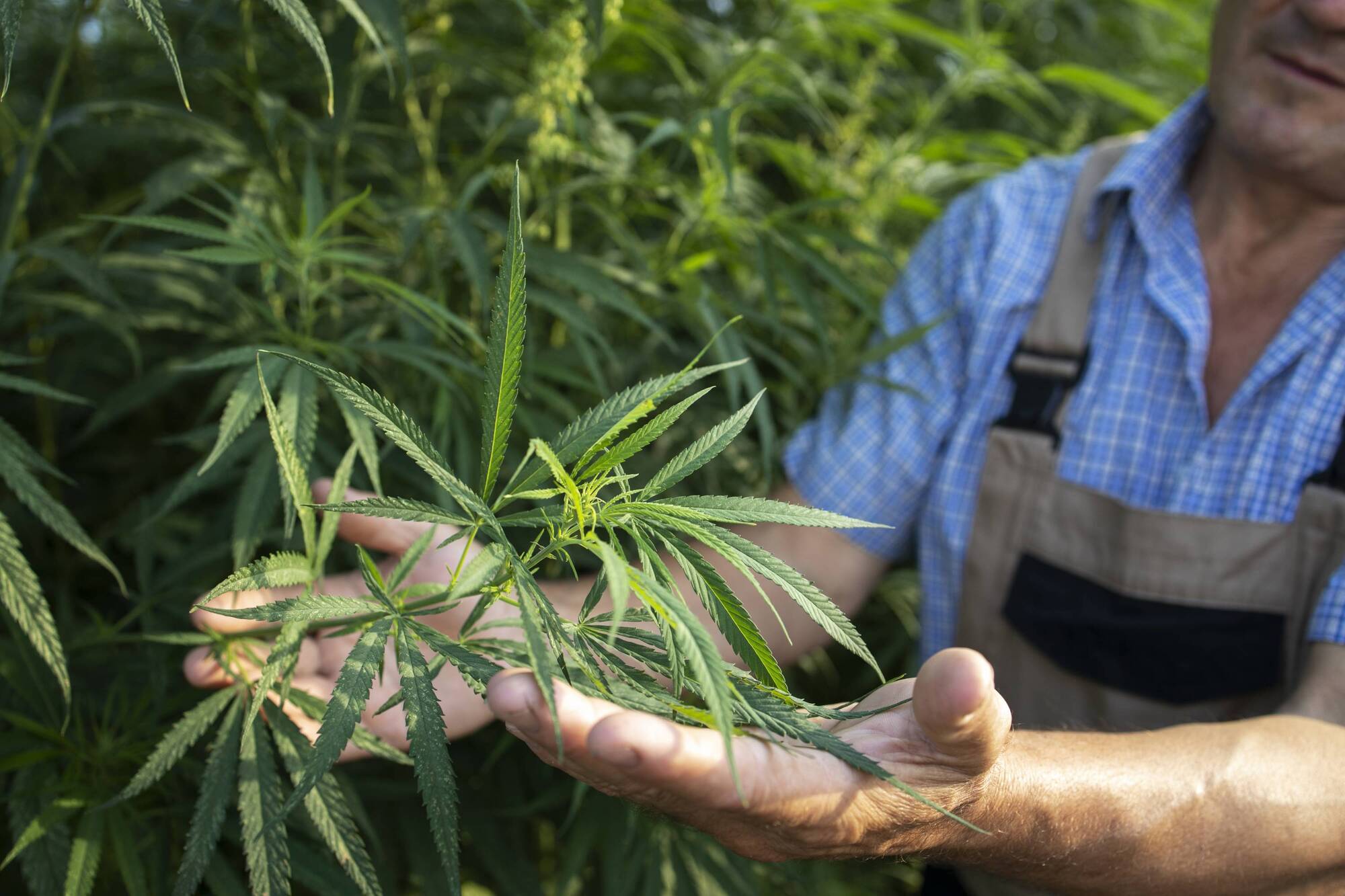
'Hemp is doing good things, it’s helping and healing people'
The conference heard hemp crops are ‘not so simple to sell’ because markets are ‘emerging and only developing’ and due to legislation.

The conference heard hemp crops are ‘not so simple to sell’ because markets are ‘emerging and only developing’ and due to legislation.

The emerging hemp industry in Ireland is in a “catch-22”, according to Robert Johnson of Hemp Cooperative Ireland.

Speaking to the Irish Examiner at the recent Irish Hemp Event held at Teagasc’s Ashtown Food Research Centre in Dublin 15, Mr Johnson said that unless more hemp is grown, there won’t be the processing facilities put in place on a scale, but that farmers interested in growing it also need the stability of facilities and a market.

He said that the co-op has found young farmers and entrepreneurs to be “really engaged” with the crop, and can see potential uses for it.

“They’re incredibly dynamic, they’re thoughtful and they ask the right questions and they take risks; they haven’t been beaten down the years, they’ve got the youthful vigour,” Mr Johnson said.

Younger people don’t seem to get the stigma. Hemp is doing good things, it’s helping and healing people.

“It’s unusual that we’re so far behind our European neighbours.”

He said some of the problems lie with educating people and then allowing for the removal of “the stigma, and then moving to more regenerative farming” in Ireland.

“Farming is at risk and I’m sure all the farmers know that,” he said.

“It’s a viable crop, it can add value to your farm, that’s the biggest thing. People are fixated on the THC [tetrahydrocannabinol] content and the next thing needs to obviously be removing it from the Misuse of Drugs Act.

“Hemp is a crop, there is a safe limit of THC in food. There’s a zero-tolerance policy here and that can’t continue.”

Learning curve

Wicklow hemp farmer Ed Hanbidge told the event that he grew his first crop of hemp in 2015, having looked for “something different” to do alongside his beef and sheep enterprise.

He grew an “absolutely great” crop, despite having known “nothing about it”, but that “the only way to do anything is to just go and do it, learn by doing”.

He said that farming is one side of it, but “it’s not so simple to sell”, because markets are “only emerging and only developing”.

He started to look at the food side of things, and researched the Finola hemp variety, a “dwarf variety, easy to combine, to grow for seed” for hemp oil production, and that’s what he went for.

“We now have our own combine, we have a drying trailer to dry it, we have our own cleaners so we’re able to clean the seed, and we have our own presses, so we’re able to press the seed and we make the hemp seed oil, and we’re also looking now at balms and various different hemp products,” Mr Hanbidge said.

“My biggest problem is being a farmer — because I’m too involved in the farm as such, that I’m not a business person, I’m more of a farmer, I like to be stuck in the lambing shed, elbow deep, but I need to be out selling and it’s harder for me because I’m not a salesperson.”

The start-up, Keadeen Mountain Farms, has been a “learning curve”.

Part of that, first and foremost, was learning how to grow hemp, then how to process it, and the “steepest curve” was learning how to sell it, and market it.

'A bit of a problem'

With hemp, he has encountered barriers in accessing finance and insurance for his business endeavour.

“There’s a bit of a problem there,” he said.

“Why is it such a problem? Why can we not get money for hemp food, and it is safe food? Food that is healthy, very healthy.

“I thought we had moved away from the stigma but there still seems to be that stigma there.

“There still seems to be a barrier, but for no reason; I don’t know what that reason is.

“THC is what the fear is about. We’re afraid of THC. Maybe it’s time we grew up a little bit.

“To me, it’s ridiculous — because I’m immersed in the industry and I know hemp has so little THC.”

He said hemp is “just a plant”, and “we should embrace it”.

“THC is stifling the industry. It’s really holding the whole thing back.

“There [are] safe levels and there’s education.

“There’s a lot of money to be made. There’s nothing wrong with profit, and there’s a lot of profit to be made in the hemp industry.

“Once we get a market and we get people to realise the potential, what hemp can do and what hemp products can be made.”

Speaking at the event, Teagasc energy and rural development specialist Barry Caslin said that there are a lot of opportunities in hemp, with the development of markets in Ireland to be one of the most interesting areas in the future.

“There have been challenges in this area in the last number of years, and a lot of it is getting critical mass, getting the required volume of product to justify creating markets,” Mr Caslin said.

He said farmers “need stability” and “structure”, especially when they’re deciding to grow a crop like this.

“If you bring your milk to the dairy co-op you get your price per litre, you bring your grain to the co-op you get a price per tonne, or you bring your cattle to the factory you get a price per kg.

“Those structures are there for most commodities.

“Around hemp, those structures are not really there and in terms of the processing of the hemp, the decortication, there’s been a lot of stop-starts in hemp over the last years.

“We’ve seen a lot of emphasis in more recent times on CBD [cannabidiol], on the food side, there have been challenges there in terms of legislation.”

He noted that the programme for government has an “emphasis on industrial hemp”, with a consultation recently being held on how markets can be developed for this.

“It is a very interesting crop in terms of what can be developed from it, what can be produced from the crop,” Mr Caslin said.

“In terms of industrial fibre crop, there’s no issue in getting licensing for that, farmers can legally grow industrial hemp and get a licence to do that.

“It’s about getting the critical mass of crop in the ground that justifies building a decortication plant and process all of that and that requires coordination, it requires pulling the right people together, and having that critical mass.”

Only cultivars with less than 0.2% THC — the narcotic component of the plant — may be grown for fibre and seed oil production in the EU, according to information compiled by Mr Caslin.

CBD is not a controlled drug following separation and extraction. While it is psychoactive, it is not psychotropic. However, if CBD-containing products or preparations also contain THC, in any quantities, these are considered controlled drugs.

There is currently no legal exemption in Ireland under the Misuse of Drugs legislative framework for any amount of THC, causing a barrier for the processing of hemp in Ireland, as the main two cannabinoids in industrial hemp are CBD and THC, Mr Caslin said.

Under the Misuse of Drugs Acts, cannabis means any part of the plant of the genus cannabis, but excludes the following after separation from the rest of the plant: the mature stalk and fibre produced from it; and the seeds.

Under current legislation, hemp farmers must destroy the hemp flower, and as cannabinoids are produced in the flower head, there is a further regulatory barrier to the development of an Irish hemp-derived food and cannabinoid market.

The sale of the flower could be permitted between farmer and processor to allow for the extraction of cannabinoids. Once the cannabinoids are separated from the plant the waste can be destroyed, per An Garda Síochána requirement.

Project will explore hemp’s carbon sequestration potential

At the Irish Hemp Event, a one-year project involving hemp focused on improving the quality of soil and local biodiversity has been launched.

Loop Head Together, a community-based, local development and farming forum based on the Loop Head Peninsula launched its Hemp4Soil project, a European Innovation Partnership project at the Irish Hemp Event 2022 held recently at Teagasc's Ashtown Food Research Centre in Dublin 15, organised by Hemp Cooperative Ireland.

The first of its kind in Europe, the project will explore how growing hemp on the land of local farmers on the Loop Head Peninsula could help create sustainable income streams for farmers in the future, as well as provide a product.

The project will use regenerative farming techniques to improve life in the soil in three ways - soil remediation, microbial life, and carbon storage. 

The main objectives of the project are to reduce the presence of chemical fertilisers, improve soil microbial activity, and increase carbon content of the soil.

Speaking at the launch, project lead Laura J Foley and researchers involved with the project pointed to a potential for a follow-up 'phase 2' project, which could look at a regulated rollout of hemp cultivation as a farming initiative’

"Hemp has the potential to solve many of our environmental challenges in a way that is economically beneficial to farming communities," Ms Foley said. 

"Incorporating hemp cultivation and regenerative farming techniques into our traditional farming system has the potential to reduce costly inputs while creating additional revenue streams for farms."

Speaking at the event, Glyn Mitchell of The Carbon Farm in Jersey said with the world being in “dangerous territory” with CO2 levels, Governments are "starting to look at farming and agriculture in a very different light because there is only one sink for carbon that we have agency over - and that's the soil".

"We need farmers in order to actually make that happen," Mr Mitchell said.

The Carbon Farm has been working with Jersey Hemp, a licensed British hemp farm, to improve and track soil health and carbon sequestration through industrial hemp cultivation. The Carbon Farm provides biologically complete compost to aid the nutrient demands of hemp.

Mr Mitchell's role with Jersey Hemp is to work with farmers to "increase the amount of carbon in their soils which they need in order to actually grow the crop without synthetics".

According to The Carbon Farm and Jersey Hemp, the crop regenerates soils for other crops and trees.

More in this section

Farming

Newsletter

Stay ahead of the season. Sign up for insights, expert advice and stories shaping Irish agriculture.

Cookie Policy Privacy Policy Brand Safety FAQ Help Contact Us Terms and Conditions

© Examiner Echo Group Limited