Farm Finance: Could share-farming be the secret to first-time cereal growing?
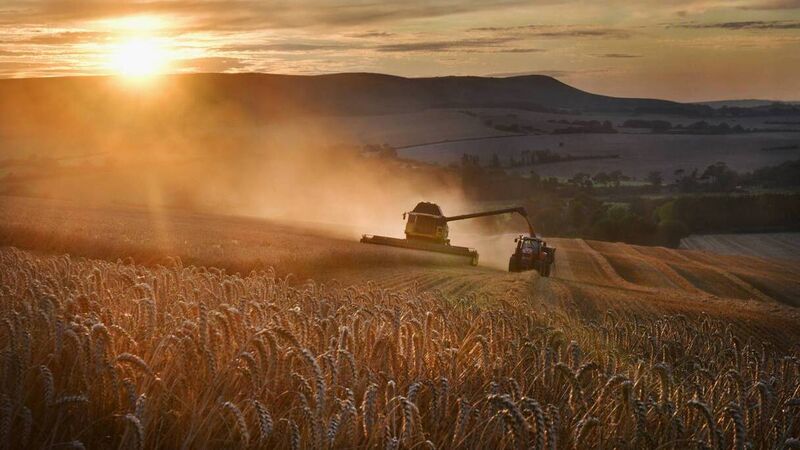
The Tillage Incentive Scheme was announced in the past week.
The Tillage Incentive Scheme was announced in the past week, with a payment of €400 per hectare, or approximately €160 per acre for eligible land.
Whilst the scheme rules are not yet published, the bones of the scheme are such that the payment will only be made if the land was not declared in tillage for 2021 and that the applicant has increased their total area under tillage from 2021 to 2022.
The proposed fund for this element of the scheme is €10m, which will cover 25,000 hectares or about 62,000 acres, this is less than 1% of the total land area under grass in Ireland.
For the uninitiated beef and dairy farmer, the prospect of growing cereal crops can seem alien and understanding the costs and potential financial return is a critical first step in evaluating whether or not to take up the scheme.
Grassland that is farmed intensively has the capacity to produce 10tons of dry matter (DM) per hectare over the course of the year. For spring barley, the most common combinable crop, one would be doing well on average to achieve three tonnes of grain at 20% moisture per acre or 7.5 tonnes/ha.
Conversion to dry matter to exclude grain moisture means the actual dry matter tons per hectare are likely to be lower even after accounting for straw DM.
In terms of meeting one’s own individual feed requirements on a farm, if there is expected to be a fodder shortage, either as a result of the incapacity to obtain imported feedstuffs or the costs of such feedstuffs being economically unjustifiable, then the primary concern must be to grow as much fodder as possible from within your own farm gate to bridge the deficit.
To that end, where grassland on the farm is in good order and likely to produce high yields of DM, diversion of grassland to combinable crops would actually result in a reduction of the total amount of dry matter produced on-farm.
Where sufficient fodder can be produced on-farm with no material deficit expected next winter in bulky fodder types (for example, silage), then consideration of the tillage incentive scheme makes a lot of sense, especially if the grain produced can be used to displace the requirement for bought-in concentrates.
For optimal animal performance supplementation with some level of cereal grains will improve performance compared to feeding animals a diet consisting solely of silage.
As such, the scheme makes particular sense where enough silage can be made, taking account of existing stocks carried over from this past winter, and where there is an intention to feed concentrates next winter and spring.
Growing one’s own grain in these circumstances gives power back to the farmer in the face of potential grain import shortages. For most farmers though, the lack of expertise and the inability to store and otherwise deal with their saved grain are major deterrents.
Greater collaboration with your local friendly tillage farmer or contractor and collaboration with your co-op, merchant or feed supplier can give the best yield in these circumstances.
For those lacking facilities to store and mill their own grain, avenues such as grain B&B, or entering forward contracts to buy back grain or rations are possible and can offer hedge for both the farmer and processor alike.
To that end, agreeing the margin for drying, storing and processing straight barley even at this early stage makes a lot of sense. Historically, a margin of €60/€70 per tonne should cover these costs based on a standard 20% moisture level.
For those farmers who are still outside of their comfort zone when faced with the prospect of planting cereals, the option does exist to enter a share-farming arrangement with a contractor or tillage farmer.
A simple share-farming agreement could be that the farmer in return for making available the land and covering, say 50% of the seed and fertiliser costs receives say 50% of the grain output, and 100% of the straw output, with the farmer continuing to claim the land within their own BPS.
For the farmer, they can leverage the contractor/tillage farmer's expertise and equipment for their own benefit whilst remaining in the eyes of Revenue and the Department of Agriculture as being the farmer of the land.
In contrast, where land is leased via conacre to a prospective tillage farmer, there can be negative tax implications both in respect of capital gains tax and future gift/inheritance tax for beneficiaries who may be deprived of business relief as a result.
Those considering a share-farming agreement could consider utilising Teagasc’s template for tillage share-farming in order to put a formal written structured approach in place.
The advantage of a written agreement allows both parties to consider in fullness what they are agreeing to and avoids misunderstandings and potential disagreements.