Rhododendron removal costs estimated at €2,457 a hectare
An action plan i Mayo shows how removing rhododendron can help the critically endangered Freshwater Pearl Mussel
Rhododendron removal costs estimated at €2,457 a hectare

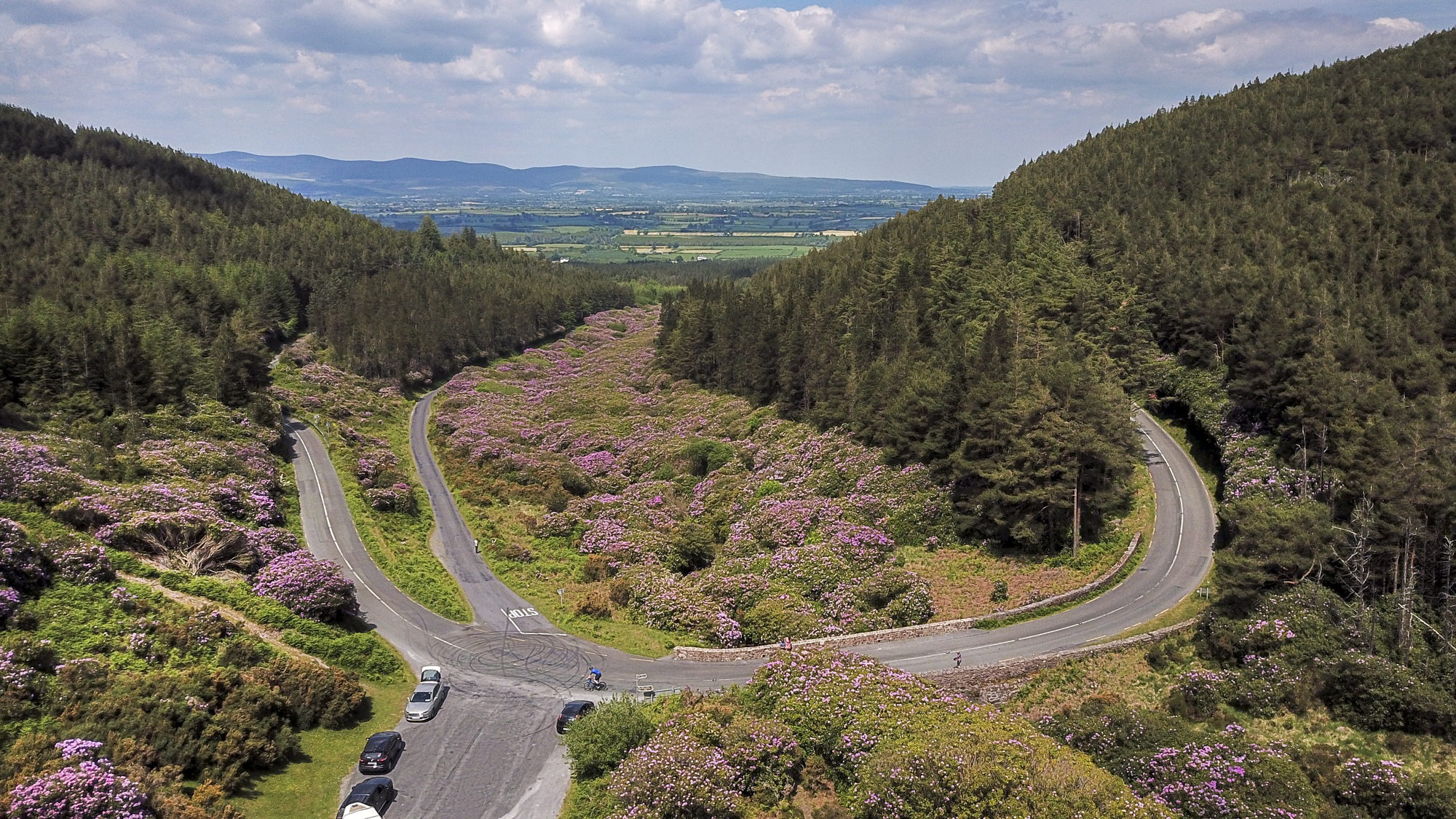
The cost of removing rhododendron varies according to local conditions such as density, age and plant growth. Photo: Dan Linehan

It is costing a lot of money to remove an invasive species from the countryside, Kerry TD Michael Healy-Rae was told in a written reply to a Dáil question.

Rhododendron ponticum is a large perennial evergreen shrub that is native to the Iberian Peninsula and Asia. It was introduced to Ireland during the 18th Century as an ornamental garden plant because of its attractive flowers.

But it subsequently escaped into the wild and is particularly invasive in the west, north-west and south-west. Once established, it forms dense, long-lived thickets which smother the ground flora and suppress the regeneration of native trees and shrubs.

Well-established thickets eventually form a toxic layer of leaf litter which produces a dark sterile environment and supports little wildlife. It may take several years to eradicate it from a site. 

Minister of State for Heritage, Malcolm Noonan, said a reasonable estimate for the removal of rhododendron, would be €2,457 per hectare. However, the cost varies according to local conditions such as density, age and plant growth, he told Deputy Healy-Rae in a written reply to his Dáil question.

The Minister of State said the National Parks and Wildlife Service has a long-standing and ongoing practice of invasive species management. It has been a particular feature of work practices in Killarney National Park since the 1980s.

He said the Department of Housing, Local Government and Heritage allocated more than €1.3m for invasive species removal across 15 of its sites in the parks and reserves network in 2021. Close to €500,000 was allocated to the Southern Division for works at Killarney National Park and at Glengarriff Nature Reserve in Co. Cork.

Mayo action plan

A few weeks ago, Minister Noonan and Minister of State for Community Development, Joe O’Brien, launched a pilot rhododendron eradication project in the Bundorragha river catchment in southwest Mayo. The project, conceived by local landowners, will develop, and demonstrate a community-led control programme at the catchment level.

It will produce an action plan including best-practice guidelines for communities and local authorities. The project will work with a range of stakeholders to develop and test best-practice methods for treating rhododendron at different densities and maturity and provide recommendations for upscaling in other infestation sites.

It is being funded by the National Parks and Wildlife Service through the European Union’s LIFE IP Wild Atlantic Nature programme. Leenane Development Association, who will co-ordinate the project, appointed a local ecologist, Conor Ryan, to oversee its delivery.

South-West Mayo Development company is involved in the steering committee and will be examining the ways in which the Rural Social Scheme can tie in with such nature conservation projects.

The social scheme, run by the Department of Social Protection, provides a supplementary income for low-income farmers, fishermen or women who are unable to earn an adequate living. Minister Noonan said working closely with farmers and local communities is essential to addressing environmental concerns.

Locally adapted conservation programmes such as this have the potential to benefit local communities and the environment. “We can increasingly see the benefits of adopting multi-actor and multi-disciplinary approaches for dealing with complex environmental problems,” he said.

Minister Noonan said the project epitomises this approach by bringing together all relevant stakeholders in the management of rhododendron. Being conceived and driven by local farmers increases its chance of success.

Stressing that the Rural Social Scheme is more than just an income support scheme, Minister O’Brien said it is a social inclusion and community development programme too.

It also shows there is further potential and opportunity via the Rural Social Scheme for small farmers to play a significant and practical role in our biodiversity, climate, and environmental challenges.

According to Leenane farmer Martin Gavin, lead co-ordinator in the project, the area has a legacy of a pristine landscape. He said it is home to the best population in Europe of the Freshwater Pearl Mussel, a highly threatened animal, categorised as critically endangered in Ireland.

“With the arrival of the Pearl Mussel Project EIP, it meant for the first time we had the expertise on the ground to show us what we were doing right.

It also showed us what we could do to help enhance the quality of the vegetation and water that is so important for the protection of this very rare species, which lives for up to 120 years.

“One of the biggest threats to the Freshwater Pearl Mussel is the invasive species rhododendron as it could squeeze out the native upland vegetation in the catchment.

“When rhododendron was first introduced into the area, little did anyone know how ideal the conditions were for it to really start to become a major problem.

“Therefore, it’s really exciting that we have secured funding via LIFE IP Wild Atlantic Nature to put a programme in place that will hopefully eventually lead to the eradication of rhododendron in the whole Bundorragha river catchment area,” he said.

x

CLIMATE & SUSTAINABILITY HUB

More in this section

Farming

Newsletter

Keep up-to-date with all the latest developments in Farming with our weekly newsletter.

Cookie Policy Privacy Policy Brand Safety FAQ Help Contact Us Terms and Conditions

© Examiner Echo Group Limited