Women often those who drive innovation on farms, despite lack of recognition
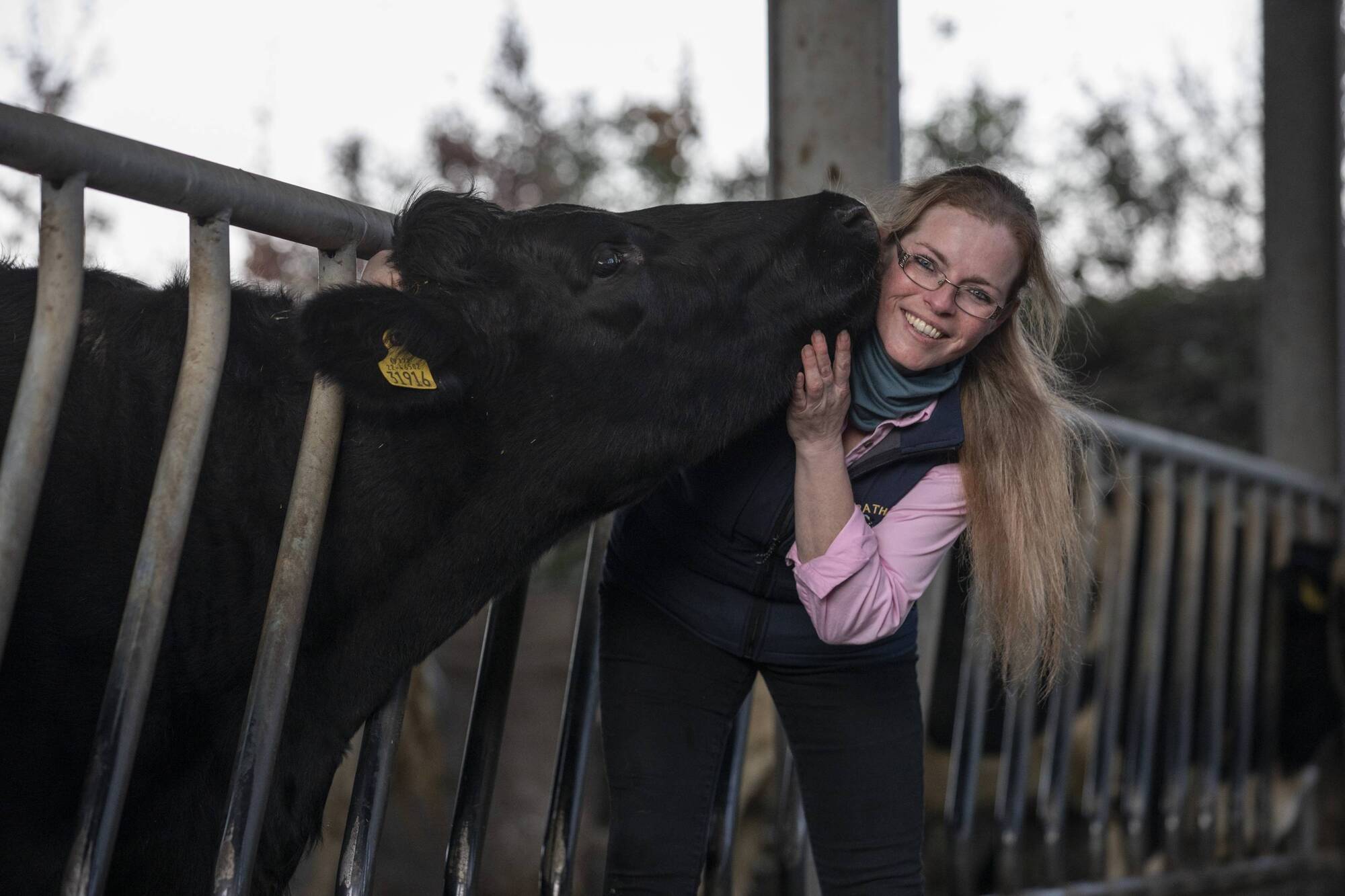
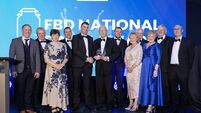
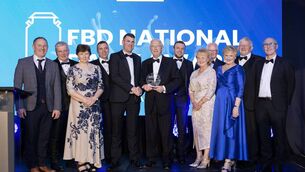
Paula Hynes, Cork dairy farmer said if you want to be a farmer, "don't ever let anyone stop you". Picture: Clare Keogh
Central Statistics Office figures show that the percentage of female farm holders has increased by only 1% since 2010 with 18,101 - or 13.4% - female farm holders in 2020.
However, as International Women’s Day approaches on March 8, Maura Farrell, senior lecturer in the School of Geography, Archaeology and Irish Studies at NUI Galway, told the Irish Examiner that when you further break down the figures of female farm holders, there are fewer “actively engaged or working in farming”.
Meanwhile, many of the women working on farms and contributing to the enterprises are going unaccounted for.
"A lot more women are engaged in agricultural education, particularly third-level education", Ms Farrell said.
"I suppose we think about agriculture directly in farms - but there are a lot of women involved in the industry, a much broader basis outside of just farming.”
"[At farm-level], of course, you’ll get very innovative, forward-thinking farmers who have a daughter who has always worked on the farm and don't question allowing her to inherit it," Ms Farrell continued.
“Sometimes, it can be the mother or the woman on the farm who says the work is too hard, the hours are too long, and they are the ones who encourage daughters not to become engaged or involved in the farm.”
The “stereotypes” are very much still there, with Ms Farrell warning they often “permeate all the way down from very senior cycles to farm level” in the industry.
“Agriculture is a system that works from the family farm right up to agricultural organisations that we have, the Department of Agriculture, all of these different advisory services, all these bodies are part of the system.
“If we want to see women on farms, then we need to see them within all of these bodies as well.”
She welcomes the changes that are being seen, that are making it more “accepting of women in farming and agriculture”.
For example, Teagasc recently published its first Gender Equality Plan.
Currently, 44% of Teagasc staff are women - however, women were found to have been significantly overrepresented in lower grades and significantly underrepresented in senior positions.
“Our long and deep history in the agriculture and food industry has resulted in Teagasc having a male-oriented gender culture,” Teagasc director Frank O’Mara said.
“This has to change. While we have made some progress in recent years, we know we have more to do.”
Ms Farrell explained one issue was that while women "not excluded" from farming, their effort is often not as documented or acknowledged in the same way as their male peers.
"I think that definitely comes from the family farm, where women tend to do a huge amount of work and that work is not acknowledged," she said.
“In this day and age, it is bizarre to think that women who work on farms do not have an identity on farms; we went through this whole course of action in Ireland where we were going through what we would call them - would we call them women farmers or female farmers, for example.
“Why aren’t they farmers? Just say what they are, let it be a man or a woman, they’re a farmer.
“So that identity is not there.”
Despite this, Ms Farrell said that it is often women that “think more strategically when it comes to the farm”.
“When it comes to farm diversification, it’s often women who kind of see the family farm and realise much quicker that 'we need this to earn money'; whereas, the male may often think 'but this is my heritage, this is from my family, I need to make sure that we keep this running irrespective of whether it’s making money or not',” she explained.
“When it comes to diversification, it’s often women who drive it and realise ‘okay, we have land here, we can do something different with it to make money’."
With fewer services and facilities available in rural areas compared to urban, women are “coming from a lower base” which presents further challenges.
“Even childcare; if a woman takes over or starts a business on a farm, it’s still a business, she still needs that childcare, she still needs good broadband.
“And within a rural context, those things are not as readily available as they are within an urban context.”
Ireland’s CAP Strategic Plan for 2023 to 2027 has been submitted to the European Commission for approval.
Through the new CAP, gender balance is to be addressed through higher rates of aid for women farmers, as well as through female-focused knowledge transfer groups and inclusion as a theme to be addressed by European Innovation Partnerships.
Ms Farrell welcomes this, saying that getting policy change is "really important".
Through previous research that Ms Farrell had undertaken, she has found that a lot of women who want to start-up businesses "didn't want to be seen any different to men".
"But my thinking on that is it's all well and good if we're all at the same level. But women are not at the same level when it comes to entrepreneurship, when it comes to innovation, women are well down the ladder.
"So to get them to that level they need to be at, they need to be able to accept a helping hand to make a level playing field.
"When we get to the level playing field, yes, we should all be in there together. But until we get to the level playing field, we need to be given an extra addition."
One of the biggest issues that persist in agriculture, Ms Farrell said, is accessing land.
"If your heart and soul is in farming, and you don't get the family farm, what do you do?"
Cork dairy farmer Paula Hynes encourages young women who want to enter farming to not give up despite the obstacles.
Ms Hynes, who farms with her husband Peter with the help of their three daughters - Chloe, Becky, and Georgina - in Aherla, said that when she first started farming, she was told by some that she "couldn't do it because you're a woman".
“The more you tell me I can’t do something, the more I’ll do it," Ms Hynes said.
"If your passion is about something, you don’t have to come from a farming background; if you want to do it, you go and you do it - and don’t ever let anyone stop you."
Before 2014, Ms Hynes said she "hadn't a clue about cows", but always received the full support of her husband.
But, when the farm increased to 180 cows, Ms Hynes said she gave the push that was "needed to invest in technology on the farm to make it easier for ourselves".
"I think there is an awful perception out there that farming is 24/7, a horrible lifestyle," she continued.
"That’s why we put in the big investment in 2017; we spent over €500,000 putting in a new parlour and a drafting system.
"It was a big investment, but like everything, you have to spend money to make money."
Ms Hynes said she has seen a "big movement" in the past couple of years where women "are standing up more for themselves" to receive the recognition they deserve for their farm work.
"The younger generation is definitely driving that forward; it’s the older generation of women who will still kind of say ‘sure look, I didn’t do anything only block the gap’ and she’s inside milking the cows and then going to her day job," Ms Hynes said.
She feels it is very important to encourage the younger generation; and that her and Peter "100% back" their daughters in pursuing a career in farming.
"They all have a fantastic work ethic; Becky is starting her own herd of cows now, she's big into showing. We backed her 100% because that's what she wanted."