Ireland hopes to meet the conditions for BVD-Free status in 2023
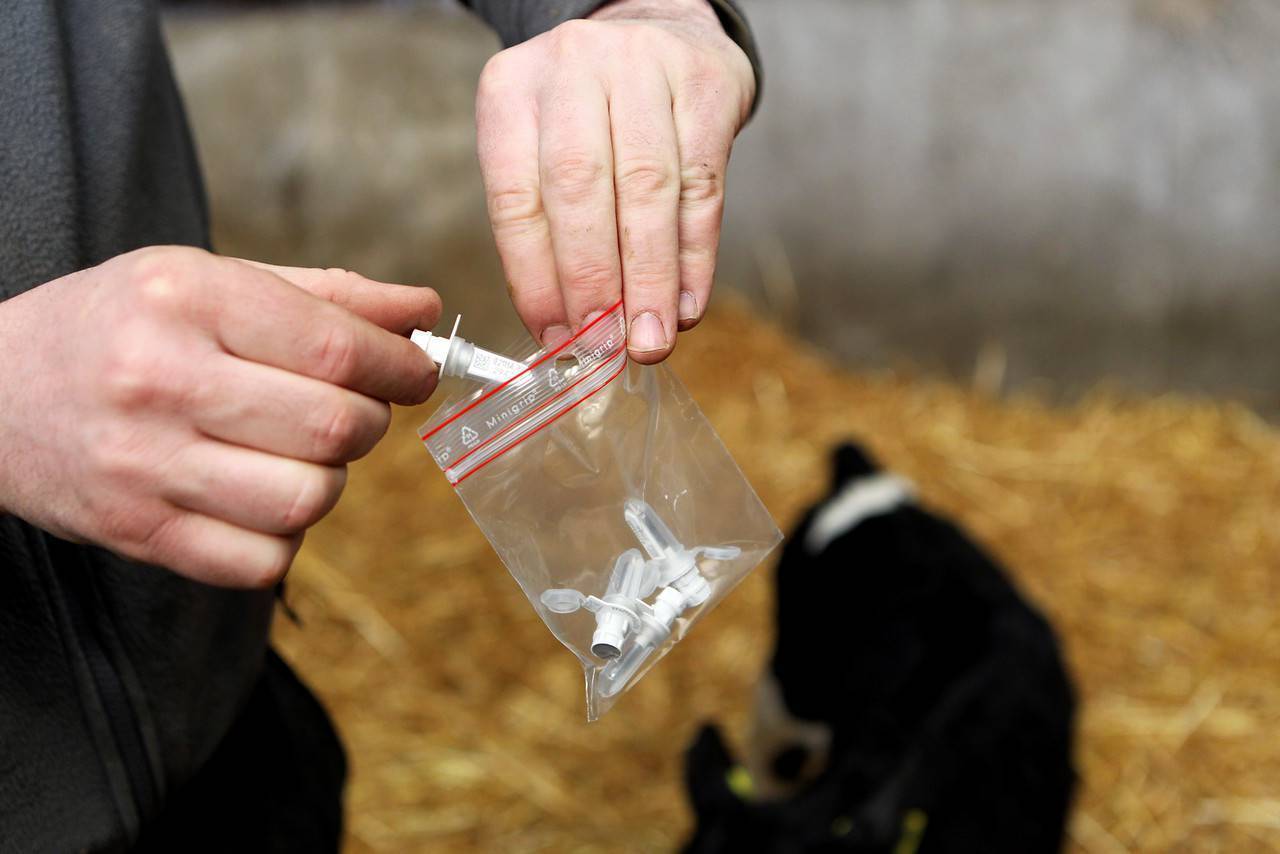
Screening a sample of home-bred young stock for BVD is more cost-effective than continued tissue-tag testing, in herds previously been found to be BVD-free, but researchers have shown it isn’t suitable for all Irish herds.
As the BVD finishing post nears, this is very likely to be the second last calving season with compulsory BVD tissue tag testing for the majority of dairy and beef farmers.
However, it is a different story north of the border. Eradication progress in Northern Ireland has levelled off.
In some parts of the North, in mid-2021, BVD incidence was as high as 0.57% of animals tested. That is nearly as high as the 0.66% incidence south or the border in 2013, the first year of a compulsory eradication programme which has reduced national incidence to 0.03% after seven years.
Border counties such as Armagh and Fermanagh have the worst BVD eradication record. In the year to June 2021, Armagh had the highest level of initial positive or inconclusive results, seen in 0.57% of animals tested, with the next highest being the Enniskillen area at 0.44%, compared to the Northern Ireland average of 0.33%.
Progress towards the eradication of BVD is being delayed by the failure of a minority of herd keepers to test their cattle. At the start of May, only 70% of Northern Ireland herds had a BVD status for every animal. Nearly 15,000 cattle born since eradication started in 2016 were restricted from moving to markets or other farms, due to a ‘BVD Unknown’ status. Farmers were encouraged to test these cattle as soon as possible.
Untested cattle are prohibited from moving to slaughterhouses since September 1 last. There are fines of up to £5,000 for anyone found guilty of moving or possessing an untested animal, and suspension of Beef and Lamb Farm Quality Assurance Scheme membership. Only 10 such animals arrived at slaughterhouses from September 1 to mid-December.
Meanwhile, the Department of Agriculture, Food and the Marine in Dublin is expected to apply for recognition of its BVD eradication programme in 2022, and hopes to meet the conditions for BVD-Free status in 2023.
The North’s Department for Agriculture, Environment and Rural Affairs has warned farmers that cattle moving to the Republic will soon have to meet new BVD status requirements When the European Commission approves the Republic’s BVD programme (expected this year), additional requirements for cattle moving south for breeding or beef production may include blood testing and a 21-day period in approved quarantine.
BVD vaccinated animals can still move south, but only until BVD-Free Status is achieved by the Republic (expected in 2023).
BVD-Free Status in the republic will require an 18-month period without disclosure of a confirmed BVD persistently infected animal, with 99.8 % of cattle establishments BVD free, accounting for 99.9 % of the bovine population.
Already, more than 96% of the Republic’s breeding herds were BVD-free at the end of 2021.
Meanwhile, farmers are advised to continue tissue tag-testing all calves as soon as possible after birth and removing calves with positive or inconclusive results promptly (there is higher DAFM financial support if they are removed within 10 days). Holding onto BVD reactors is one of the reasons the eradication effort has lost momentum in the North.
At the end of 2021, around 3% of southern herds contained small numbers of animals without either a valid test result or the registered birth of a negative calf. The presence of these animals prevents herds attaining negative status, and accessing lower-cost testing. It is legally required to test all animals of unknown status, including those born before 2013.
As in 2021, automatic herd restrictions and notification to neighbouring holdings will continue in 2022.