Government forms dairy group to set strategy for farming's climate target
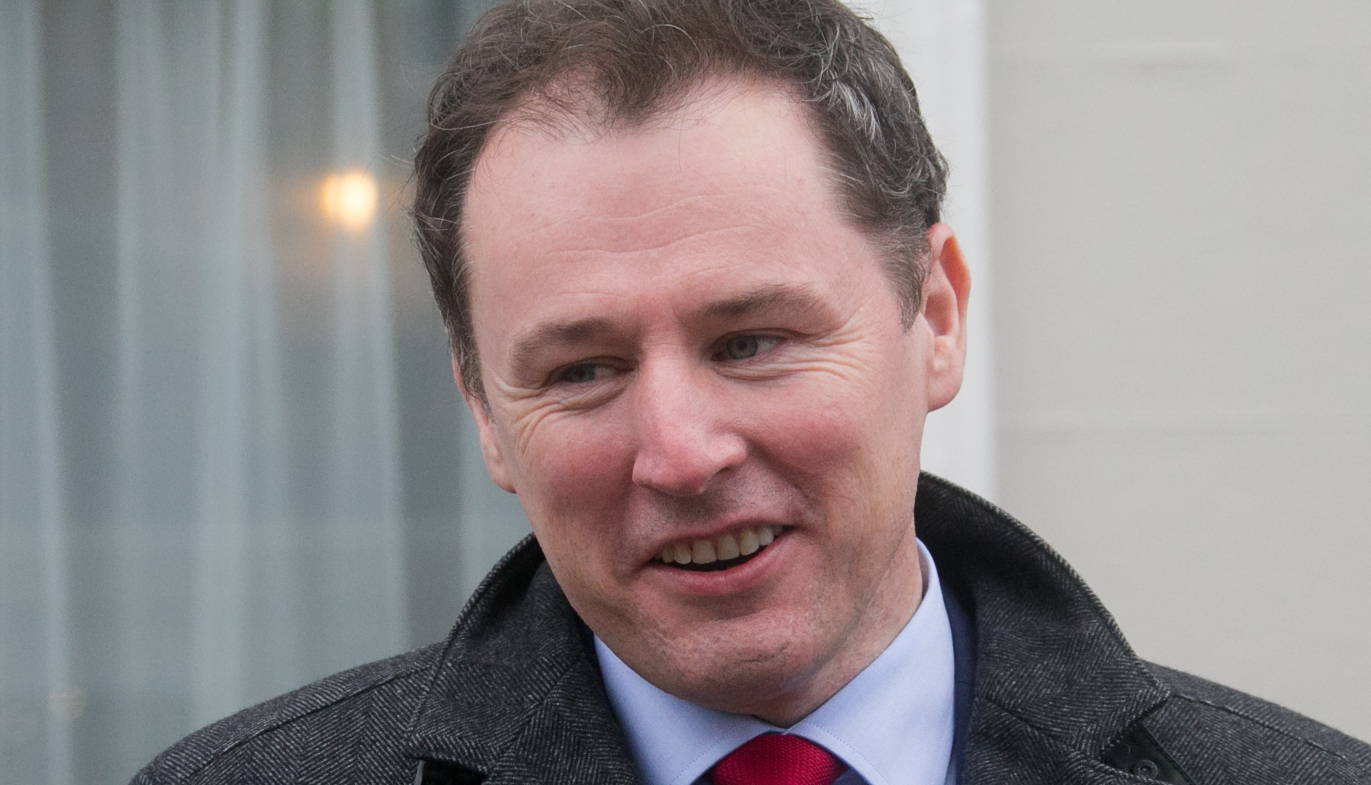
Minister for Agriculture Charlie McConalogue pictured yesterday during the IFA AGM at the Mansion House, Dublin. Picture: Gareth Chaney/Collins
A new group including key stakeholders from the dairy sector will be tasked with planning how the industry will meet targets for agriculture and land-use emissions reductions set in Ireland's Climate Action Plan.
Minister for Agriculture, Food and the Marine Charlie McConalogue met today (January 28) with farming representatives for a discussion on dairy sustainability, as well as to announce the launch of the new 'Food Vision Dairy Group'.
Explaining the new group's remit, Minister McConalogue said its first task will be to produce a detailed plan by the end of March to manage the sustainable environmental footprint of the dairy sector in line with the Food Vision 2030 strategy.
The first meeting of the Food Vision Dairy Group will take place in early February.
“A key priority for the Food Vision Dairy Group is ensuring that we continue to provide a platform of sustainability for our farmers and our sector," Minister McConalogue said.
The Minister explained the first step would be to develop and implement this plan to stabilise, and then reduce emissions associated with the dairy sector.
Minister McConalogue said: “Working together, we can stabilise and then reduce emissions from the dairy sector, positioning Ireland as a world leader in sustainable food systems, meeting our climate targets, and ensuring that the market delivers a reward for our quality, sustainably produced food, particularly for our farmers as the bedrock of the sector.
“We want to ensure that we continue to have a sector that is vibrant and attractive to new entrants. We have to think about how we ensure that there is space for generational renewal and new entrants to the sector, or for those with marginal enterprises to improve viability, and space to encourage innovation and value addition."
The news has not gone down well with farmers, who warn limiting dairy production will jeopardise the future of many Irish farms.
Speaking following the meeting, Irish Creamery and Milk Suppliers Association president Pat McCormack, said farmers could not accept any proposal that will place an arbitrary cap on the productive capacity of dairy farms.
Mr McCormack warned such a policy risked "irreparable damage" to the main driver of Ireland’s rural economy and said that assurances there will be opportunities for new entrants was "unconvincing".
“If we know one thing from history, it is that that the overall trend always trumps individual cases,” said Mr. McCormack.
"All these temporary arrangements become ‘bedded down’ and become permanent practice. Effectively, the most dynamic farming and agri-food sector we have will be driven up a cul-de-sac from which we will never be able to reverse."
However, Mr McCormack denied farmers were slow to play their part in combatting climate change.
“That’s just not true, and adds insult to injury," he said. "We’re the only sector that already has an emissions lowering plan that’s ‘up and going’. The Teagasc MACC curve and new technologies are already showing how agriculture can meet its climate commitments – and new technologies will accelerate that progress.
"The Government ignored the further potential in that area in the CAP Strategic Plan they submitted, and will now compound that mistake by effectively proposing caps on our most valuable product.”
Irish Farmers Association Dairy Chairman Stephen Arthur, agreed that the timeframe was "too short for such serious issues".
“The prosperity of the sector depends on the ability of farmers to grow their business. The sector has already endured 30 years of stagnation, which led to a lost generation of dairy farmers.
"We will not allow our sector become a twilight industry," he said.