Teagasc grassland researcher accoladed
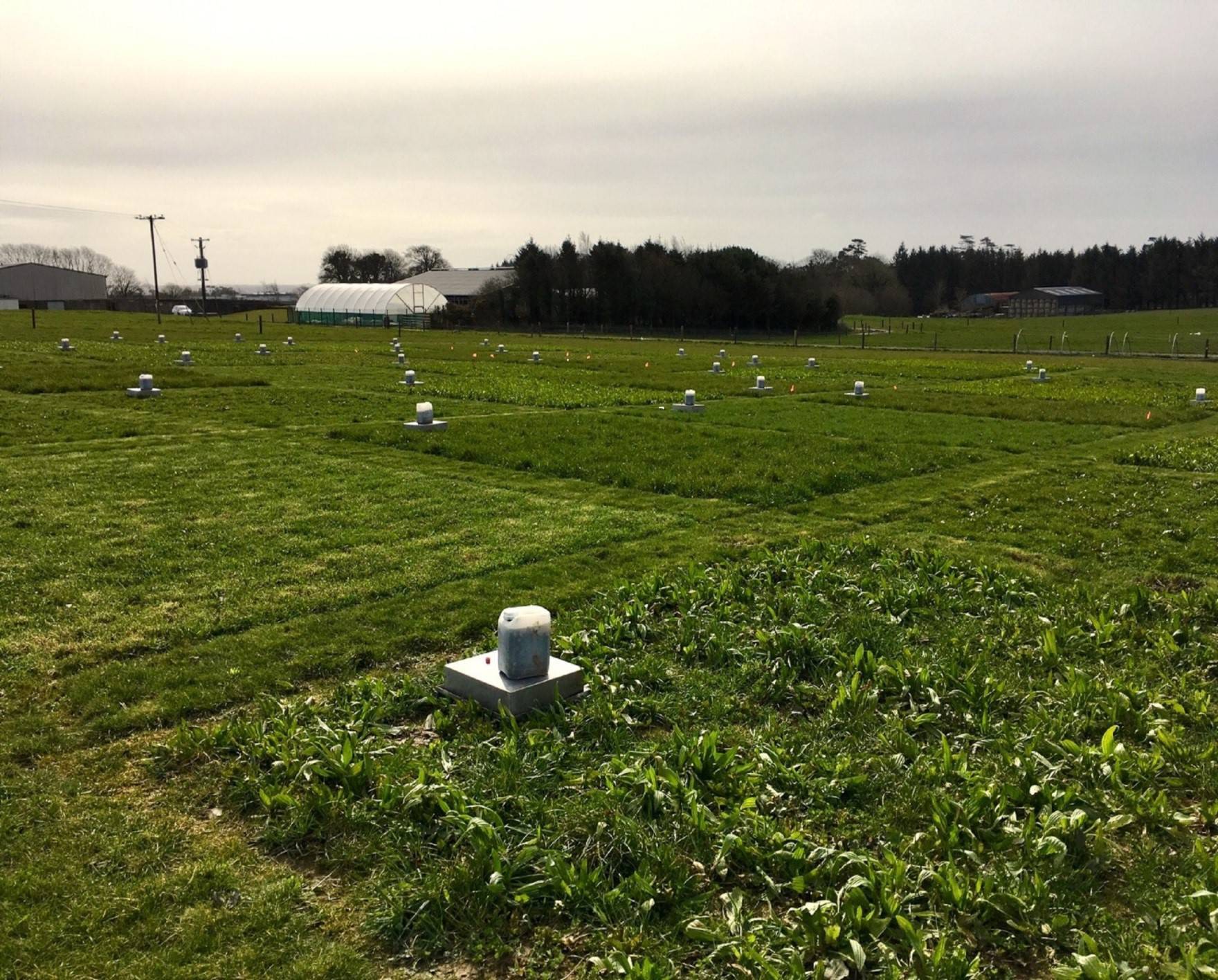
Multispecies swards trials at Teagasc’s Environment Research Centre at Johnstown Castle
A scientist at Teagasc’s Environment Research Centre at Johnstown Castle has picked up an international award for her research showing that multi-species mixtures enhance grassland sustainability.
Dr Saoirse Cummins from Waterford won this year’s Brian Chambers International Award for Early Career Researcher.
Dr Cummins' poster was entitled ‘Strong effects of grassland sward composition on reducing N2O emissions and emissions intensity’ and showcased her PhD work carried out in collaboration with Rothamsted Research and The University of Reading.
The poster highlights the benefits of multi-species mixtures to reduce the greenhouse gas emissions intensity (the volume of emissions per unit of production) of nitrous oxide (N2O).
Dr Cummins' results are from a year-long field trial assessing N2O emissions in relation to grassland sward composition and a system-scale analysis of N2O emissions and sheep production.
The Brian Chambers International Award, organised by the International Fertiliser Society (IFS) is an award scheme for Early Career Researchers who demonstrate how their work can provide practical benefits to farm crop nutrition.
The award is hosted at the annual IFS Agronomic Conference since 2015 and this year took place in Cambridge, UK on December 9-10 following the theme ‘Updating Evidence-Based Management of Crop Nutrition’.
Speaking about her work, Dr Cummins said: “Some key results presented at the IFS conference include the significantly reduced N2O emissions intensity of a six-species sward compared to a perennial ryegrass monoculture at higher (300kg/hectare/year) and equal (150 kg/hectare/year) inorganic nitrogen application levels.
Dr Cummins’s findings build on previous research and provide further evidence to support the role of multi-species and clover based swards in climate-smart livestock production systems.
The project analysed data from the North Wyke Farm Platform database and was supervised by Dr Dominika Krol, Dr John Finn, Professor Gary Lanigan, Dr Karl Richards (Teagasc), Dr Tom Misselbrook, Dr Laura Cardenas (Rothamsted Research) and Professor Chris Reynolds (University of Reading).