The Irish vertical farm growing basil without soil
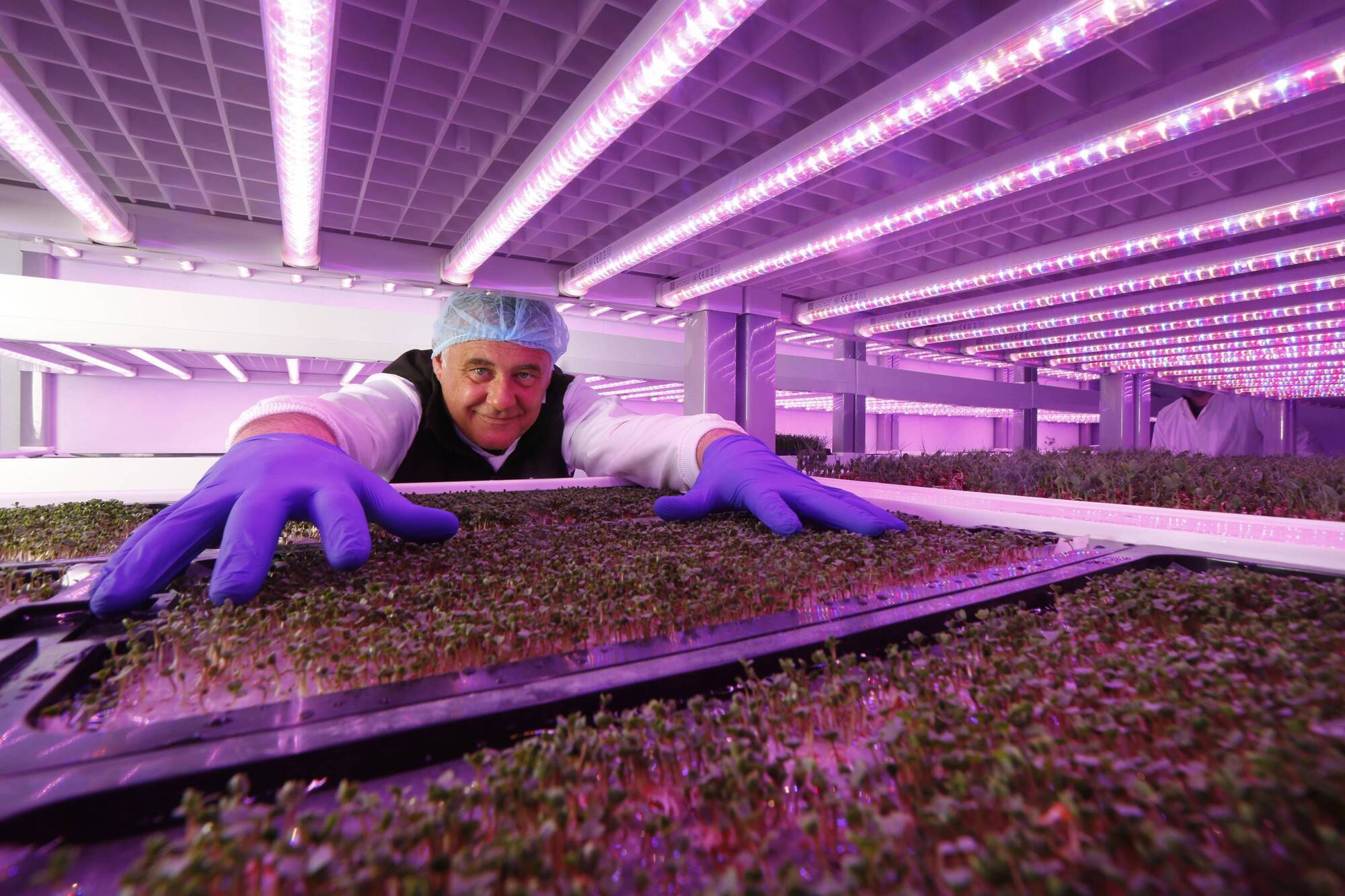
Stephen McCormack, McCormack Family Farms with the hydroponically grown SuperValu Signature Tastes Microgreen Mixes
More and more Irish consumers can eat hydroponically grown products, with micro greens launched in SuperValu supermarkets, and the Compass foodservice group signing a deal for basil produced without using soil.
In traditional growing, soil is a major source of nutrients for plants but with hydroponics, alternatives to those nutrients are directly fed to plants instead, and growing can be moved indoors.
Supervalu said customers get great-tasting, nutrient-rich greens with fewer negative impacts on the environment, because soil-free growing reduces strain on land-based resources Compass Group Ireland said vertical farming allows growers to produce fresh greens here in Ireland, which would otherwise be imported. It requires less land and uses up to 10 times less water than traditional soil crops, through recycling and reuse.
Vertical farming is growing crops in many layers, one above the other, often indoors in a specially controlled environment for all year round production.
In addition to micro greens, growing pea shoots are also launching in SuperValu stores, grown using soil-free methods on a bed of compostable paper, and sold as a living product that customers can cut as required. SuperValu says both products are sustainably grown and herbicide and pesticide-free, and are food award winners.
Environmental benefits claimed for hydroponic vertical farming include 70% less water used (it is recycled through the system repeatedly; none of the soil degradation which is an issue worldwide; use of nutrient solutions instead of fertilisers; no weed growth so herbicides are not needed; no pesticides; and products can be grown locally.
SuperValu’s new products are grown in Co Meath by McCormack Family Farms.
Ian Allen, Managing Director, SuperValu, said, “We are delighted to be the first retailer in Ireland to introduce these new products to our customers around the country.” Meanwhile, Compass Group Ireland is supporting Brian O’Reilly, a former mushroom farmer, and his brother Aidan, who have launched a commercial hydroponic farm to grow basil, baby leaf mixes and microgreens 365 days a year.
They operate under the Emerald Greens brand at Ballyporeen in Co Tipperary, in converted mushroom tunnels.
Compass will use 25% of the basil produced each week by Emerald Greens (about 200kg).
As a result, Emerald Greens will see production capacity rise by 20%, with the addition of a second growing tunnel. Further tunnels will be added in 2022.
Compass Ireland is also partnering with Ross Hazel Farm, a fruit and vegetable producer in Co Meath, to convert mushroom-growing tunnels on its Clonard site into vertical farming units. Ross Hazel Farm is run by Lynsay Orton, who has been a Compass supplier since 2016.
Deirdre O’Neill, Managing Director at Compass Group Ireland, said: “At Compass, we believe it is our responsibility to contribute to a future of sustainable food production and regenerative agricultural practices.
“Emerald Greens is at the forefront of Ireland's grassroots movement towards more sustainable food production.
Brian O’Reilly’s decision to move into vertical farming was prompted by the opportunity to maintain year-round production with better margins and less reliance on UK exports post-Brexit.
Compass Group Ireland serves about 40,000 meals per day in 130 workplace locations on the island of Ireland. The company employs 1,500 in the Republic and Northern Ireland.