Paths to a profitable, eco-aware dairy farming
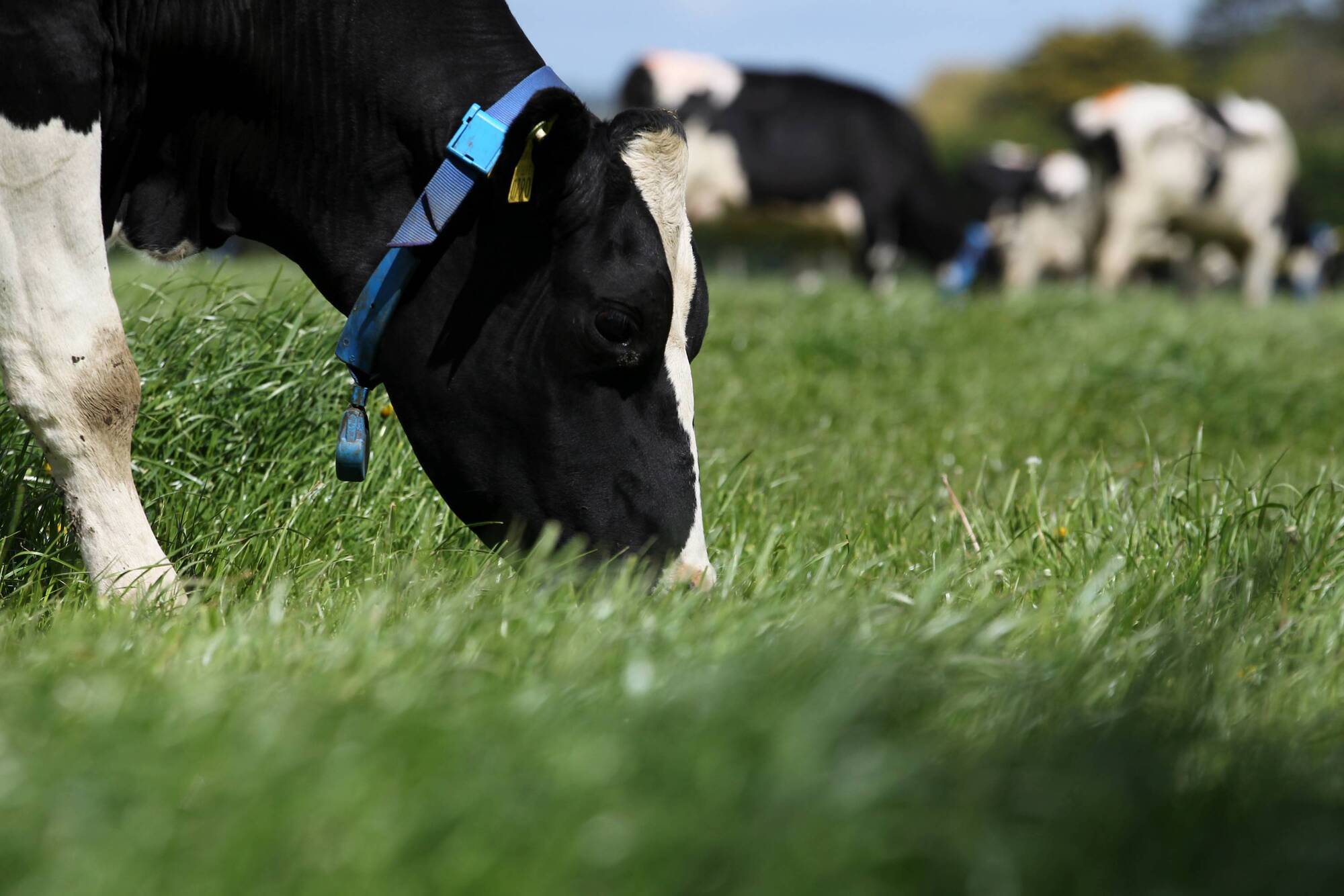
The dairy herd of 57 cows at UCD Lyons Estate research farm is in the top 1% of herds nationally with an EBI of €204 (milk sub-index of €69 and a fertility sub-index of €81 - January 2021, evaluation).
outlines UCD’s Lyons Farm work developing a sustainable, high-output, grass-based spring milk production system

Research at UCD’s Lyons Farm has been investigating the development of a milk production system that is based on higher-output per cow.
There are numerous reasons for this, including environmental concerns about increasing dairy cow numbers and rising emissions as a result, facilitating farm expansion for land limited and fragmented farms and a lack of available skilled labour and infrastructure at farm level to deal with expanding animal numbers.
The overall objectives are to develop a sustainable high output grass-based spring milk production system, incorporating the most recent advances in grassland management, genetics, nutrition and dairy cow husbandry.
The study, now funded by Dairy Research Ireland, started in 2016 with the expansion of the dairy herd at Lyons. Details on milk production, grassland management, genetics, fertility and profitability are published regularly. Farmer groups and other industry stakeholders from Ireland and abroad visit Lyons on a regular basis to get the information first hand. It has also become a valuable teaching tool, with information and research developed using the Systems Herd being incorporated into a number of the undergraduate degree programmes.
High levels of milk output per cow and per ha are possible in high EBI cows in grazing systems.
Excellent fertility is achievable with this high output grazing herd.
Life Cycle Analysis (LCA) conducted has shown that the system is as efficient per kg CO2/kg milk solids as benchmark low-concentrate grazing systems.
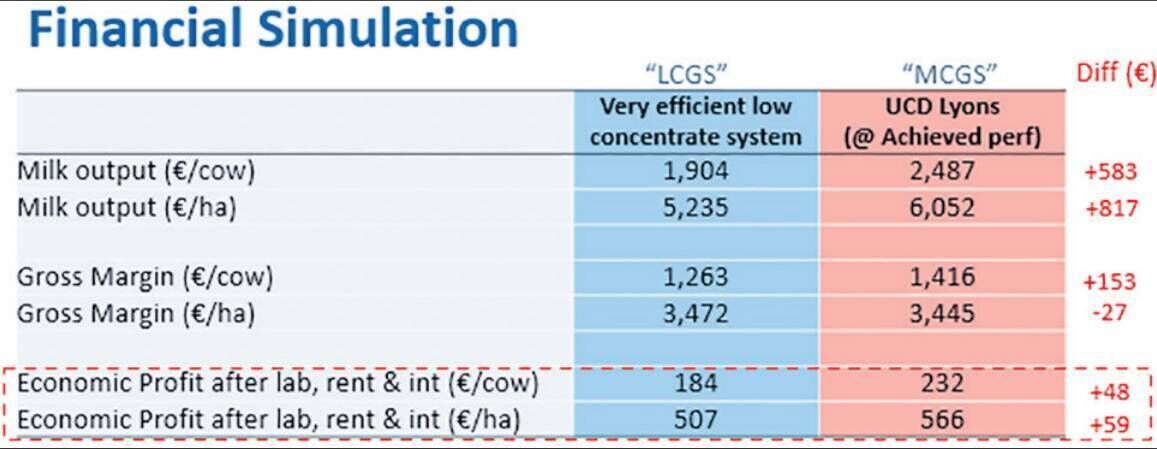
Financial simulations using data from the Systems Herd have shown that the higher-input and higher-output system compares favourably to efficiently run low concentrate systems.
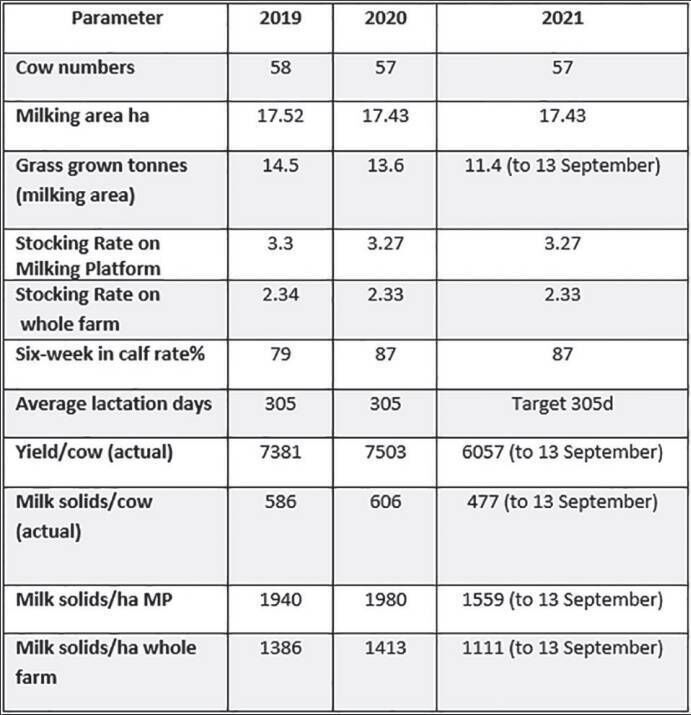
The herd (57 cows) is in the top 1% of herds nationally with an EBI of €204 (milk sub-index of €69 and a fertility sub-index of €81 - January 2021, evaluation). The performance target is 625 kg of milk solids per cow with a target stocking rate on the milking platform of 3.25 LU/ha and a whole farm stocking rate of 2.33 LU/ha. The performance achieved in 2020 (606 kg of MS per cow) is approximately 42% higher than the national average figure of 427 kg milk solids per cow. Fertility results for the herd are excellent with 79 to 87% of the herd in calf in the first six weeks in the past three years (Teagasc target 75%). The diet consists of grazed grass, grass silage and 1500kg of concentrates which is necessary to support the high energy demands of these high producing cows.
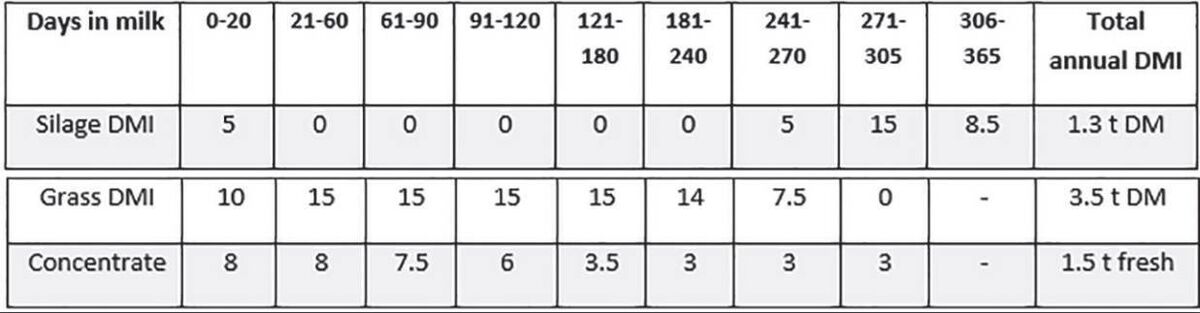
From a feeding perspective, the focus is to maximise grass intake with approximately 75% of the diet coming from grazed grass and grass silage (DM basis). On an as fed basis, the annual feed budget consists of approximately 94% grazed grass and grass silage. However, achieving over 600kgs milk solids will not happen with grass only and therefore cows are fed 1500 kgs concentrates over the lactation to meet energy requirements. Cows are fed a flat rate as in the table below with high feeding rates for the first 4 months post-calving and high overall intakes are achieved (Table 2).
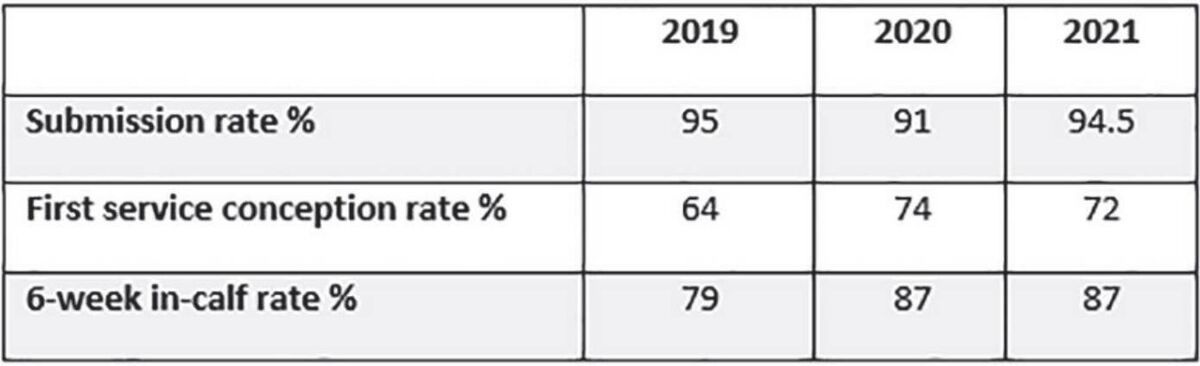
The breeding season began on May 1 and finished on July 9 (10 weeks). High levels of fertility are being achieved with a group of cows that are within the top 5% of herds for fertility sub-index. Table 3 shows the fertility performance since 2019. This year the submission rate was 94.5 with a 1st service conception rate of 72% and a six-week in-calf rate of 87%.
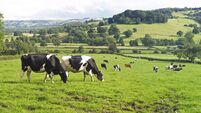
As grass is the corner stone of this system, we continue to aim to maximise grazed grass intake throughout the year and the management in the autumn period is really important in achieving this. In 2020 grass grown was 13.6 t DM/ha, with 12 tonnes of DM/ha utilized.
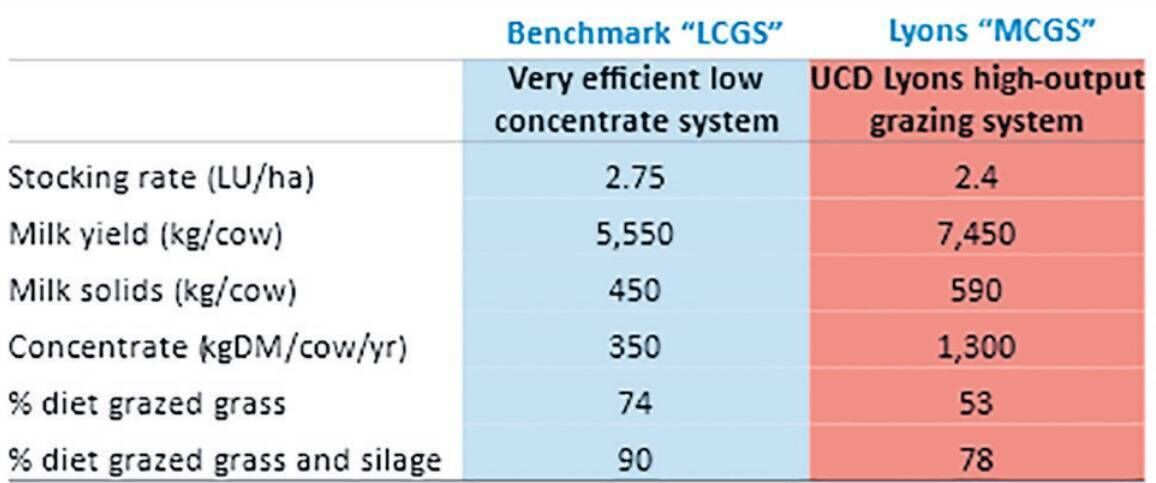
In order to evaluate the profitability of the Lyons dairy system, financial simulations were undertaken. To do this, the Lyons Grazing System was compared to a benchmark low concentrate grazing system (LCGS), using parameters as described in Table 4. This was a full assessment of production with labour priced at €15/hour, imputed rent (all land) at €420/ha and interest on capital at 5%. The milk output value was based on a milk base price of 30c/litre and concentrates were priced at €340/t DM. Results of this analysis is shown in Table 5.
Reducing Concentrate Protein Levels and Use of Native Feed Ingredients Within the overall study we have taken a further step to investigate nutritional strategies to improve the environmental sustainability of the system. Using low crude protein concentrates (12% and 14%) during the main grazing season and using only native feed ingredients has been shown not to impact performance negatively and may improve the sustainability of dairy production.