Moorepark project: Beef-dairy breeding trials centre stage
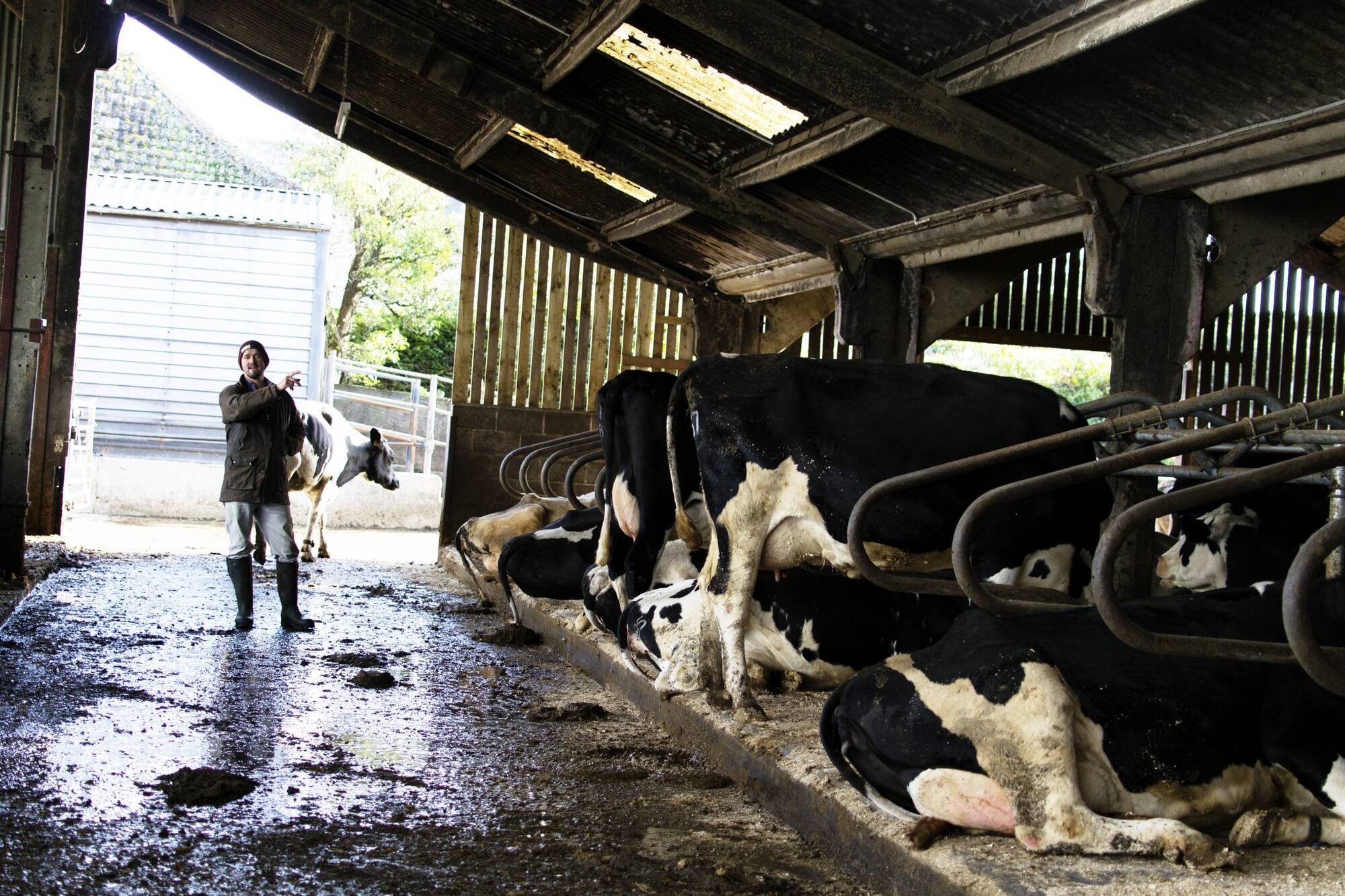
It is clear from Teagasc's ongoing experiments that in vitro (laboratory) produced embryos transferred fresh can achieve pregnancy rates that are comparable with AI. Picture: iStock
An experiment now going on at Moorepark may point the way towards an expanded dairy herd that also produces valuable beef animals.
It is investigating embryo transfer technology that could enable much better beefing quality in the more than 70% of dairy calves destined for beef production.
But it’s another ominous straw in the wind for suckler farmers who fear dairying will be favoured ahead of them, as pressure comes on total cow numbers from climate action.
They reacted angrily to Teagasc Director Professor Gerry Boyle’s recent comment that: “We are very strongly advocating, based on research, that we shift from beef cow production to what we call dairy beef production”.
Suckler cow numbers rose from about 400,000 in 1983 to 1.2m in 1998, but have been falling since 2011, to about 930,000 in 2020. Dairy cow numbers have declined from more than 1.5m in 1983 to 1m in 2005, but started to rise in 2011 and were near 1.6m by 2020.
Professor Boyle (who is a member of the Climate Change Advisory Council which will propose carbon budgets to the Government) was speaking at the Dublin Economics Workshop 2021 Annual Economic Policy Conference in a session entitled “How can Ireland best meet its climate change and biodiversity targets?” In his presentation, he said there are implications for livestock activity levels, to achieve the Government‘s target of 51% reduction in emissions by the end of this decade.
He said a 20%, at best, reduction in agricultural emissions by 2030 is achievable via decarbonisation technology such as reduced nitrogen, etc, and a separate target for biogenic methane is required, such as the 10% reduction by 2030 target which has been set in New Zealand.
He said Irish farmers have limited diversification opportunities for the climate action era, such as forestry, anaerobic digestion, dairy beef, carbon farming, and niche activities such as organic farming.
He emphasised the importance of reversing the decline in afforestation (due to licensing difficulties, annual new forest planting is 60% behind the Government’s target).
All these factors will bring more and more pressure on cattle numbers.
In that scenario, a dairy herd that produces 30% female dairy calves, 3% male dairy calves, and 67% beef cross calves, with the help of sexed semen and embryo transfer, could play a vital role.
The feasibility of such methods is being investigated in the Moorepark trial, which started last spring with 1,200 lactating dairy cows in nine herds being synchronised to be ready for breeding at the same time.
One-fifth of the cows were bred to normal AI.
In seven herds, of the remaining 80% of the cows, half were assigned to receive an elite dairy embryo (of which 50% were fresh and 50% were frozen) and half were assigned to receive an elite beef embryo (of which 50% were fresh and 50% were frozen).
In the remaining two herds, 80% of the cows were assigned to receive a commercial beef embryo (of which 50% were fresh and 50% were frozen).
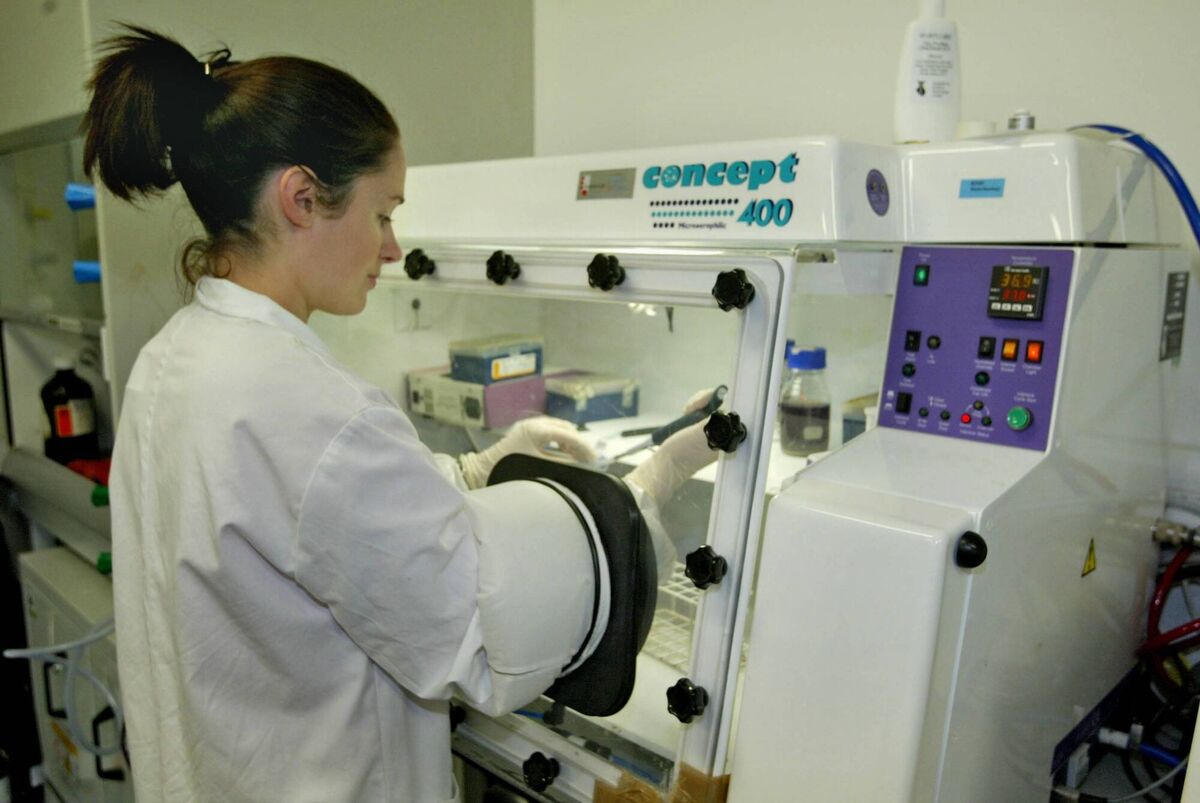
Immediately before embryo transfer, the cows had been examined by ultrasound to determine suitability, after which 9.5% of cows were deemed unsuitable for embryo transfer.
Successful pregnancy rates were 47.7% for all cows, 61.1% for transfer of a fresh dairy embryo, 40.1% for transfer of a frozen dairy embryo, 51.7% for transfer of a fresh beef embryo, and 41.2% for transfer of a frozen beef embryo.
It is clear from the experiment that in vitro (laboratory) produced embryos transferred fresh can achieve pregnancy rates that are comparable with AI.
According to the Teagasc researchers at Moorepark who carried out the experiment, In vitro embryo production (IVP) has been improved, and it is now a viable technology for seasonal calving systems. They said it will become an important tool to accelerate genetic gain in dairy breeds and in beef breeds suitable to crossing with dairy dams.
The findings in the experiment show how recent advances in reproductive technology, particularly in sexed semen and IVP, offer further potential to accelerate genetic gain in dairy and in dairy-beef.
The calves in the Moorepark experiment will be monitored to evaluate the rate of genetic gain and added value from elite dairy, beef and commercial beef embryos.
The elite dairy and elite beef embryos were produced by collecting oocytes from 40 elite dairy dams (weekly for eight weeks) and 21 elite beef dams (weekly for eight weeks), using ultrasound-guided transvaginal ovum pick-up.
To produce commercial beef embryos, ovaries were collected from 119 beef heifers post-slaughter, and oocytes were harvested.
All oocytes were fertilised in the laboratory with sperm from high EBI bulls for the elite dairy embryos, and with sperm from high DBI (the dairy-beef index of beef bulls suitable for use on dairy females) bulls for both the elite beef and commercial beef embryos.
After fertilisation, the developing embryos were cultured in a lab incubator for seven days and either frozen or transferred fresh.
It is expensive to harvest elite dairy oocytes, the resulting embryos will be ten times dearer than using AI. That expense limits their use only to elite breeding herds that can produce high-value offspring. The owners of these herds could harvest many oocytes from their best-bred cows, have them fertilised by sperm from high-EBI dairy bulls, and transfer the resulting embryos to cows not needed to rear replacements. In that way, genetic progress in a dairy herd can be greatly speeded up.
The cost of beef embryos is lower if they are harvested from beef females after slaughter in beef factories. If these beef embryos are transferred into dairy cows that are not required for breeding dairy replacements, their calves will have 75% to 100% beef genetics.
This is a new avenue for increasing the beef value of non-replacement stock on dairy farms.
Such technology can fit well into the dairy herd calf crops of the future comprising 30% female dairy calves, 3% male dairy calves, and 67% beef cross calves.
It is sexed semen that will make this possible.
Currently, if conventional dairy semen is used for the first half of the breeding season, followed by beef semen or natural service beef bulls for the remainder of the breeding season, the farmer can expect 30% female dairy calves, 30% male dairy calves, and 40% beef cross calves.
This is not sustainable, because more than 70% of the calves are destined for beef production, but about 30% are male dairy calves from dairy Genetics, and therefore of low economic beef value.
The technologically altered calf crop is a more sustainable option for the dairy industry, by reducing the number of male dairy calves.
If sexed semen becomes widely used, the reduced number of male dairy calves could have unfavourable implications for the national breeding programme.
However, multiple matings between elite bulls and dams within a single breeding season can fill the gap, achieved by embryo transfer as in the Moorepark trial.
As an additional option, sexed semen can be used to produce the embryos.
Sexed semen produces a nine-to-one female-to-male ratio, reducing the number of male dairy calves. Pregnancy rates are currently about 10% lower with sexed semen than with conventional semen. But this gap will continue to close, as the technologies for creating sex-biased semen improve.
Sexed semen is already recommended for dairy farmers crossbreeding with Jersey bulls, to minimise non-replacement calves of low value, perhaps in conjunction with high-DBI beef bulls on all dams not required to generate replacements.