Rising fertiliser prices put farmers under pressure and pose a dilemma for the EU
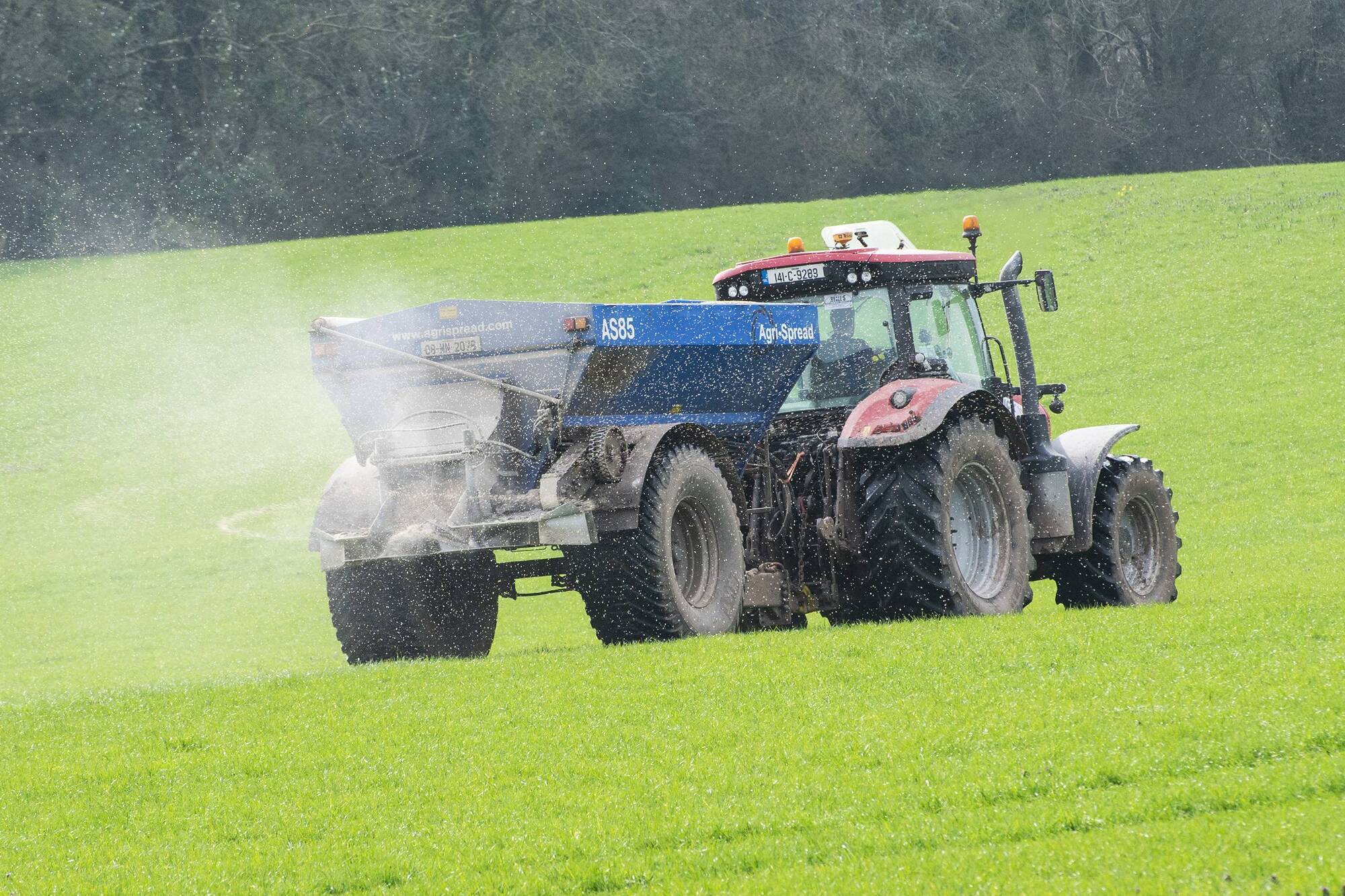
Already, in the UK, ammonium nitrate fertiliser prices are at or near record price levels. File Picture: O’Gorman Photography.
High fertiliser prices may yet prove to be the least of farmers’ troubles caused by the price increase of more than 400% for natural gas in Europe.
Fertiliser manufacturers use natural gas to make ammonia by adding nitrogen (from the air). Several big manufacturers have been forced by higher gas prices to cut back fertiliser production.
Some experts fear that the gas price rise could trigger a repeat of the 1970s oil crisis and the accompanying recessions.
Gas prices have risen higher and faster than oil prices did in the 1970s.
The latest official EU figures showed the price of natural gas in Europe rose 441.3% in the past year. Natural gas in the US increased 76% in price.
According to analysts at Rabobank, a cold winter followed by low wind generation on the European continent contributed to rising demand for gas, thus slowing down the build-up of inventories.
Meanwhile, hot weather increased demand for gas to generate electricity for air conditioning, and the supply of Russian gas has slowed down.
Global natural gas supply and demand balances are extremely tight and storage levels are critically low heading into the high-demand winter months, according to a Rabobank report.
“Our fundamental modelling is indicating that global storage facilities would be practically empty, in a cold winter scenario. This would be a catastrophic scenario that the market is trying to solve for now by increasing prices so much that demand is forced to ration.”
Households will experience a rise in gas prices unlikely to be offset by higher wages in the near term, thus reducing their spending power. Rabobank experts warn the gas crisis might shave 0.7 points off a predicted 3.9% recovery of the Eurozone in 2022.
They say higher natural gas prices are likely here to stay because of a slowdown in natural gas production in the US, the global growth engine for such supplies over the past decade, via fracking. The US is no longer increasing supplies, and production remains well off pre-pandemic highs.
At the same time, global demand for gas continued to rise as part of the shift towards a zero-carbon future. Natural gas provides an important bridge away from the dirtiest of fuels such as coal and fuel oil.
It could be mid-winter before certification of the new Nord Stream 2 gas pipeline between Russia and Germany is completed.
Fertiliser is only one of many industries affected by higher gas prices. Also in the agri-food industry, production of ethanol and food packaging are affected.
A key by-product in fertiliser factories is food-grade carbon dioxide, used to stun animals for slaughter in the meat industry and for injection in packaging to extend shelf-life.
Production of aluminium and specialised chemicals is also very sensitive to gas prices.
Even if gas shortages are overcome, the price impact will continue in the markets that depend on gas.
Already, in the UK, ammonium nitrate fertiliser prices are at or near record price levels.
Prices jumped when CF Industries closed their two UK fertiliser production sites due to high natural gas prices, without any estimate for when production would resume. The two sites are estimated to produce about 40% of the UK’s ammonium nitrate fertiliser supply.
With the UK government fearing that a halt to carbon dioxide production by CF Industries would cause massive disruption in supply chains, from fizzy drinks to meat, it introduced a three-week support package for one of the company’s sites.
Yara, the world's largest trader of ammonia, said it has responded to wholesale gas prices surging by bringing ammonia to Europe from production facilities in Trinidad, the US, and Australia.
The threat to fertiliser prices poses a dilemma for the EU.
Reducing fertiliser use by 20% is a Green Deal 2030 target, but it may now have to act to keep this key input for European farmers affordable.
It has options. For example, it could lift the anti-dumping charges it implemented in 2019 on fertilisers coming from the US, Russia, and Trinidad and Tobago.
An investigation by the Commission had found hard evidence for “dumping” of cheap fertiliser in the EU, which disadvantaged the EU fertiliser industry (which already has to pay very high carbon allowance prices while competing with international competitors in countries where such carbon policies are not in place).
According to EU farmers, prices for liquid ammonium nitrate have doubled since anti-dumping charges were imposed.
The latest official EU figures showed the price of urea rose 79.1% in the past year (the average price of all fertilisers rose 72%).
The EU could also lift its ban on imports and transit of potash from Belarus, the world's top producer of this crop nutrient.
Here in Ireland, IFA said anti-dumping duties removed competition from the market and left farmers facing some of the highest fertiliser prices globally.
They have joined with COPA and the other European farming associations in asking the European Commission to suspend the anti-dumping measure on UAN.
“With current gas prices and the knock-on impact this inevitably will have on fertiliser prices, the imposition of EU anti-dumping taxes on any fertiliser is completely unacceptable at present,” said IFA President Tim Cullinan.