Farm land values: Positive picture on the landscape
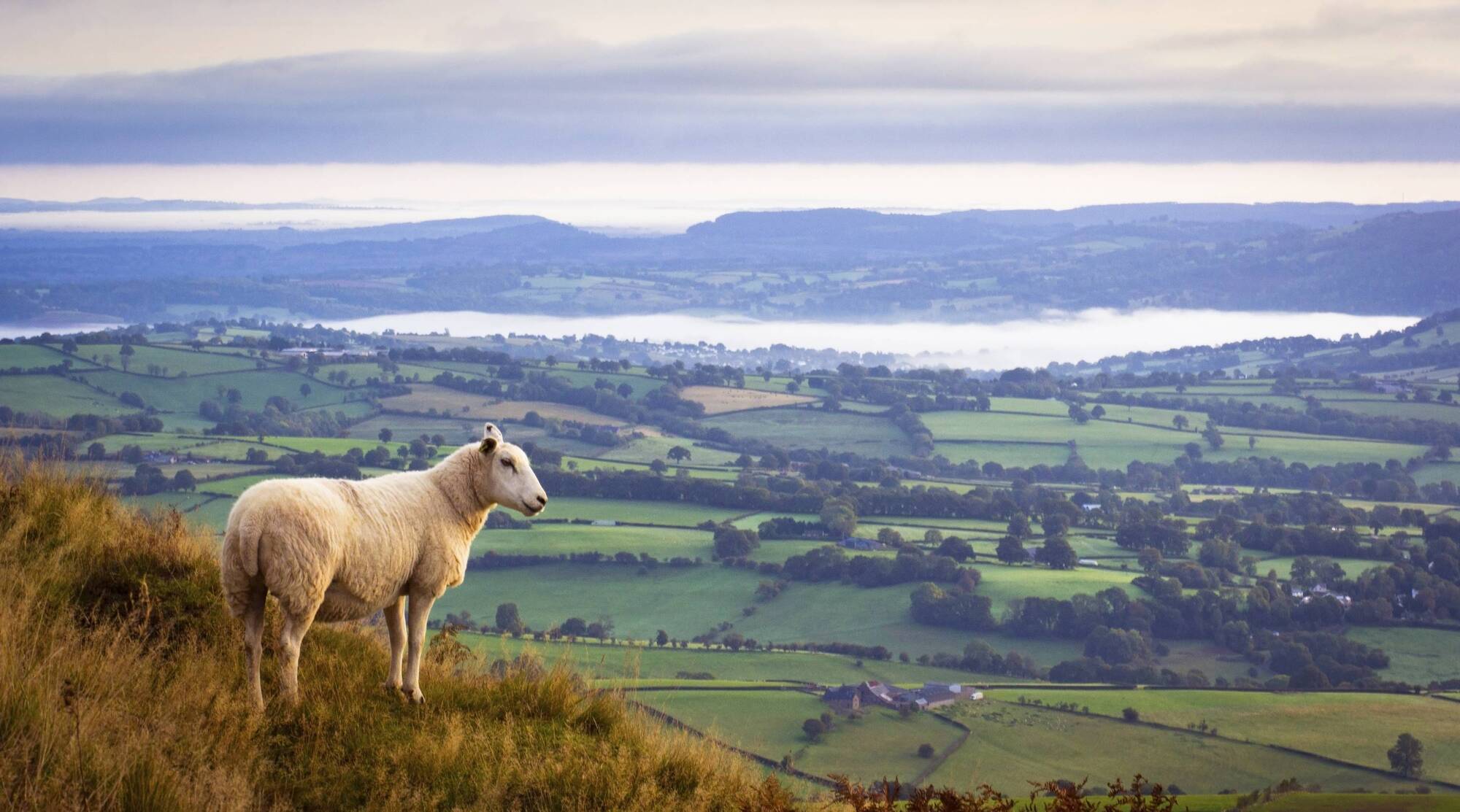
Farm land is  making €10,000 to €14,000 per acre. Hot spots like West Cork and near towns are at €14k to €20k an acre
Farm land values: Positive picture on the landscape

Most farm land around Ireland is between €10,000 to €14,000 per acre. Hot spots like good land in West Cork and land with development potential near towns are making anything from €14,000 to €20,000. Picture: iStock

Conor Power talks to some of Ireland's leading auctioneers about the rising value of the country's farm land to gain insights on factors driving demand 
With the number of people remotely working on a permanent basis having gone up dramatically during the last year and a half, the pressure on rural residential property has never been more acute.

Land prices are on the up in Munster as well as in the rest of the country and they’re not showing any signs of decreasing. Whether it’s grassland, tillage land or equestrian acres, the trends look set to remain in an upward trajectory for the foreseeable future.

“Land in North Cork is making €10,000 to €12,000 per acre,” notes Michael O’Donovan of Sherry Fitzgerald O’Donovan, who have offices across County Cork in Mallow, Fermoy and Midleton, “with the exceptional parcels making up to €15,000 per acre.”

 “Land prices are hitting €14,000 to €16,000 per acre on a regular basis,” says Trevor McCarthy of Cork-based Irish & European, whose area of operation is a little farther south. “Good grassland with buildings is getting €14,000 to €15,000 per acre. 

“We think that there’s a lot of positivity out there in the agri-land market,” he says. “Again, it’s the dairy man or woman who’s driving it… That’s where most of the confidence is. Any farmer who’s in dairying is generating cash for his business every month and it’s a sector that’s looking positive at the moment… And the banks like funding dairying operations because they can see the cash flow it generates.” 

Forestry land is still in demand but the pinch on supply is even more acute in this particular sub-sector. As a result, forestry land prices have seen a hardening during the year, with prices for the best plantations reaching around €5,500/acre.

“Most land around the country is between €10,000 to €14,000 per acre,” says Mike Brady of Cork-based Brady Group, agricultural consultants and land agents. “Then you go to the hot spots and it’s making anything from €14,000 to €20,000: the hot spots being good land in West Cork; land near towns that may have development potential; land that might be an ideal grazing block that two people are interested in; a certain amount of stud farms.”

 South Tipperary has been another hotspot too, with its large grassland holdings and potent blend of agricultural activity – dominated by the dairying sector but represented by some top beef farmers and equestrian businesses.

“In the Tipperary area, you’d be talking between €10,000 and €15,000 per acre,” says Alison De Vere Hunt of Cashel Marts, “with the exceptional properties making in the region of €20,000. But that would be the average – selling holdings of between 10 and 50 acres.” 

The absence of live auctions in the last year may have dampened prices compared to the extraordinary ones that were more commonplace in the years preceding last year. However, Alison feels that the lack of much-sought-after larger holdings may have something to do with how the year has been; solid but not as extraordinary.

When bidding for farm land, you’re not just competing against other farmers; you’re competing against investors too, even for smaller land parcels.

Investors sharpen focus on agri land

The investors are, by now, a well-established component in the agricultural land market and their presence is applying upward pressure on land prices in general.

“It’s not easy to pick up bargains anymore,” is how Alison De Vere Hunt of Cashel Marts puts it, “because you’re not just competing against other farmers; you’re competing against investors too and even those buying smaller parcels just to live on.” 

It’s a fairly accurate description of today’s land investor because, unlike his predecessor back in the days of the Celtic Tiger, today’s investor comes with less inflationary ambition; with the objective of simply putting his/her money in the best, most tax-efficient place – earning a modest return and keeping it safe. Alternatively, today’s investor also comes in the form of someone investing in a rural lifestyle; a family on a smallholding.

“It’s a very buoyant market compared to previous years,” says Éamonn McQuinn of McQuinn Consulting in Tralee. “It’s the best 18 months that I’ve seen in a long time… we’ve had a good few big sales. There’s certainly a healthy appetite for land in Kerry. What’s driving it in anyone’s guess but I’ve seen it with a number of farms where the land is being bought for tax reasons.” 

Prices for top grassland vary in different parts of the county, he says, with good pastures in North Kerry achieving from €12,000 to €13,000/acre upwards.

“I would find that there’s a strengthening of the market in the last 6-12 months,” says Tom Crosse of Limerick-based GVM Auctioneers. “It’s patently obvious that land prices are on the up – I’d suggest by about 15%. 

"There’s a lot of demand there, driven by dairy farmers and by the resurgence of the business community who see land as being a reasonable investment. Beef farmers are doing well also and I think that low or negative interest rates in banks is pushing money out of banks and into land. Hobby farming is also becoming fashionable… All told, it’s all very positive.” There were some strong sales in his area of operation, including one in the Patrickswell area that was expected to make €1 million but is believed to have made close to €1.4 million.

Another phenomenon he finds is that of people from Cork who were underbidders in areas where strong prices have already been established, are moving on land in Limerick instead, thus spreading the boom in land prices, as it were. Kerry farmers are prone to the same behavioural pattern, he adds.

“We’re finding that lands are exceeding the asking price regularly, with active bidding being the norm,” says Waterford auctioneer Brian Gleeson, whose reach includes West Waterford and East Cork. “We’ve sold agricultural land for between €12,000 and €15,000 per acre. We’ve also appraised two land holdings in West Waterford recently and, such is the quality of the soil structure, these farms will be a litmus test for prices in West Waterford in the coming months.” 

David Shee of Shee & Haw in Carrick-on-Suir also has a close eye on the land market in Waterford, having sold a number of farms in the area over the last year: “We sold a 34-acre farm near Kilmeaden for over €10,000 per acre,” he notes, adding that the sale of a smaller holding (circa 14 acres) near Portlaw village was agreed for a price in excess of €13,500 per acre.

Tightening supply adds to competition

 “There wasn’t as much land on the market,” notes Michael O’Donovan of Sherry Fitzgerald O’Donovan, who have offices across County Cork in Mallow, Fermoy and Midleton. Substantial farms that did come on the market tended to go very well, he notes, with one 180-acre holding selling for €2.5 million (over €14,000/acre) in East Cork. 

“We haven’t had as much land for sale in the last year as we’ve had in the last couple of years but anything that’s selling is selling well enough.” “We’ve had very little supply this year,” says Trevor McCarthy of Irish & European’s Cork office. “We just haven’t had a huge amount of land coming in the market in the last year but anything we have had coming up has gone quite well.” “No problem selling land,” says Mike Brady of Cork-based Brady Group, agricultural consultants and land agents, “but the volume of sales is down. There just isn’t enough land coming on the market.” Statistically speaking, there is approximately 40% less land on the market now compared to the situation about three years ago – a strong contributory factor, surely.

The reasons why supply seems to be tightening are multiple, it appears, with different agents offering different views to explain the pattern.

“There’s a bit of uncertainty going forward,” suggest Michael O’Donovan of Sherry Fitzgerald O’Donovan, who says that much of the uncertainty he speaks of is centred in the dairying sector and specifically, in the uncertainty over the future of the price of milk.

“I would say that the first main reason would be long-term leasing,” says Mike Brady of the Brady Group. “People that may have considered selling a farm before will now enter a long-term lease and they’ve a tax-free income. It’s particularly clear when you compare the situation with putting that same money in the bank. Where are you going to put it? 

"If you sold a farm for a couple of million euros, the bank is going to charge you if you put it in there. The best you could do might be to put it into prize bonds with the Post Office but that’s limited to €50,000. On the flip side, then, you have people with money who are considering buying land and letting it out for the very same reason in reverse.

“Another reason is that dairy farmers are motoring along fine and they’re not so inclined to get out of the business… With hobby farmers or part-time farmers, they seem to be less pushed to sell as well.” 

Hobby farmers and part-time farmers tending to stay put could also be a part of the changes brought by the Lockdown. With the number of people remotely working on a permanent basis having gone up dramatically during the last year and a half, the pressure on rural residential property has never been more acute. 

According to multiple anecdotal reports from auctioneers all over the country, the pressure point is on rural houses with a small curtilage of a few acres, with many agents saying that all the stock of such housing has disappeared ‘off the shelves’ over the last year or so.

 This, of itself, puts plenty of pressure on the land market, with active bidding coming thick and fast in the case of residential farms that are broken into lots.

Less farmers retiring

 One of the underlying reasons for the tightening of the supply of land has been the issue of retiring farmers. Since the end of the Early Retirement Scheme (recently criticised by the EU for not having adequately met the needs of older farmers), holdings have been much slower to come to the open market. Many of those who might have retired earlier under the previous scheme are now retaining holdings and leasing them out.

“Traditionally, when you had farmers retiring and if they didn’t have somebody taking over the farm from them, they’d sell the farm,” says Trevor McCarthy of Irish & European. “Whereas now, even before they’ve reached retirement age, the option is there for them to go into a long-term lease. It’s tax-efficient – they can generate tax-free income in a long-term lease.”

 With an increasing number of farmers seeing the benefit of leasing their holdings long-term, an increasing number of young farmers looking to rent land long-term, it’s no wonder that there’s such a scarcity of agricultural land all of a sudden. When one adds to that the resurgence of the investor, land prices look to be heading in only one direction.

The story of slow supply to the agricultural land market is not a new one, but current pressures are being keenly watched by Government authorities.

Land prices heading for ‘perfect storm’?

With pressure on land prices mounting, it begs the question of how long such a situation can last.

Will some Government tax advisor step in and spot the gaping hole and attempt to shore it up? According to Mike Brady of the Brady Group, not only is this next move is inevitable.

“It’s already happening,” says Mike Brady. “They (the Government) are already looking at it… Land is the worst home in the world at the moment for passing on to the next generation. If you let it out on a ten or 15-year lease, you might be only getting 1.5% or 2% return on it but at least it’s 2% tax-free and the land is going to be there at the end of it.” Such a situation, in fact, illustrates the kind of double pressures on land that are contributing to the rise in values.

“As a consequence, because the volume is down on the supply side, prices are being pushed up. The hobby farmer is back on the market again – back in the saddle after Covid, so to speak. To a lesser extent, you have a certain amount of development land and CPO’s starting up again. 

"Those are two more areas, where it’s been dead for ten years but which are starting to kick in again. I would say they you could be heading towards a ‘perfect storm’ with land prices – you’ve a shortage of supply and demand coming from all the different sectors.”

 But when it comes down to it, the story of slow supply to the agricultural land market is not a new one. While certain factors that have produced a pinch in supply over the last year or so will probably be ironed out, Irish land has its own peculiarities that few other countries in Europe experience – a cultural trait, perhaps, related to our own particular history and of the role that land has played in it.

“Traditionally, there has always been a bit of an issue with agricultural land supply in Ireland,” says Trevor McCarthy of Irish & European. “Land in Ireland only trades every three or four generations on average. This is something not seen in most other European countries.”

Residential 48-acre Golden Vale farm likely to fetch €800,000

 An excellent holding consisting of 48.5 acres of Golden Vale land complete with a residence is expected to sell well in the coming weeks, according to the selling agent Richard Ryan of GVM.

The property is in the townland of Brickfield, approximately 5km from Kilmallock and 8km from Charleville.

“It’s being offered in three lots,” says Richard. “Lot 1 is the house – a four-bedroom bungalow-style residence on half an acre, with a guide price of €225,000. Lot 2 is 22.5 acres with a guide price of €275,000 (€12,000/acre). It’s all excellent-quality grazing land which has all been re-seeded within the last couple of years… it’s really good land. Lot 3 is 25 acres and we’re guiding that at €300,000 (€12,000/acre).” 

The house is around 40 years old but has been very well maintained.

Lot 2 comes with an old farmyard, comprising an old milking parlour and a few stables, an old slurry pit and a cubicle shed.

“The outbuildings are well maintained and in good order,” says Richard, “but a bit antiquated by today’s standards…. We’ve a good bit of interest in it and we would expect to be able to conclude a deal on it in the coming weeks.”

End-of-month online auction date for 49-acre farm in North Cork

 There should be keen interest in an upcoming online auction of a 48.6-acre holding in Gortnacross, North Cork.

The residential holding is going under the virtual hammer on Thursday, September 30, at 11am.

“It’s reasonable-quality grazing land,” says selling agent Will Lyons of Cork-based auctioneers ERA Downey McCarthy. “And it’s very well located, in proximity to Mallow.

“The farm is just to the northwest of Mallow and it has extensive road frontage, with a number of access points to the property. It’s entirely in grass, divided into grazing paddocks To attend the online auction, interested parties must first register their interest online at eracork.ie, where they can also download a full legal pack for them or their solicitor to review beforehand. The solicitors with carriage of sale is the Beauchamps firm in Dublin.

The guide price is €430,000. At €8,800 per acre, it is a logical expectation for a good quality farm in this part of Munster. The online route has become popular in recent years and its method has been well tried and tested and will probably remain a strong option for many auctioneers even after Covid restrictions have been lifted.

Hobby farmers interested in charming 44-acre North Cork holding

According to Mary O’Callaghan of Mallow auctioneers Singleton O’Callaghan, there is keen interest in a 44-acre residential equestrian holding new to the market in North Cork – 15km from Charleville and 22km from Mallow.

“It’s set up as a small equestrian holding,” says Mary, “but the interest in it so far is mainly from people who aren’t particularly into farming or equestrian or anything like that – they’re interested in the rural lifestyle, the peace and quiet. They’re very much into growing their own produce… the good life, basically.” 

The property has a modern three-bedroom dormer-style bungalow, along with a hay barn that houses three stables and a number of out-offices. There are ten acres of mature forestry but the remainder of the land consists of pasture.

“The land is good quality land – all grazing ground,” says Mary.

The holding features a man-made lake covering approximately one acre, it’s well fenced and maintained and there is electricity and water supply. The house is in a private position, set well off the main road with a tar-and-chip driveway leading from the public road. The N20 is a few kilometres away.

The agents are seeking offers in excess of €495,000 for the farm.

Rare high-class home on 27 acres in East Cork to generate c.€1m

A top-quality residence on a substantial tract of top-quality land in East Cork is already generating a great amount of interest, according to the selling agent Michael Barry of the Fermoy office of Dick Barry & Sons.

The 27-acre residential property on the edge of Rathcormac village, comes with some form: two years ago, a larger part of the land – a 95-acre non-residential holding located across the road from it – was sold at auction for over €17,000/acre.

“As you’re coming out of Rathcormac village and heading towards Cork city, it’s on the left-hand side,” says Michael, who explains that at the time of the auction, the owners kept the house on 27 acres with a period house, stables and sheds until they found alternative accommodation. Now that they have, the magnificent period house on 27 acres of prime land is on the market.

“It’s a beautiful period house known as Greenhall,” says Michael. “There are 2 acres of woodland, but the rest is top-class land.” Despite the location on the very edge of the development boundary of the satellite town, this is strictly agricultural land, albeit high quality land in a superb location. The price guide is €1,000,000, selling jointly with GVM in Kilmallock.

Brace of farms in East Cork offer varied prospects in rising market 

New to the market with Midleton-based auctioneer David Keane, a pair of residential farms offer different prospects to the vibrant agricultural land market in East Cork.

“The 46-acre farm is in Churchtown South, Cloyne,” says David of the location which is 5km south of Cloyne village and close to the beach. “It’s a unique situation because there’s a high percentage of it within the development boundary in Churchtown South village.” 

While the location wouldn’t allow for large-scale development, it could benefit someone who was looking at building a house on five or six acres. The recently-refurbished house on the land is in good condition.

Most of the land consists of top-quality pasture with extensive road frontage and it will be offered in four or five lots with a price expectation of €17,000 to €20,000/acre.

The second farm is a 92-acre residential holding 10km north of Killeagh and includes c.13 acres of forestry. Extensive road frontage bounds one side, with a stream demarcating the other.

The land is of good quality pasture and the dwelling – a c.4-year-old bungalow in need of modernisation – can be sold separately from the rest of the land. The price expectation is over €12,000/acre.

More in this section

Farming

Newsletter

Keep up-to-date with all the latest developments in Farming with our weekly newsletter.

Cookie Policy Privacy Policy Brand Safety FAQ Help Contact Us Terms and Conditions

© Examiner Echo Group Limited