Legal Advice: Opposing the registration of a right of way
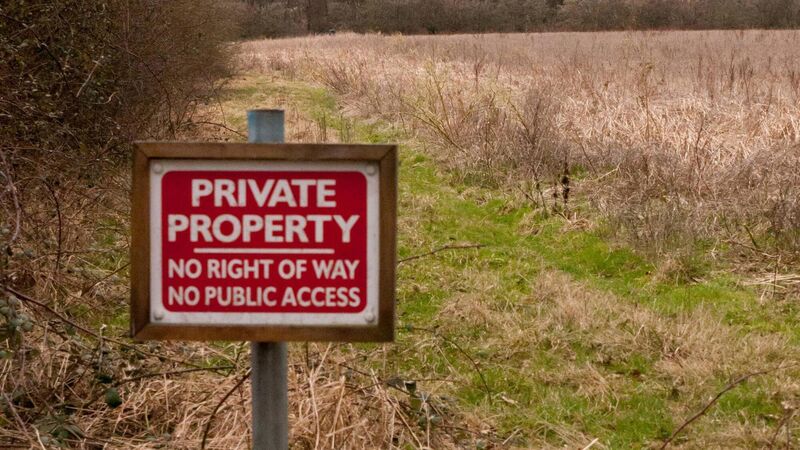
Rights of way can come into existence if there is continuous and uninterrupted use for a minimum period of 20 years. File Picture.
The deadline for the registration of rights of way on November 30 is fast approaching. A person may access their house or lands through a neighbour’s private roadway or lane. They do not own the private lane or roadway and they do not have a registered right of way but they believe they are entitled to use it and they may therefore seek to register this right of way in advance of the deadline or thereafter. What do you do if you wish to prevent someone from registering a right of way over your land?
In order to advise on this, it is essential to know how a right of way by prescription comes into being in the first place. Rights of way can come into existence without any agreement or consent and the use must be continuous and uninterrupted over another person’s land for a minimum period of 20 years (based on the current law).
To establish such a right of way there must be dominant and servient lands. The dominant land is the land benefiting from the right of way and the servient lands are those over which the right of way exists. Many landowners are lodging applications under the Land Registry Section 49(a) procedure. This involves the applicant lodging an application for registration in the Land Registry. The applicant must swear an affidavit as to the facts showing proof of the acquisition of the right of way by prescription, evidencing the 20-year user period at least, that the exercise of the right has been without force, without secrecy and without permission. Once the application is received by the Land Registry and they have examined it, the Land Registry will send a notice to the owner of the servient lands. This gives the servient landowner the right to object to the registration sought.
The landowner is allowed a period of 21 days to lodge a valid legal objection. If the Land Registry are satisfied with the application and no objection is received within the said time frame, the Land Registry will proceed to register the right of way sought.
If a valid objection is made, the Land Registry may refuse the application or the application may be withdrawn. The only avenue available to the applicant then is to apply to the Courts to seek a declaration of the existence of their right of way. There are no set criteria as to what constitutes a valid legal objection. Grounds for challenging the application would be that the user has not acquired the said 20 years user, that the right of way has not been used as it is impassable or overgrown.
The person objecting could lodge an objection on the basis that the right of way has been abandoned. This is very much dependent on the facts of the case. There has been numerous case law where the Courts have repeatedly found that mere non-use is not proof of abandonment, there must be an intention to abandon and extinguish the right of way for the right of way to cease to exist.
In relation to the Section 49 application, there is no requirement that the servient landowner needs consent to the application. If no valid legal objection is made, the right of way will proceed to be registered as a burden on your folio. It is therefore up to the servient owner to lodge an objection within the requisite time frame to resist an application for the registration of a right of way over their land.