Additional town hall webinar added to CAP public consultation
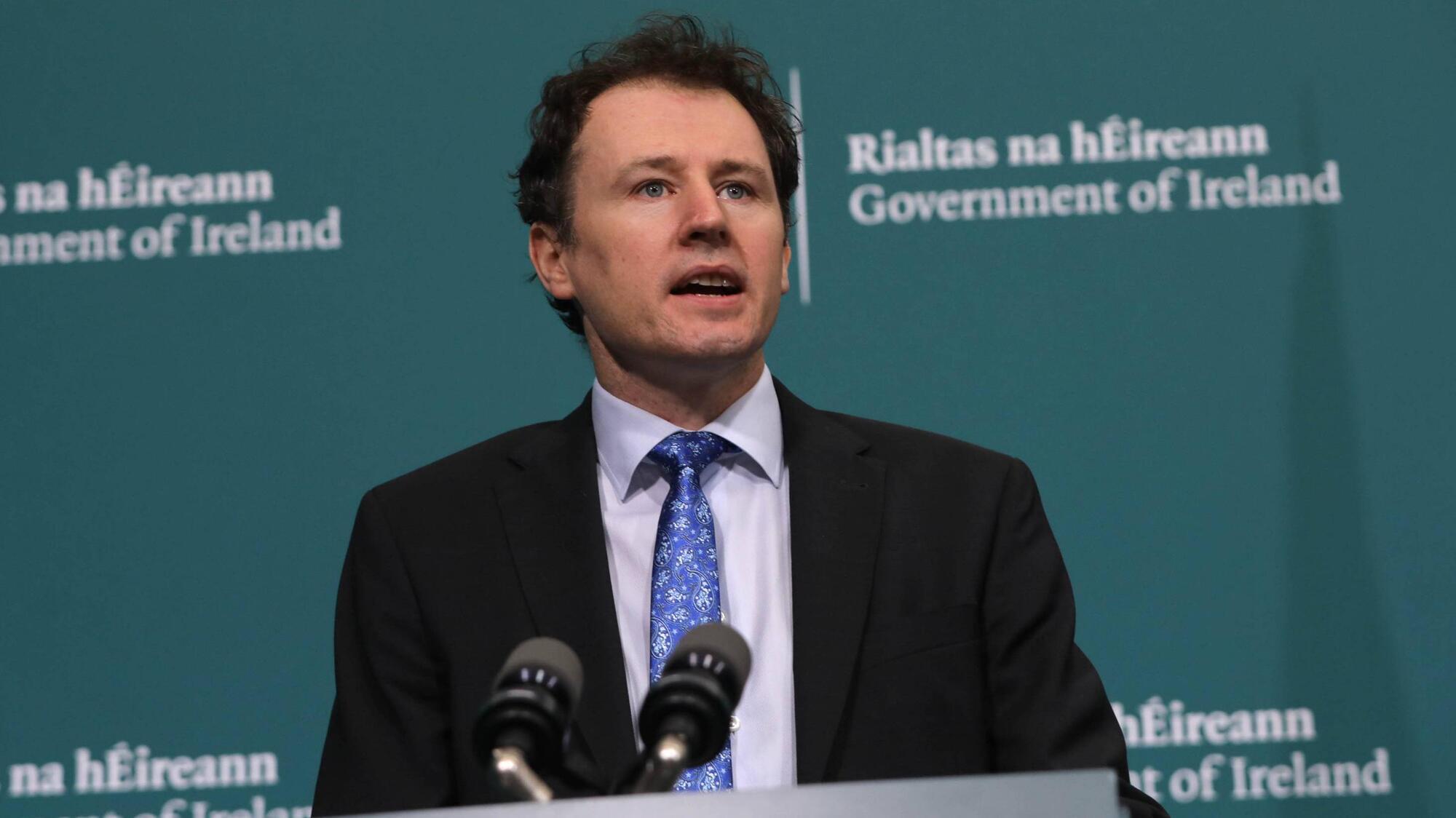
Minister for Agriculture, Food and the Marine Charlie McConalogue. Picture: Chris Bellew, Fennell Photography.
An additional town hall webinar date for Tuesday, August 10 next has been announced by the Department of Agriculture as part of a public consultation on the draft interventions proposed for the 2023-2027 CAP Strategic Plan (CSP).
The consultation was launched on July 30 and will run for four weeks to August 27 next.
The additional date will provide further opportunity for stakeholders to participate in the process while a new modelling paper on the direct payments has been made available on www.gov.ie/cap
“I have consistently said that I would consult widely to hear the views of all stakeholders in order to fully inform my decisions on, for example, redistribution of direct payments, capping and convergence of direct payments, and on how best to achieve the economic, environmental and social objectives of the CAP,” Minister Charlie McConalogue said.
“The latest modelling paper will provide stakeholders with information on the impact of some of the possible changes in direct payments to farmers.
“Stakeholders will have an opportunity to hear more about the modelling at the three virtual town hall meetings on August 10, 11 and 12.
“There will be an opportunity to ask questions on the night, or to submit them in advance.
“In addition, written submissions can be made to my department by post or email until August 27.
“There is also an opportunity to complete an online survey.”
Irish Farmers' Association (IFA) Livestock Chairman, Brendan Golden has asked the Minister to "clarify" his intentions on the draft suckler scheme for 2023-2027, which is now out for public consultation as part of the new CSP.
“While farmers will understand the concept of a reference year, any suggestion that farmers would suffer a penalty on their payments for existing cows if they increase numbers would be unprecedented and unacceptable,” he said.
“IFA has consistently sought a payment of €300 per suckler cow. This scheme must be the vehicle to do that, but we can’t have restrictive conditions.
"The Minister and the Department need to learn the lessons from the BEAM scheme, which turned what should have been a good news story into a negative.
“The overall problem with the consultation document is that there is no indication of the budget for the schemes. The budget for the suckler scheme must be sufficient to deliver €300 per suckler cow.
"The Government should set out their plans for the budget as part of the consultation process.
“IFA will make a comprehensive submission before the deadline of August 27."
Meanwhile, Ireland’s CSP 2023-2027 will underpin the sustainable development of Ireland’s farming and food sector by supporting viable farm incomes.
It will also enhance competitiveness through strengthening the socio-economic fabric of rural areas, and by contributing to the achievement of environmental and climate objectives at national and EU levels.
The new CSP represents a change in the approach to CAP planning and implementation compared to previous programming periods.
Instead of the familiar compliance-based approach followed previously, a new performance-based approach will be adopted.
This will be underpinned by a ‘New Delivery Model’, under which member states’ performance will be judged on outputs and results, and on how their CSPs contribute to CAP objectives at EU level.
The CSP will also take a more holistic approach, incorporating interventions under both Pillar I (Direct Payments and Sectoral Interventions) and Pillar II (Rural Development) into one overall plan.
The responses received through the public consultation will be reflected in a draft version of the overall CPS that will be submitted to external evaluators in early September.
Following completion of their work, an updated plan will be made available for further public consultation in October/November.
The final plan will be submitted for government approval in December before submission to the EU Commission by January 1, 2022.
The EU Commission months will subsequently approve the plan within six to eight months and it will commence on January 1, 2023.