Food Vision 2030: Where will your farm be in ten years?
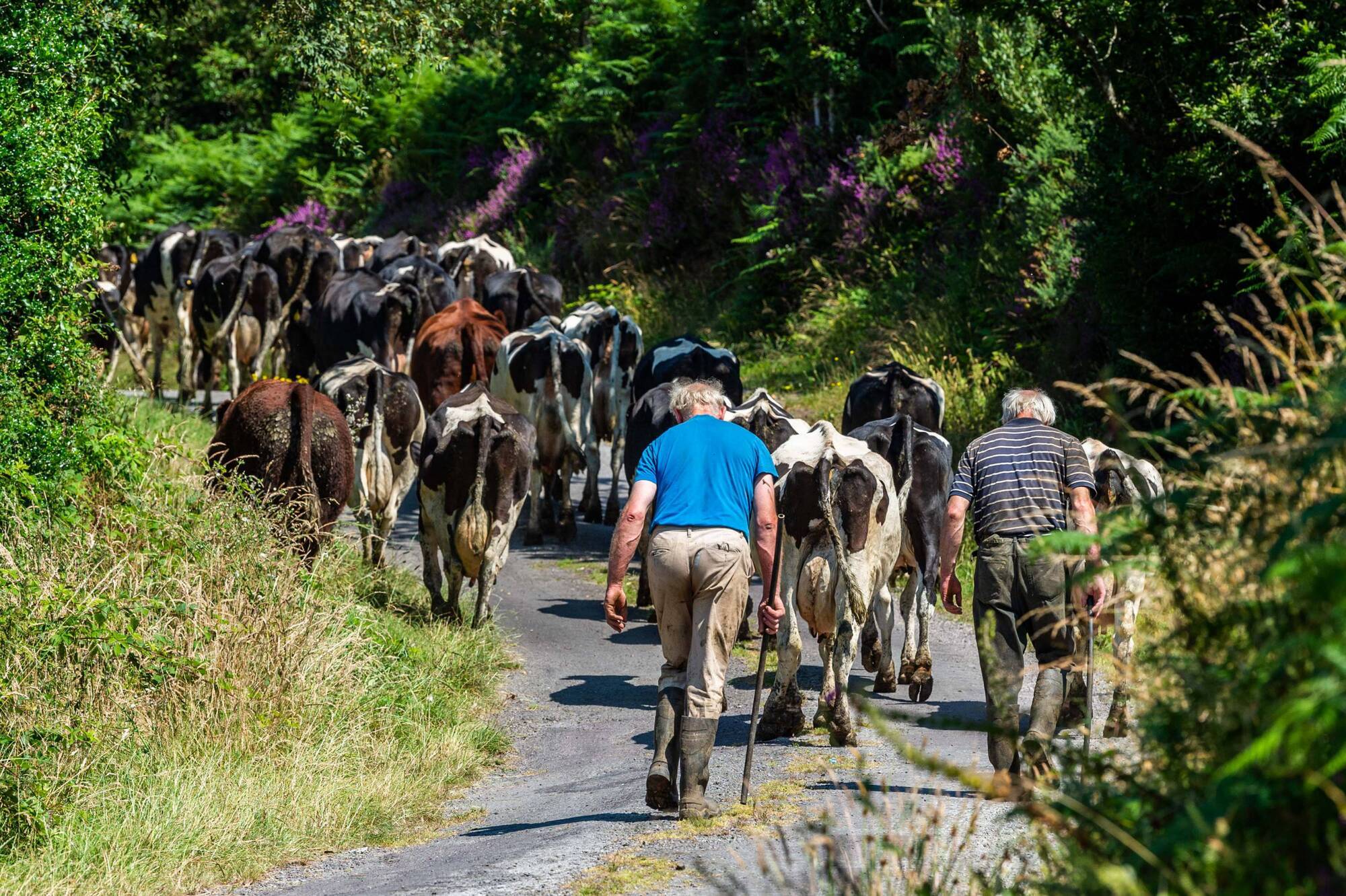
Dairy farmer Paul Kingston moves his 75-strong herd of dairy cows across the R586 at Drimoleague. Picture: Andy Gibson.
The strategic aim for Irish agriculture has changed somewhat over the past decade. The 2030 version of where agriculture is going was released on Tuesday.
As a backdrop, many of you will recall Food Harvest 2020 as being a plan immersed in optimism.
To parlance the document, farmers were tasked with becoming more productive, reducing costs and producing higher value outputs while the food industry was tasked with better target R&D and responding better to market demands.
The opportunity for farmers was increased returns, less exposure to volatility and greater economies of scale with less fragmentation.
The opportunities for the food industry included increased value-added output, higher profitability with consumers' preferences satisfied, improved consumer health and an increase in consumer loyalty.
It’s hard to criticise such an aspirational document, after all, it points to a win-win for all. That document highlighted where agriculture was aiming to be in the decade that was to follow to 2020.
As a reference point the average farm income in 2010 across all sectors was €17,771, for 2020 the story looks a lot better with average farm income across all sectors rising to €25,663.
However, looking in more detail, the reality on the ground is enterprises other than dairying had modest increases in profits if any, with sheep farmers fairing best with an average increase in profits of €6,114 per holding, some of this increase in profitability across the sector reflects the transition of basic payments due to convergence.
The modest increases in average farm profit have not resulted in a transformation for Irish farmers. The big winner, however, over the past ten years has been dairy farming enterprises with family farm income increasing by a chunky €29,804 over 2010 levels.
The abolition of quotas gave dairy farmers the opportunity to expand their business and ultimately farm profits with dairy farms having an average of 56 cows in 2010 versus 82 cows in 2020.
Looking at the 2030 document, the aspirations within are equally noble.
The keyword that permeates throughout the document is sustainability, with this being further divided into economic sustainability, social sustainability and environmental sustainability.
There are four overarching missions:
- The creation of a climate-smart, environmentally sustainable agri-food sector;
- Creating viable and resilient primary producers with enhanced well-being;
- The provision of a sector that produces food that is safe, nutritious, and appealing, trusted and valued at home and abroad;
- Becoming an innovative, competitive and resilient agri-food sector, driven by technology and talent.
Much like the 2020 Food harvest strategy, there is little within the 2030 mission statement one could find fault with.
The challenge for all will be the translation of these aspirations into a more meaningful increase in profitability at farm level than has been achieved in the preceding decade.
While there are some notable good news stories of start-ups and successful product positioning at producer level, the reality on the ground is that the vast majority of farmers in Ireland continue to derive their income from farming which is predominately commodity based.
Rebranding product and targeting premium markets is outside of the scope of farmers, and farmers are in a weak position vis a vis claiming a fair share of the margins from producing a premium product.
To my mind this is perhaps best expressed in the relatively low differential in pricing between U grade and P grade beef cattle for farmers.
Farmers will be interested to note within the document the target of creating “a climate-neutral food system by 2050, with verifiable progress achieved by 2030, encompassing emissions, biodiversity and water quality”.
Undoubtedly the biggest challenge for farmers for the coming decade will be the ability to adapt to environmental restrictions and challenges imposed at processor level by those seeking to differentiate and at a base level as a result of EU changes.
The dairy sector which has benefited the most over the last decade in terms of financial performance will find itself facing the biggest challenges over the coming decade in terms of the perceived environmental impact of intensive farming.
Issues already on stream include the introduction of selective dry cow therapy, and by extension default mandatory milk recording, low emission spreading technology, restrictions to the availability of prescriptive therapies and potential restrictions in stocking rates due to potential changes to the nitrates derogation.
- Kieran Coughlan, Chartered tax adviser Kieran Coughlan, Belgooly, Co Cork.