75% of cattle herds have been exposed to IBR
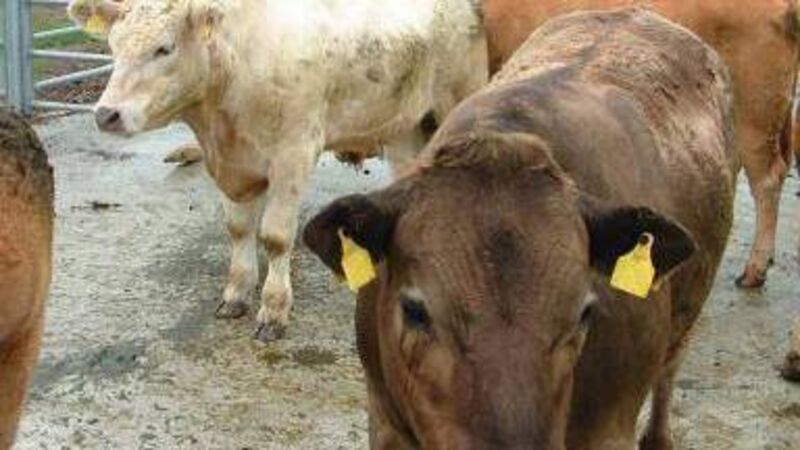
IBR is a highly infectious disease of cattle caused by bovine herpesvirus 1 (BoHV-1) that can give rise to significant economic losses in farms. File Picture.
Infectious bovine rhinotracheitis (IBR) is widespread in Ireland where evidence suggests that 75% of cattle herds have been exposed to the virus.
IBR is a highly infectious disease of cattle caused by bovine herpesvirus 1 (BoHV-1) that can give rise to significant economic losses in farms.
IBR spreads typically by close contact between animals, although airborne spread of the virus may occur over distances of up to 5m; it can also be spread by using contaminated semen, equipment and by people.
Clinical signs may include dullness and reduced appetite, high temperature, rapid and loud breathing, sometimes with coughing, fluid discharge from nose and eyes, inflammation of the throat and, on occasion, death.
Infection can also be accompanied by sudden reduced milk production, abortion, nervous signs (normally only in young calves).
However, it is also recognised that in herds with endemic infection, the course of infection can be sub-clinical but nevertheless, still be associated with a reduction in milk yield and negative reproductive outcomes.
While the economic impact of infection may be greatest following initial introduction into a herd, there are also ongoing losses in herds with established infection, as susceptible cattle are exposed to the virus.
In dairy herds, a reduction in milk yield can also be a significant outcome of infection and in some cases, the main presenting sign.
Several studies have investigated the effects that exposure to this virus can have on milk production.
One study that looked into the effect of IBR outbreaks on milk production in free dairy herds in the Netherlands, found that losses averaged 0.92kg of milk per cow per day during a nine-week period.
Another study explored the potential economic impact of subclinical IBR infection in the UK and found that IBR-seropositive cows produced 2.6 kg per day less milk over two years (study period) compared with cows that were seronegative.
An Irish study found that infected dairy herds recorded a reduction in milk yield, as well as in milk fat and protein, highlighting sub-optimal milk production in positive herds.
It concluded that profitability was reduced by an average of €60 per cow per year, aggregating to a national figure of €62M of foregone profit.
Detailed information leaflets on IBR and herd biosecurity, along with answers to frequently asked questions on IBR and specific guidance for herds with bull calves that are potential AI sires, are available from the IBR section of the Animal Health Ireland website (animalhealthireland.ie).
- Maria Guelbenzu, IBR Programme Manager, Animal Health Ireland