Threat to pig industry as ASF advances in Germany
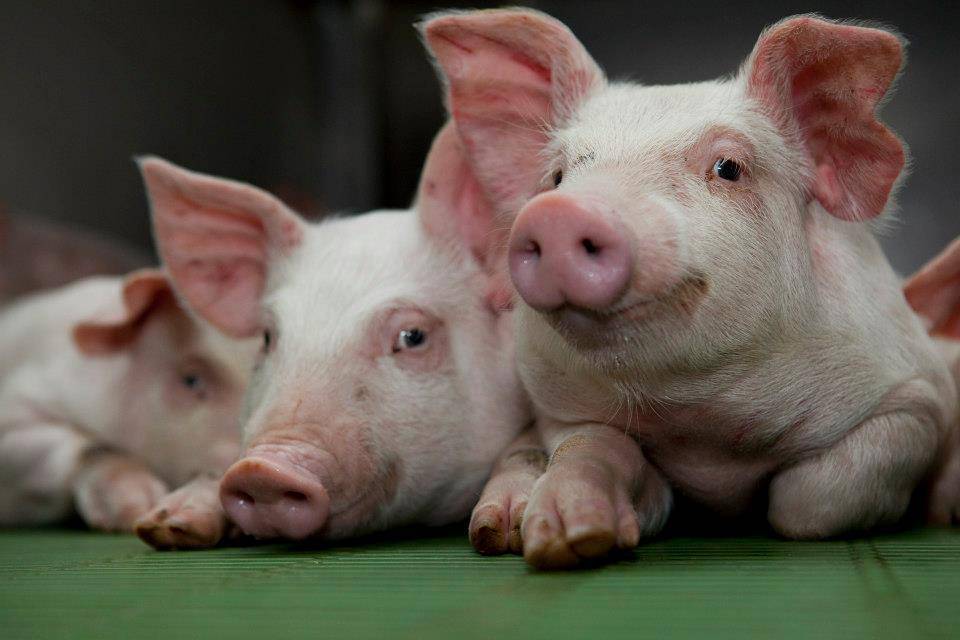
657 cases of ASF have emerged in domestic pigs in Europe since the start of 2021. File Picture.
The worldwide spread of the African swine fever (ASF) virus advanced into domestic pigs in Germany recently.
With Germany, France, Denmark, the Netherlands, and Poland together having about half of the EU’s pigs, the jump from wild boars to domestic pigs in the east of Germany increases the threat to the industry from the disease which has completely disrupted the global pigmeat trade, mostly due to African Swine Fever (ASF) outbreaks in China and its neighbouring countries.
Cases on three farms in Germany are the latest among 657 cases in European domestic pigs so far in 2021. Most of these (590) were in Romania, with 24 in Poland and 33 in Serbia.
But there have been 7,975 cases detected in the European wild boar population this year, including 1,018 in Germany, 2,436 in Hungary, 1,953 in Poland, 812 in Romania, and 1,230 in Slovakia.
There is no vaccine for ASF, so prevention measures are the only way to stop the spread of this disease, harmless to humans but frequently deadly for pigs.
With no cure or vaccine currently available, it is important to prevent outbreaks, by citizens, tourists, farmers, hunters etc taking appropriate actions.
In outbreak zones, mass slaughter of farm-kept pigs and of wild boar is currently the only effective way to prevent spread to adjacent regions and countries. Early detection, prevention and reporting are therefore crucial if this epidemic is to be controlled.
Areas affected by ASF suffer significant financial losses, mainly due to restrictions on meat exports.
If pigs show any signs of fever, loss of appetite/weight, loss of energy, vomiting, diarrhoea, or redness of the skin, contact the local vet.
With over 15 million sows, pigs are big business in Germany.
There was no early effect on German pig prices after the first recent ASF detections on farms.
This was not unexpected, because the farms were in the eastern region of Brandenburg (close to the border with Poland) where ASF has already been found on a large scale in wild animals, so there have not been any significant changes to the zones from which trading of pigmeat was already restricted.
Also, Brandenburg is not a major pig farming area.
Countries such as China, South Korea, and Japan were among nations to ban pork exports from Germany last September when ASF was first found in Germany’s wild boars.
Now, the findings in domestic pigs could hinder negotiations with China about ending import bans.
The bans have contributed to pig meat oversupply pulling down pig prices across the EU.
Germany’s trading of live pigs and pork within the EU has continued because ASF remains contained within the Brandenburg region.
The EU has agreed to allow continued export of pork from German states not affected by ASF.
It is hoped that German trade with Vietnam, Singapore and Canada can continue because they recognise regionalisation for export from disease-free areas.
Meanwhile, Germany must fight to control the spread of the virus, after it was found on one organic farm with 200 pigs, and two hobby farms with four pigs and two pigs.
The hobby farms are unlikely to have sophisticated biosecurity measures which will protect larger pig farms in the affected areas.
Meanwhile, concentric exclusion zones will be put in place, in which all wild boar will be actively hunted, as part of measures to contain the virus.
The German authorities in three states bordering Poland are constructing permanent 1.2m-high fences. Such fences are already used on the Germany-Denmark border, to reduce the risk of virus spread by wild boar.
Over 1,500 infected wild boar carcasses have been found in Germany since last September, but all were in a 30-km wide strip along the border, in the states of Brandenburg and Saxony.
This is in sharp contrast to the situation on the other side of the border, where the spread of the virus in Western Poland has been unstoppable, with 5,203 infected wild boar found since November 2019, and 24 farms hit by outbreaks so far in 2021.
Meanwhile, another disease is cutting pig production significantly in the American Midwest.
The Porcine Reproductive and Respiratory Syndrome (PRRS) virus costs the worldwide pig farming industry billions per year, and an epidemic caused by the PRRS 144 strain is leading to sow units being depopulated, after causing up to 25% sow mortality, and up to 50% wean to finish deaths.