Study reveals only Ireland gets close to adequate wages for dairy farming
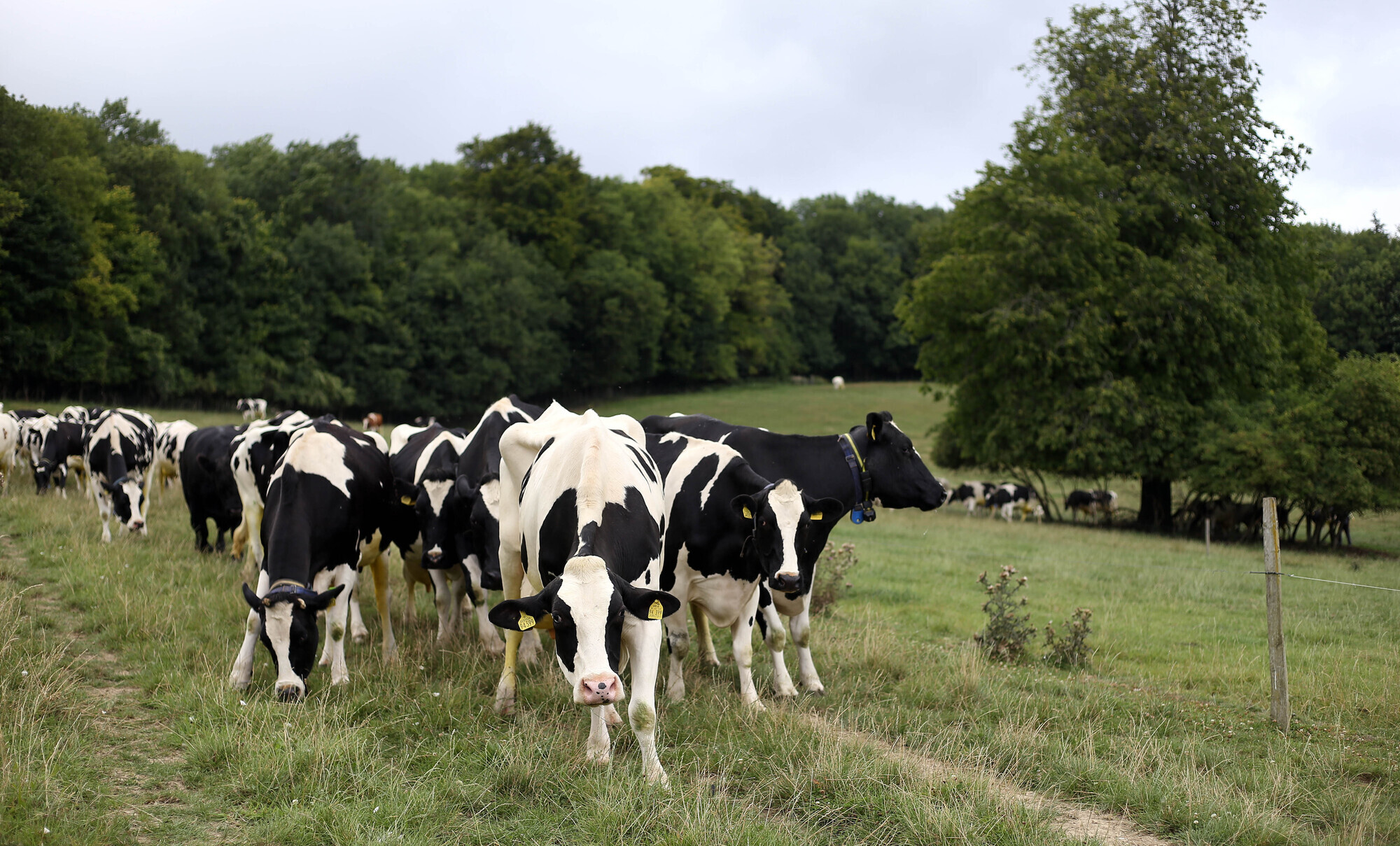
Cows grazing in a field before being milked at Home Farm near Sevenoaks. File Picture.
Milk costs from 2015 to 2019 were analysed in key milk-producing EU countries for the EMB by German agricultural sociologist Dr Karin Juergens. The minimum milk price farmers needed for a decent family income was calculated.
General operating costs (based on official EU data) included seeds, fertilisers, feed, buildings, machinery, pesticides, and energy. Droughts were found to have caused a significant cost increase for feed in some countries.
When beef sales were deducted from general operating costs, paid milk production costs were found to range from 21.54c/kg in Ireland to 38.68c in Denmark.
Adequate income was calculated, based mainly on national wage agreements. This ranged from €8.76 per hour in Lithuania to €30.06 in Denmark (€22.66 in Ireland).
But in most countries, not even paid costs were covered, not to mind adequate income (CAP payments were included as income). Only Ireland came close, with "real" income of €22.23 per hour not too far short of the estimated adequate income of €22.66.
The EU average outcome was found to be "real" income of €3.25 per hour compared to estimated adequate income of €19.85.
According to the study by Dr Jürgens, this outcome is being reflected in dairy farm closures across the EU, because it makes little economic sense for a young farmer to stay in dairying.
In the study, net investment from 2009 to 2018 was found to be generally low, and negative in France, implying running down of assets.
According to the study, the milk production cost (including adequate income of 12.07c/kg, based on an hourly wage of €22.66) in Ireland increased to 34.21c/kg in 2019, mainly because of drought (in 2018) making feed more expensive.
But the milk price was only 31.26c.
The average Irish outcome in the study from 2015 to 2019 was a "cost" of 21.54c, compared to a 33.38c milk price.
In 2019, the average milk cost (including adequate income) across the EU was calculated at 45.35 cents/kg. With EU prices for milk averaging 34.52 cents/kg, there was a significant shortfall.
“This clearly shows a problematic imbalance throughout the EU,” said EMB President Sieta van Keimpema, from the Netherlands.
The EMB said Ireland had the lowest production costs in 2019 by a long shot, at 34.21 cents/kg. However, even with Ireland’s extremely favourable conditions for milk production, costs in the study were not covered in three of the five years looked at.
At the other end of the scale, Lithuania, with many small farms, had the highest 2019 production costs at 58.63c/kg, and a low milk price of 28.79c, leaving a shortfall of 51%.
Production “costs” in the eight EU countries were found to range from about 34 to 59c/kg, but prices for milk only ranged from about 29 to 34c/kg.
The EMB said the study showed that in the Netherlands and Denmark, farm managers and family labour were left with nothing in hand, and thus no income.
“We have to bear in mind that we are talking about the Netherlands and Denmark, countries with very modern farms that continue to take on new technical developments,” says Ms van Keimpema.
Dr Jürgens, the author of the study, said: “Dairy farms are not just missing the earnings needed for stable and future-proof operations.
"They are not even making enough for an appropriate income or even an adequate living.” In the study, she calculated costs including income targets appropriate for the level of training and qualifications and based on national minimum wages.
EMB Vice-President Kjartan Poulsen, an organic dairy farmer in Denmark, said: “How can it be acceptable for someone to earn nothing or close to nothing? We are a well-trained workforce with long-standing experience, and we work hard every day. That includes weekends and holidays.
“Furthermore, we also undertake major risks and shoulder significant responsibility for our animals, for food security and for the environment.”
Dr Jürgens said the study provides important insights for successful implementation of current environmental policies like the EU’s Green Deal.
“Farms will only be in a position to contribute to the implementation of environmental, climate and animal welfare goals that imply higher costs if there are lasting improvements to their economic situation.”
She found that 2019 milk production costs, including appropriate remuneration, were lower than paid milk prices in all eight countries and in the EU on average.
The calculated cost shortfall averaged 24% in Belgium, Denmark, France, Germany, Ireland, Lithuania, Luxembourg, and the Netherlands, which together produce 60% of the EU-27's milk.
High general operating costs were attributed in Denmark to wages, depreciation, and contractor charges; in France to depreciation, and contract work; and in Lithuania and Luxembourg, depreciation was almost half of the costs.
Denmark has only 35% family labour, compared to nearly 70% in other member states.
Per kg of milk, adequate income is low in Denmark because of high milk yield and less non-remunerated family labour.
It is high in Lithuania, due to more family labour, and low milk yield.
The study included a separate analysis of organic milk production in Germany in 2019, based on data from the federal ministry.
The cost was estimated at 64.63c/kg (including adequate income of 24.53c for labour), compared to a milk price of 47.17. Real earnings per kg to repay the estimated 24.53c for labour were therefore only 7c.
The European Milk Board (see europeanmilkboard.org) is made up of 21 dairy farmer associations and farmers' lobbies in 16 countries, including the ICMSA in Ireland.