Share farming provides opportunity but it also requires trust
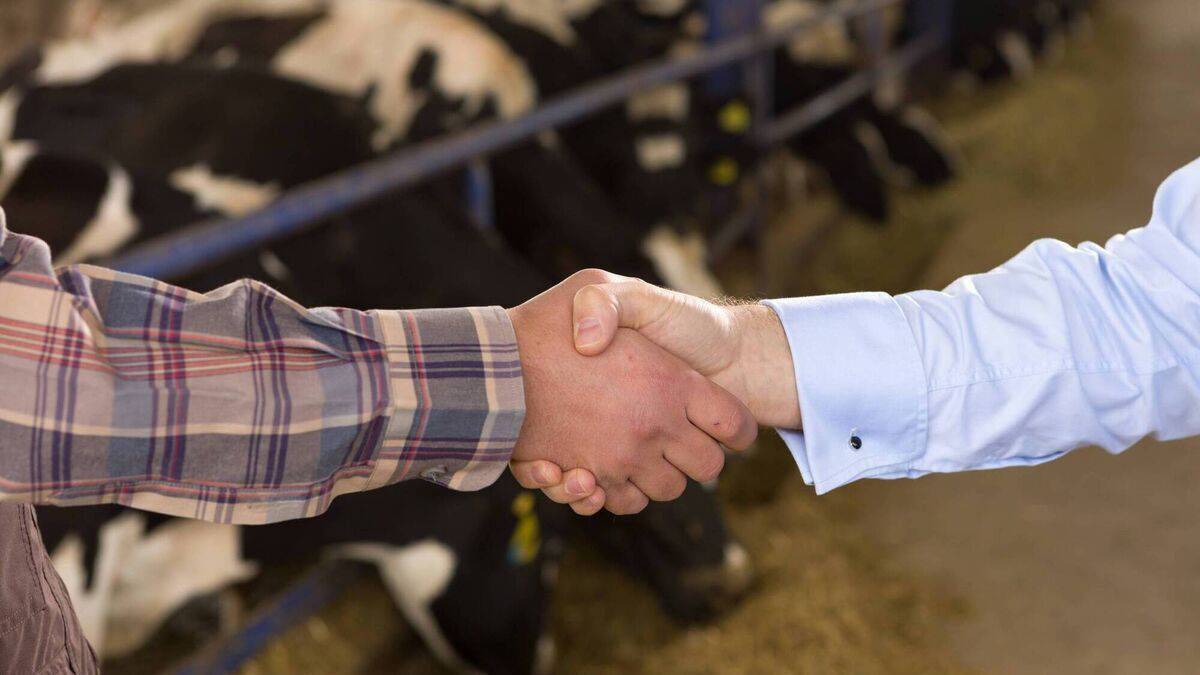
Share farming mightn't be popular but it will be part of the future and is something that farmers need to consider. File Picture.
Share farming isn’t popular in this country but it does nonetheless have a place, and dare I say it will have a greater place in farming in Ireland in the future.
Let’s be honest, historically farmers in Ireland pretty much farmed until they either dropped dead or were no longer physically capable of farming.
The decision to lease out land still carries unwarranted negative connotations.
I recall one conversation I had with a farmer who rebuked any notion of letting ground as to do so would be throwing in the white towel.
Interestingly the grave offense taken was not as a result of his fear of making less profit, his (unfounded) fear of negative tax consequences on the transfer of his land to his children as a result of leasing or his fear of stepping into the unknown.
Rather his fear expressed in his specific wording, a fear shared by the majority of farmers, was that he would be judged by his peers as having given up.
Well my friends, when you can make more money from letting your land than from farming it, then financially at the very least it's time to start taking a deep and long dose of reality.
My rebuff to his rebuke was simple, do you want to provide to the best of your ability for your children or not?
My memory fails me as to how the conversation ended. Where does all of this fit in with share farming?
A farmer’s fear of being judged for giving up is somewhat allayed if rather than going the whole hog leasing out the farm, they instead step back and let some young buck pour their time and energy into the farm.
As mentioned, unfortunately, you see a proportion of farms up and down the country being under farmed, possibly because the owner is no longer capable, doesn’t have the resources to invest in the property, or has lost interest but not to a sufficient degree that they would throw in the towel and let the property.
Share farming does provide an opportunity here.
Take for example a dairy farmer, who is milking 70 cows on 100 acres of good land (no need for derogation here!), by linking up with a trustworthy tillage farmer, the dairy farmer could agree to put for example 15 acres per year on a rotational basis into tillage crops.
A tillage farmer might be interested in this proposition as they get to access bawn ground particularly suitable for wheat cropping or other crops that could do with fresh ground.
A deal could be struck such that the tillage farmer gets a two-year run at any one field such that they are not stuck with ploughing tricky grassland all the time.
As part of the deal, the dairy farmer might for instance get his share via guaranteed supply of straw plus a set share of the crop equivalent to say, 30% yield.
The farmer also benefits from getting his ground back in great order suitable for reseeding into a lovely post tillage seedbed, with the old ley well gone following two crop rotations.
The farmer also has a home within his own farm for depositing farmyard dung, which can be a nuisance in an all grassland farm.
The farmer also doesn’t have to bother himself with trying to become proficient with growing tillage crops as a side enterprise to his dairy enterprise.
For a farmer milking 120 cows on 100 acres, the idea is simply irrelevant as he needs all the land he has.
The average herd size was given or take 60 cows in 2012 prior to lads beginning to expand towards the post-quota era.
It was quite possible for farmers in their sixties and seventies to tip away with a herd of that size.
As herd size has increased farmers may find themselves not able to maintain their large herd as the prime of their life fades into the rearview mirror.
A farmer milking 120 cows absent of a successor will want to slow down at some point, it is here that share farming comes into the fore.
Share farming could in such a case involve a tillage farmer or a young dairy farmer willing to step into the business.
Leasing is a big decision and is a step too far for those who simply want to step back without stepping out.
There is of course always the alternative strategy to keep going till you drop.
- Kieran Coughlan, Chartered tax adviser Kieran Coughlan, Belgooly, Co Cork