Revised roadmap for agri-related GHGs needed
AgClimatise strategy is ‘letting farmers down’
Revised roadmap for agri-related GHGs needed

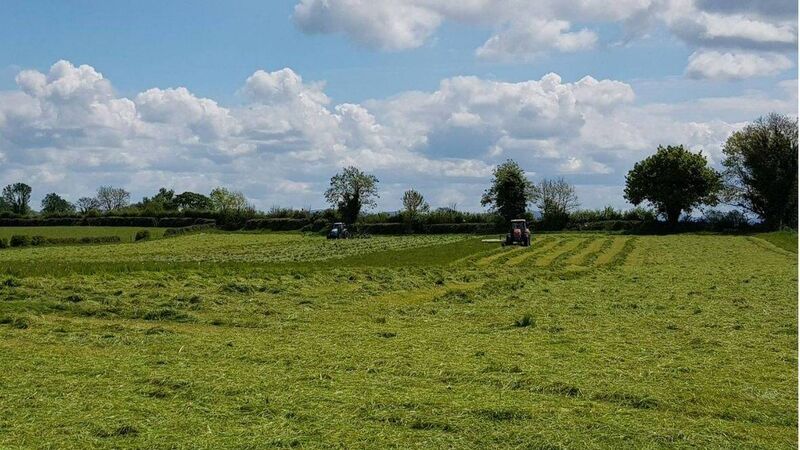
A policy framework that drives emissions down is what farmers need. File Picture. 

The Joint Committee on Environment and Climate Action will receive advice on the role of agriculture in climate action from the Stop Climate Chaos coalition’s Policy Co-ordinator, Sadhbh O’Neill, later today.

The move forms part of the group’s engagement on how Ireland should cut its greenhouse gas emissions (GHGs) up to 51% by 2030.


Ms O’ Neill will highlight how agriculture accounts for 35% of Ireland’s annual GHGs and recommend the publication of a revised roadmap for agri-related emissions reductions that set out a time scale to achieve, as a minimum, compliance with EU and national law.

“Agriculture is the single largest contributor to Ireland's climate-changing pollution,” Ms O’Neill added.

“Without an overarching policy framework for agriculture that drives emissions down, the Government will not be able to meet its commitment to cut overall national emissions by 51% by 2030.

“The existing measures proposed by Teagasc and the Department of Agriculture's AgClimatise strategy are simply not enough.

“The focus on cost efficiency is not working for the environment; it falsely assumes that ‘efficient’ farms are environmentally sustainable farms.

“But merely maximising outputs from each unit of feed or fertiliser does not reduce climate emissions and environmental damage.

“It is also letting farmers down - locking them into indebtedness with intensive, unsustainable systems when much more nature-friendly, diversified ways of producing food exist.” 

Recommendations

Meanwhile, Stop Climate Chaos will make the following recommendations to the Government during its presentation to the Joint Committee: 

  • Publish a revised roadmap for agri-related GHGs reductions that sets out a time scale to achieve, as a minimum, compliance with EU and national law.
  • Put in place a declining cap on total national reactive nitrogen (and phosphorus) usage.
  • Consult with stakeholders and implement measures based on international best practice to limit and reverse recent expansion in the dairy sector by rapidly bringing sectoral GHGs back to 2011 levels by 2025 or as soon as feasible thereafter with immediate priority given to farms in sensitive catchment areas.
  • Put in place compensatory measures to facilitate and incentivise herd reductions and diversification in the beef suckler and finishing sectors.

“Some representatives of farming organisations point to the potential for soils and hedgerows to store carbon and offset emissions from livestock,” Ms O’Neill continued.

“But this is a false solution: sequestration in trees, soils and hedgerows is not permanent and is very difficult and costly to verify.

“We need political representatives to bite the bullet and recognise that the livestock sector has grown too big and needs to be reduced alongside policies to support farmers to embrace agroforestry, horticulture, tillage and low input or organic agriculture.”

Read More

More in this section

Farming

Newsletter

Keep up-to-date with all the latest developments in Farming with our weekly newsletter.

Cookie Policy Privacy Policy Brand Safety FAQ Help Contact Us Terms and Conditions

© Examiner Echo Group Limited