“The key challenge is how do we motivate farmers to address the climate biodiversity emergency? After all, farmers are part of the solution to all of this, they can also become the first responders to it.”
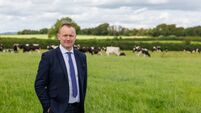
These were the sentiments expressed by Dr Brendan Dunford, manager of the Burren Programme, during a Teagasc webinar on farm sustainability last week.
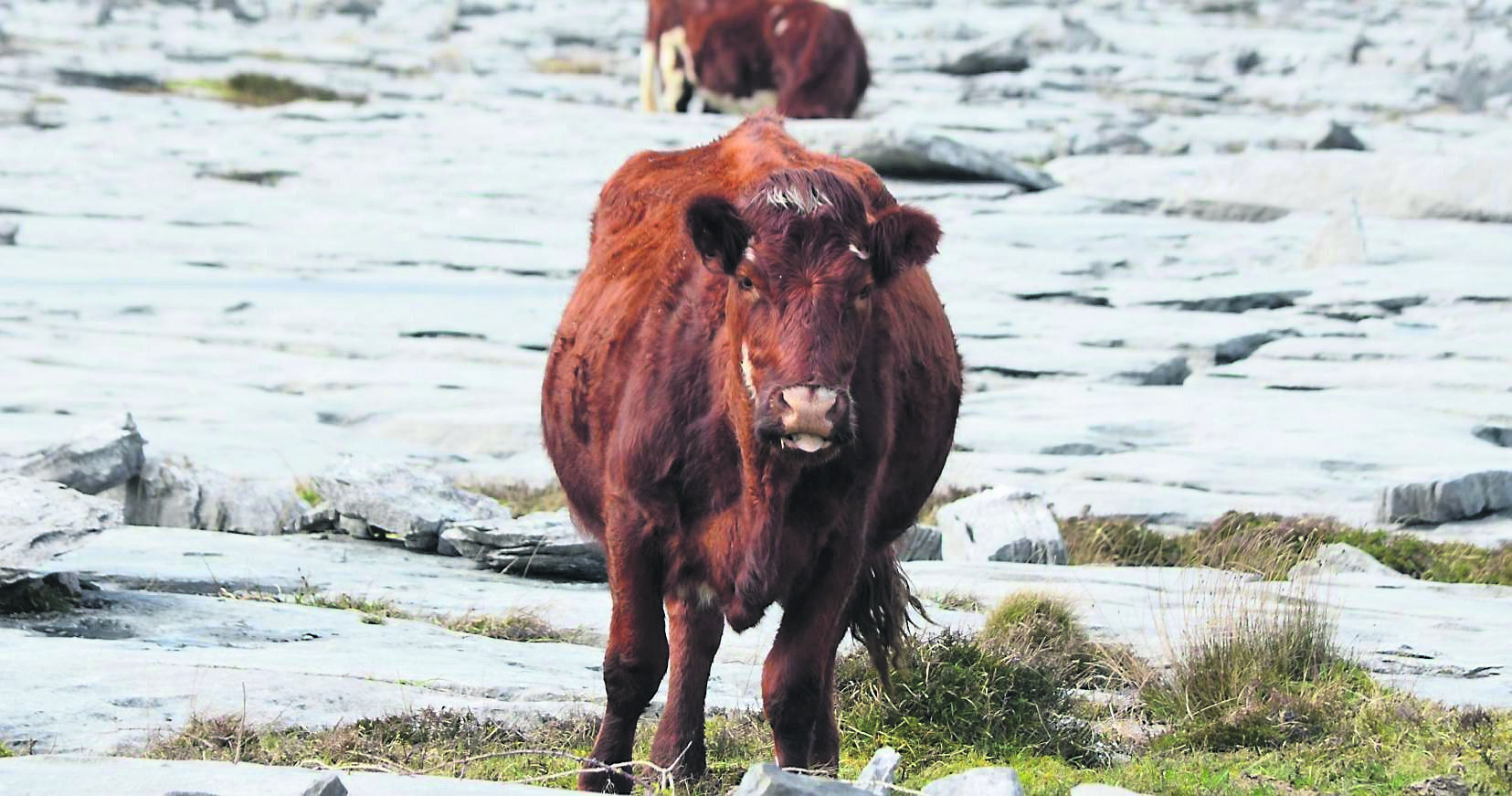
The Burren Programme is a locally targeted conservation initiative which invests in local farmers, their land and livestock, and works with farmers to optimise their farming systems, so they can continue to produce high quality agricultural goods from their unique landscape of glacial-era limestone in Co Clare.
Several hundred farm families live and farm in the Burren despite the challenges posed by the rough, unforgiving terrain, especially in an era of efficiency-driven farming.
According to Dr Dunford, these farm families produce excellent livestock, as did their forefathers, and in many cases this has been achieved using the same ancient pastoral traditions, but crucially, they also hold the key to the future wellbeing of the Burren.
Sustainable farming
Work on sustainable farming has been going on for the best part of 20 years in the Burren, and the results are now there to prove the effort is paying off.
Much of the results are due to farmers being listened to, supported and financially rewarded for their efforts.
“Over the last 40 or 50 years, there have been huge changes in farming, and nature hasn’t had a chance to adjust,” said Dr Dunford.
“In the Burren, you get more intensive farming in the green land areas.
“The intensive farming has caused damage to water, soil, etc, and biodiversity has been reduced. This is in fact happening all over Ireland.
“What we are trying to do now is to find the balance, so that we can sustain the right type of farming in the Burren and look after the natural culture and heritage.
There are about 30 million hectares of high nature value type farmland like the Burren across Europe, and what works in Co Clare may work elsewhere in the EU.
Dr Dunford says perceptions of farming, and placing a value on all types of agriculture, are crucial to addressing the climate crisis.
“When we think about farming, we think about farmers out there on the land producing milk and meat, producing all the important food commodities”.
“But maybe there is another perspective, of ecosystem services?
“Food is an ecosystem service, but so too are biodiversity, pollinators, cultural heritage, clean water and soils, fresh healthy air, carbon storage, etc.
“These are all things that farmers can produce by managing the land in a certain way.
However, there is only a market for meat. And rather than criticising a farmer for clearing some beautiful Burren habitat in the first instance, it is necessary, says the expert, to sit down with him and try to understand why the situation developed in the first instance.
“When the farmer explains that this is what he is getting paid for, or this is what he has been advised to do, this is what we do as farmers, we come out thinking the only way to change that farmer’s mind is to look at ecosystem services, put a value on them, support farmers in delivery of those services, and convince the farmer that this is the best thing to do for himself, his family, and his community.”
Motivating the farmer
Farming is a business, so there has to be payment for the work carried out.
But, according to Dr Dunford, it’s not just about the money, it is also about the head and the heart.
“A better proposition has to be made to farmers than the one that is on offer now, and I fully believe that they will adapt when that is done,” he said.
“With the pocket, and we realised this a long time ago, unless we put a value on our ecosystem services, we would not be able to persuade farmers to deliver.
“So we came up with a scoring system which reflects the environmental health of each field on the farm and the effort the farmer put into improving that health.
“We have been doing that for 12 years now, and it is working really well.
“The fields are assessed once a year by advisors, scores are allocated, and payments are made accordingly.
“The purpose is to reward the farmer who delivers the most, and not to reward the person that doesn’t deliver.”
Meanwhile, farmers can also avail of co-funding to address certain issues on their farm.
“If farmers are generating additional ecosystem services, they are also providing additional opportunities, and we have about 60 local farmers who offer their service to other farmers,” the Burren Programme manager said.
“We have five different people now who are making gates locally. That is a little mini-business in itself. We have farmers leading farm walks and, a lot of the time, they are paid to do that.”
Farmers need support. But, unfortunately, when it comes to environmental management, “support is not plentiful” says Dr Dunford.
“One of the problems we had in the Burren was the feeding of silage on winterages, so we built a Burren-specific feed ration which contained all the missing minerals and nutrients. We have had innovations around water quality, research at farm level, training and support.
“I really believe that farmers have the experience and knowledge to provide the solutions themselves.”
Farming for nature was set up in the Burren, to renew farmers’ confidence and spur them into action. It has been hugely successful.
“Farming is part of a broader community, and farmers invest heavily in these communities,” said Dr Dunford. “Farming delivers extraordinary values, and this needs to be captured.
“We set up a little festival here in the Burren to recognise the value of farming to this area.
“Locally-led approach, long-term programmes, engagement to build trust, and exciting agri-environmental schemes are what is needed.
“It can be done.”
The administration of the Burren Programme is funded by the Department of Agriculture, Food and the Marine and delivered under contract by High Nature Value Services (HNVS) Ltd.