All the world was a stage for Ireland’s rural drama groups
Rooted in parish communities, the movement promoted friendship, embraced acting and direction, helped people to think about rural and urban life (warts and all) and provided story lines that caused laughter, sadness, and sometimes controversy
All the world was a stage for Ireland’s rural drama groups

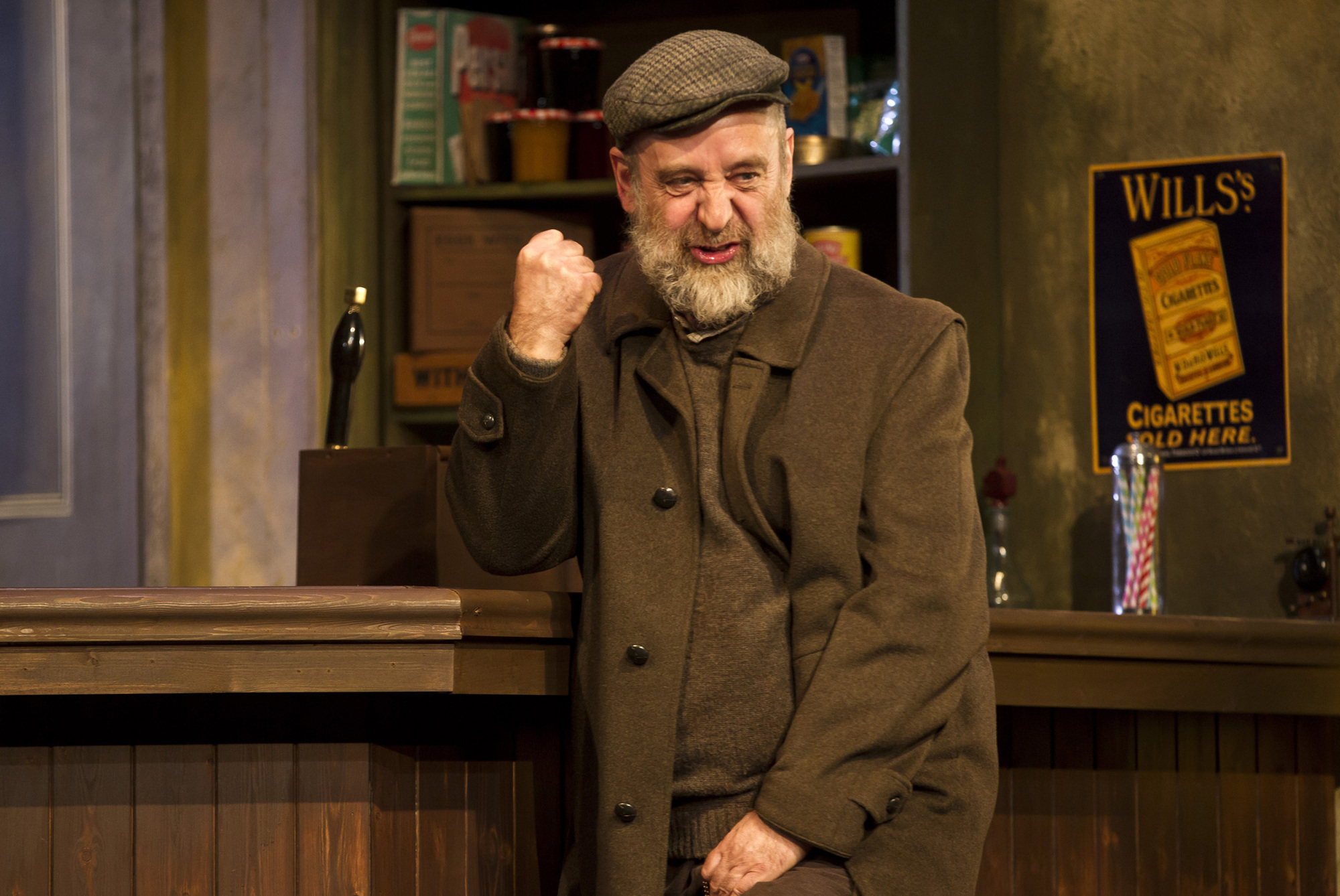
Photos released 27 April 2015 Michael Harding (The Bull McCabe) in the 50th Anniversary production of The Field by John B Keane. The Gaiety Theatre April 23 - May 30, 2015. Photo: Patrick Redmond
ONE has only to look at the ‘putting on’ of a play in any country town or parish to learn more about the complexities, tensions, dreams, follies, and stubborn individualism of rural people.

Mícheál Ó hAodha, the former Radio Éireann drama-and-variety production director, wrote those perceptive words in a magazine article about the country’s amateur drama movement nearly 60 years ago.

He estimated that 850 drama groups and 10,000 people across the country were staging plays from November to May and attracting combined audiences of up 250,000 people.

Farmers and factory workers, teachers and bankers, shopkeepers and hairdressers, musicians and singers, carpenters and electricians, postal workers and priests, doctors and builders, office staff and nurses, students and the unemployed were all involved.

Rooted in parish communities, the movement promoted friendship, embraced acting and direction, helped people to think about rural and urban life, warts and all, and provided story lines that caused laughter, sadness, and sometimes controversy.

Staging a play also involved hammering planks on porter barrels to make a set and the acquisition of delph, furniture, and other props for kitchen scenes.

The gentle hum of sewing machines on kitchen tables was heard as old clothes were redesigned as costumes to be worn by the players in period dramas.

Ó hAodha noted that for a few weeks every year, those players, like the artisans of the Middle Ages, left aside the scythe and the trowel, the spade or the scalpel, to make themselves ‘a motley to the view’ of their townsfolk.

Among the writers he mentioned was Macroom-born TC Murray and his authentic portrayal of life in rural Ireland.

“Here is no world of shamrocks and sunburstry, but the quiet dignity of a people who wrest a hard living from a none-too-fruitful soil.

“lt has been truly said that when we sit at one of his plays, we do not look at ourselves, but into ourselves,” Ó hAodha wrote.

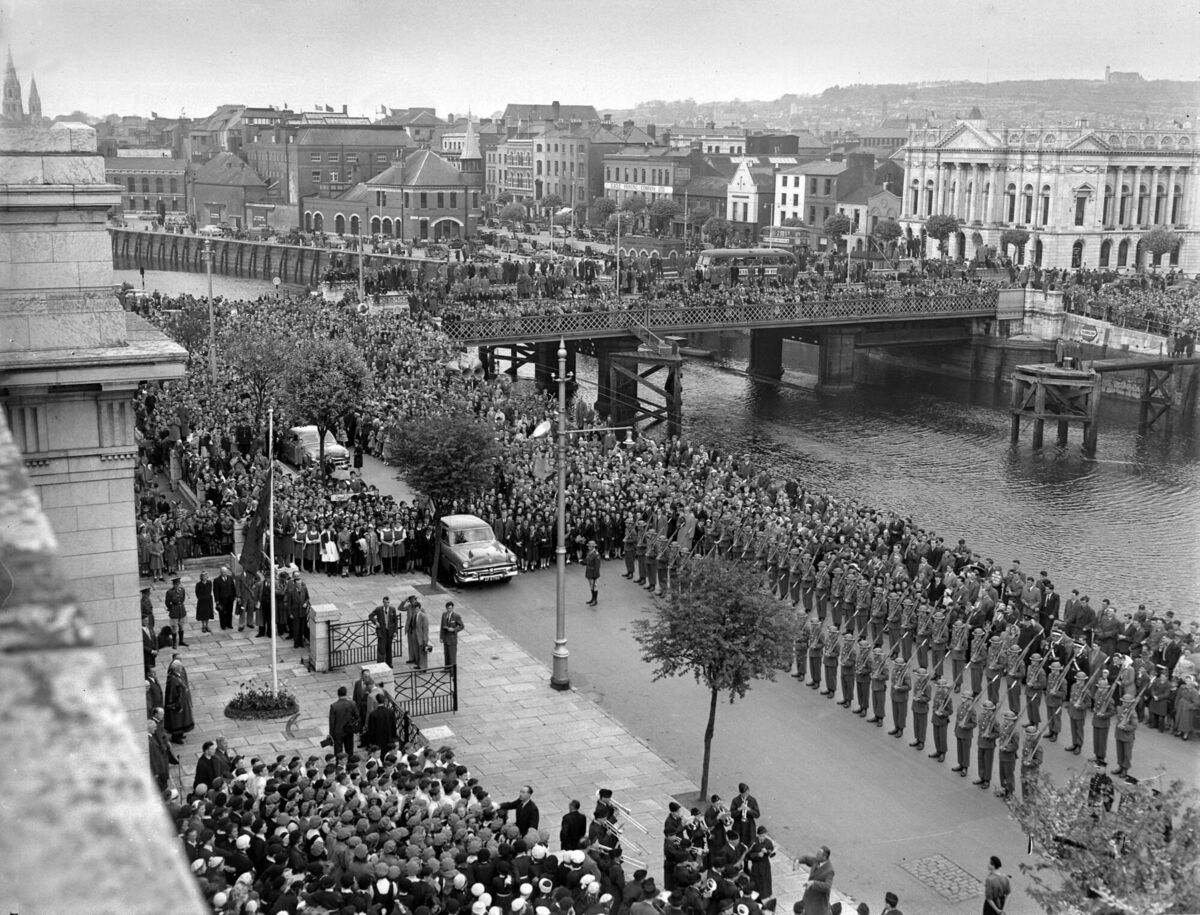
Crowds gather at Cork City Hall for An Tostal ceremonies in May 1955.

The same could be written about John B Keane, from Listowel, in Co Kerry, who challenged audiences with powerful plays, such as Sive and The Field.


Keane became known as the playwright of the people, who flocked to parish halls and drama festivals to watch different drama groups interpret and produce his work.

Butter boxes had to be used as extra seats at some venues, when one of Keane’s plays was being staged.

His work still has box-office appeal.

Tradition

Ireland, of course, has a long tradition of theatre. Touring fit-up companies put on plays in towns, villages, and rural areas during the second half of the last century. Muintir na Tire, Macra na Feirme, Conradh na Gaeilge, and schools held their own competitions.

But it was not until An Tostal, in 1953, that an All-Ireland amateur drama festival was first held, in Athlone. It was a turning point for groups, who had to change their attitudes to plays, performances, and settings.

Players began to rehearse their lines properly, producers became more selective in their casting, and players were taught about pace, tempo, and movement.

The practice of calling in a handy man with pieces of three-by-two timber and six-inch nails to make sets was abandoned and more artistic designs were developed, in keeping with the scenes being portrayed on the stage.

Indeed, the idealism, vision, and sustained vitality of amateur drama was praised by the Listowel writer Bryan MacMahon, when he officially opened the North Cork Festival, in Charleville, in 1986.

It has had ïts ups and downs, like every other artistic activity, but it certainly has held its own in the affection of the people.

"It may be fairly said that it has put down deep roots.

“And even if it wilts for a time, what is certain is that new generations, having been given the example of play production in their localities, will again take up the cause with a renewed sense of excitement,” he said.

Bryan MacMahon also argued that the personal confidence and fluidity of mind that the stage engenders can extend into vibrant economic and commercial undertakings.

Students from a background of theatrical activity are likely to project imaginatively into their studies and, later, into their lives.

Impact of Covid

Amateur drama is still an important part of Irish life. Some of the groups have the courage to put on plays by European and American, as well as Irish, writers.

However, the RTÉ All-Ireland Drama Festival, held every May in Athlone under the auspices of the Amateur Drama Council of Ireland, did not take place in 2020, due to public-health restrictions, and was called off again this year, for the same reasons.

“Covid-19 has had a devastating impact on all in the performing arts,” said festival director, Regina Bushell, “not least on Ireland’s network of 37 amateur drama festivals, many of which are at the core of creative and community life in their localities.”

As groups look toward 2022, and, hopefully, in-person festivals, the need to bring relaxation and pleasure into the lives of people is obvious.

History has many examples of how drama, and other cultural activities, can help people to cope with adversity.

The first building the Greeks restored after Athens was destroyed by the Persians in 479-480 BC was the theatre.

Nearer home, Fr Edward Daly, the Bogside priest who became a bishop, formed the ‘71 Players theatre group in Derry to provide people with a release from the violence during the early years of the Troubles.

That passion for theatre, music, and song, abundant from farmyards to factory floors, still has the capacity to lift human spirits.

And it will do so again, when the stage curtains are finally lifted in theatres and halls and audiences return after a long and difficult Covid-19 interval.

More in this section

Farming

Newsletter

Keep up-to-date with all the latest developments in Farming with our weekly newsletter.

Cookie Policy Privacy Policy Brand Safety FAQ Help Contact Us Terms and Conditions

© Examiner Echo Group Limited