All to play for as EU’s new Common Agricultural Policy takes shape slowly
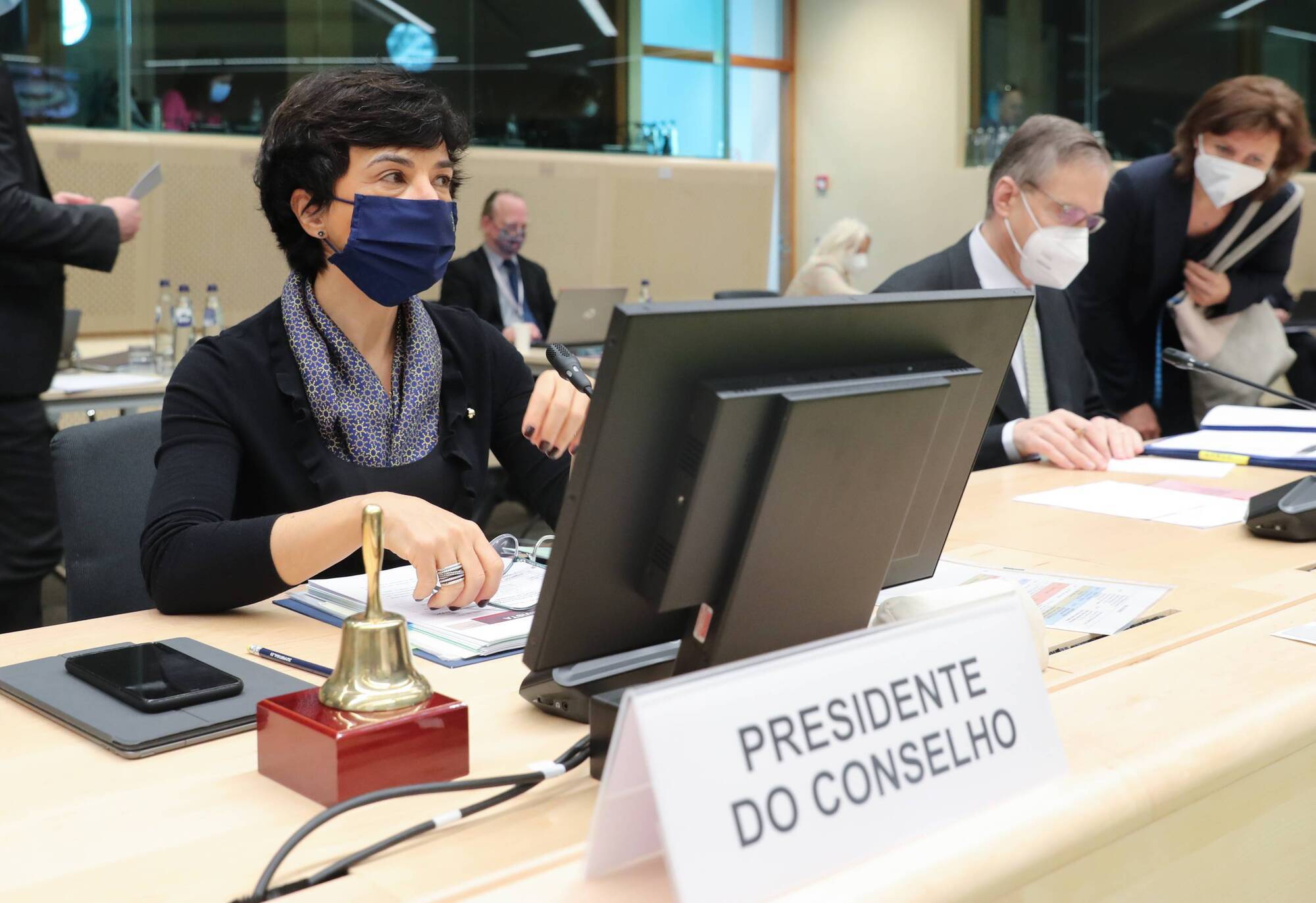
Portuguese Minister of Agriculture Maria Do Céu Antunes has until July, the end of Portugal's six-month presidency of the EU, to lead the way to agreement on the new CAP. Slovenia takes over the presidency in July. Picture: European Union
Living on the farm, personal work and management, having animals, a significant part of the income from the farm, and managing the ancestral/inherited farm, have been listed by European Commissioner for Agriculture and Rural Development Janusz Wojciechowski as possible criteria for the definition of an active farmer, in the ongoing reform of the EU’s common agricultural policy.
On Twitter, he suggested at least two of these criteria should be met, for a farmer to fulfil the “active farmer” definition.
The definition of active/genuine farmer is seen by many as a crucial step towards better and fairer distribution of EU direct payments (proposals state that basic income support shall be granted for each eligible hectare declared by a genuine/active farmer).
The CAP has been condemned by many for money not always going to those who actually farm the land, but rather to land-owners, because of how the active farmer definition defines the access to funding.
Other CAP definitions have been equally controversial, such as what makes a young farmer, a small farmer, or a new farmer.
Saying he was “thinking aloud” on the topic, Commissioner Wojciechowski said trying to work out a compromise in the CAP negotiations on the definition of an active farmer is problematic, because the EU’s agriculture is very diverse, with different sizes, types and forms of farms, different expectations and interests.
“But we try,” he said, on Twitter.
“The problem is also that any intention to control the actual activity of the owners of agricultural land, for example, comparing agricultural and non-agricultural income, checking the actual work, personal involvement in the farm, etc, is an additional bureaucracy risk.”
His comments came after a so-called super trilogue meeting convened by the Portuguese EU six-month presidency, to progress the CAP negotiations between the Council (representing member states), the Commission, and the European Parliament.
However, the main features of the new CAP remain far from decided, with Agriculture Minister Charlie McConalogue saying last week, “The final shape of the CAP regulations will not be known until final agreement has been reached, which is expected in the coming months.”
Responding in the Dáil to questions from Cork South-West Social Democrats TD Holly Cairns, the Minister said he Is hopeful that trilogue negotiations, which commenced at the end of 2020, will conclude by June, with a final shared agreement on the new CAP.
Minister McConalogue said a new Basic Income Support for Sustainability (BISS) is proposed, to replace the current Basic Payment Scheme.
Proposals by the European Commission also include mandatory redistributive proposals for direct payments, such as capping and degressivity, increased convergence of payments and a redistributive scheme to support sustainability.
But member states support these proposals being optional rather than mandatory measures, that member states can select from, to make the optimum choices for their vastly different farm structures and circumstances.
He said one of the proposals under consideration is a mandatory convergence requirement for all BISS payment values to reach at least 75% of the average payment entitlement, by 2026.
However, the European Parliament wants 100%.
It is proposed that convergence be achieved by cutting above-average payment entitlements.
CAP proposals for direct payments also include an overall cap of €100,000, degressive reduction of payments above €60,000, and a redistributive income support scheme.
Asked by Deputy Holly Cairns in the Dáil if he will address basic payment entitlements being based on reference years that date back to 2000, the Minister said the effect of this has been significantly moderated through convergence, with all entitlements reaching at least 60% of the national average by 2019.
Portuguese Minister of Agriculture Maria do Céu Antunes didn’t mention the active/genuine farmer definition at the press conference after the super trilogue, thus indicating there may have been little progress on defining the active farmer.
Meanwhile, member states continue preparation of national CAP strategic plans, based on the Commission’s non-legally binding and country-specific recommendations, along with national priorities and SWOT analysis.
Member states have expressed divergent views on what extent to integrate the EU’s Green Deal and Farm To Fork strategy objectives in the CAP strategic plans, with some asking for impact assessments by the European Commission on linking these strategies with the CAP.
Member states have reiterated their preference for a CAP delivery model with flexibility on how member states design funding interventions, in a simplified process. To ensure simplification and cut red-tape, many ministers have opposed a Commission proposal for a two-layer system that introduces both compliance and performance-based obligations.