Full of beans: High-end coffee supporting agri business the world over

Marina Market outlet finds its niche in midst of a coffee 'revolution' 
. 

Dubliner Alan Andrews knows his coffee. He is the man behind the Old Barracks Coffee Roastery which has opened a small coffee bar on Centre Parks Road at the Marina Market in Cork.

The bar in Cork buys its coffee from the roastery in Bird Hill which sources and roasts the coffee beans on behalf of the business.

The company sources its beans from small farmers across the world while at the same time offers premium coffee to its customers — that is no mean feat in these turbulent times.

The coffee is more expensive than you would expect, but because “the higher end of single origin coffee from small farmers” is sourced in places like Ethiopia, Central and South America, Peru, Brazil, Honduras, Columbia, Papua New Guinea and Indonesia, the coffee can cost anything up to €15/k compared to commodity coffee which would be sold in the larger chains at €1/k.

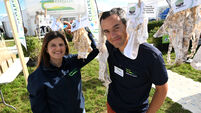
Alan Andrews of the Old Barracks Roastery, sources his coffee beans from all over the globe.  

“Ours is a very different product,” says Alan, before highlighting how the price difference can be difficult to explain to customers.

“It’s similar to what you would pay for organic produce up the road, for example. We are dealing with the really small farmers who play with the vegetation, the land and the ripeness of the fruit so that they get the maximum flavour from the coffee.”

Meanwhile, the Cork cafe opened last August in the height of the Covid-19 pandemic, and is going from strength to strength.

“We were invited to come on board last August after word got out about what we were doing at our roastery in The Old Barracks, Bird Hill,” says Alan.

“The intention for the Marina Market is to open up a 100 capacity container park through a food hub with stalls. We are the first tenant here and that is pretty cool in itself. We have been trading since, despite the Covid-19 restrictions, and employ 14 staff.” 

The product at the Old Barracks Coffee Bar includes coffee and treats — the coffee is bought from its own roastery and from there the coffee beans are sourced from all over the world.

From the treats point of view, the cakes are made in Bird Hill.

The company also boasts a small coffee shop in Nenagh and through the three businesses Alan and his team employ 35 people.

Covid-19 

“Since the pandemic restrictions first began in March 2020 we stopped trading for about two weeks, but since then we haven’t stopped," Alan says.

“The online orders started coming in and we went with it. We thought we would be closed altogether and I had plans made to paint and decorate to be honest.

“We never got the chance to paint and decorate, needless to say, because we have not stopped going."

The company has even expanded through the pandemic.

“We have gone from 10 staff this time last year to 35 now and that shows how much the business has grown over the last 12 months,” says Alan.

“We also have a product that is easy to scale. When you are getting into business in the first instance it's all about scalability and I think that we have nailed that.

“We have been trying really hard to maximise what we are doing because really we had what you might call an underactive roastery.

“We are roasting now and distributing retail but our bread and butter for years was wholesale — a lot of wholesale businesses are now closed."

Food quality and ingredients 

Alan believes that customers know more about coffee now than ever before. In fact, he adds there has probably been a bit of a coffee revolution in Ireland in recent years.

“It’s a bit like the wine,” he laughs.

“I was the first to set up training and education classes for the trade back in 2009 and Coffee Culture was the company back then.

“I would say that between 2009 and 2015 when I asked people what kind of coffee they liked the majority would say cappuccino.

“From 2016 when I asked then what coffee they liked, they would say Ethopian or Columbian — all of a sudden tastes had changed and it was all about where the beans were coming from.

“It’s getting deeper and deeper now and it’s fascinating to hear customers talk about their coffee and how interested they are in it.” 

He says social media has played a big part in the ‘revolution’.

I think that Instagram and social media have a big role to play in all of this.

“Our pricing in Bird Hill is a little bit more expensive but it has to be because we have to be able to communicate to the customer the difference between specialty coffee and commodity coffee.

“We have three coffees on offer in Cork; today you can have Ethopian, Guatemalan or Brazilan — all from small farm holdings, and a decaffeinated option as well.

“Not only are we paying farmers great money for their coffee we are also paying our staff 20% above the minimum wage, learning all about coffee and becoming fully trained baristas.

“It’s a skill that anyone can travel the world with now.”

More in this section

Farming

Newsletter

Stay ahead of the season. Sign up for insights, expert advice and stories shaping Irish agriculture.

Cookie Policy Privacy Policy Brand Safety FAQ Help Contact Us Terms and Conditions

© Examiner Echo Group Limited