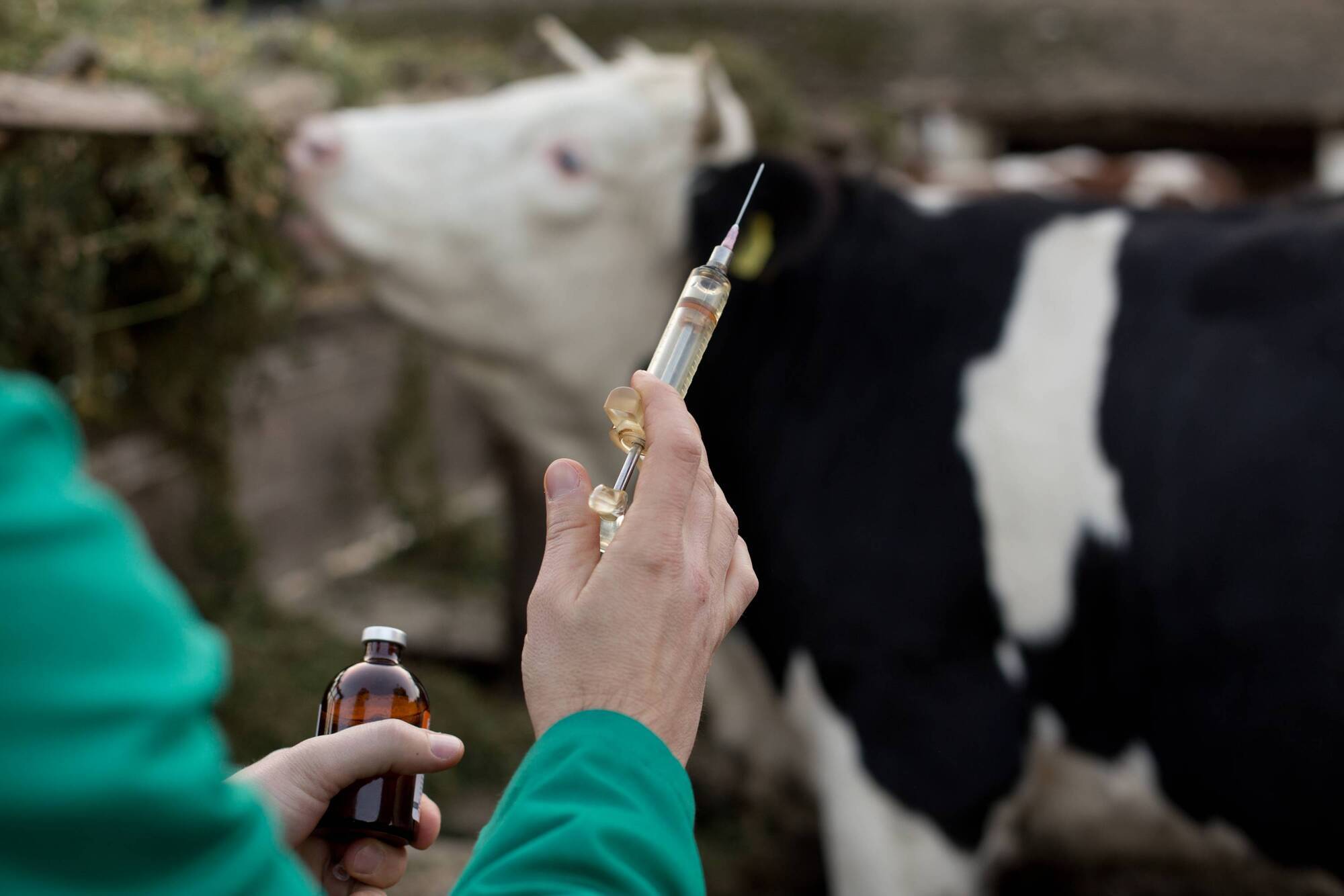
A war of words over impending animal medicine rule changes has escalated, with the representative body of veterinary surgeons saying distance prescribing of antimicrobials leads to imprudent and excessive use, often a blanket approach, and rarely with follow-up on usage and success of treatment.
And the current unrestricted sale of antiparasitic medicines is unsustainable, according to Veterinary Ireland.
Farmers fear that when the EU’s new animal medicine rules come into force next year, they may face increased costs and lose key service providers such as licensed merchant stores and veterinary pharmacies.
Agriculture Minister Charlie McConalogue says his Department’s Regulatory Impact Assessment of the EU rules is under way.
The Department says Ireland can no longer avail of a derogation to allow people other than registered vets issue veterinary prescriptions, but has sought further legal advice from the Attorney General’s Office on this.
The Minister said last week all stakeholders, including licensed merchants, who can currently sell animal medicines can still do so after new rules come into effect next January, but antiparasitic medicines (worm and fluke doses, etc) will require a veterinary prescription before they can be sold.
The dairy co-ops have called on the Department to recognise the positive role they can play, when finalising the new legislation for animal medicines.
ICOS Dairy Committee Chairman John O’Gorman said they want a holistic approach to herd health planning, supported by data-assisted prescribing for intramammary tubes, and co-op herd health plans for other animal medicines.
“As food processors, the dairy co-op sector has a vested interest in ensuring that animal medicines are used in a responsible manner in full compliance with legal requirements and best practice.”
However, in a presentation to a Joint Committee on Agriculture and the Marine debate on regulation of animal medicines, Veterinary Ireland Chief Executive, Finbarr Murphy said the mastitis control programmes of the dairy co-ops are “a mockery of prudent prescribing”.
“It is foolhardy as an exporting nation to persist with such a loose system of supplying antibiotics that is not paralleled in any other Member State.”
Committee chairman Jackie Cahill TD, led an angry reaction by some members to Veterinary Ireland statements.
He said, “I am strongly of the view that a farmer will only use an antibiotic when it is absolutely necessary.
"Obviously, I would say that it has to be done under veterinary supervision, but to state that financially we can bring a vet out to every animal that is sick on the farm cannot work in practice.”
Michael Fitzmaurice, TD, said, “The farmers in Northern Ireland are trusted to give antiparasitic medicine to their cattle.
“Going by what Veterinary Ireland has said, is the thinking that the farmer here is not as sharp as the farmer in Northern Ireland?”
Senator Tim Lombard said, “One of the issues I have heard is that we need to look at dates when dosing will take place and the weights and amount per animal.
“Will we have a vet in the yard telling us an animal is 600kg?”
Veterinary Ireland president Conor Geraghty told the Agriculture Committee one of the main changes in new legislation is “we can no longer rely on antibiotics as a preventative. We can only use them on sick animals”.
Therefore, practices such as blanket dry cow therapy; treating animals bought-in in case they get pneumonia; using CTC powder for calves that might get cough; or blanket treatment for watery mouth in lambs at birth, will no longer be allowed.
Mr Geraghty said there will be restrictions on critically important antibiotics.
Co-ops fear economic loss and undermining of their stores network, if antiparasitic medicines are made “prescription-only”.
The new legislation may also threaten the existing recognition of co-op mastitis control programmes as a structure within which a vet can make an appropriate assessment of the treatment needs of dairy cows, with regard to intramammary remedies.
ICOS says these programmes have seen substantial reductions of sales in dry cow tubes, a move towards selective dry cow therapy, and many co-ops banning use of critically important antibiotics.
“We accept that substantial changes will need to occur in the mechanics of prescribing dry cow tubes, with the likely necessity of moving to 100% milk recording to get a dry cow prescription,” said an ICOS spokesperson.
Veterinary experts have said new rules will not necessarily increase costs for farmers.
The Agriculture Committee was told by Catherine McAloon of the UCD School of Veterinary Medicine the overall aims of new regulations are to reduce antimicrobial usage and to move towards more prudent use, through co-ordinated effort to improve milk quality and reduce the need for antimicrobials.
She said mastitis is a very costly disease on farms, and reducing it, and the need for antimicrobials, will be a cost benefit, in the long run.
Finola McCoy of Animal Health Ireland told the Committee that improving milk quality brings a financial gain.
She said blanket dry cow therapy is no longer acceptable under new regulations, but farmers who have successfully moved away from blanket dry cow therapy are all extremely happy for various reasons, including cost savings, along with ease of management and reduced stress levels when managing their herds the following spring.
Veterinary Ireland food-animal spokesman Tadhg Gavin told the Committee one of the main reasons for change in antiparasitics rules is development of resistance whereby drugs traditionally used on grazing animals no longer work against parasites.
This natural occurrence is driven by drug overuse and incorrect use.
Due to resistance, some farms are now limited in what drugs will work, which drives cost, because they are often restricted to the newer drugs.
“The level of production they can achieve is reduced, and feed conversion efficiency is reduced, and the animals do not thrive," he added.
“Animals not being able to thrive is a major cost to farms. We address this by using the right dose at the right time and when necessary.”


Cancel anytime