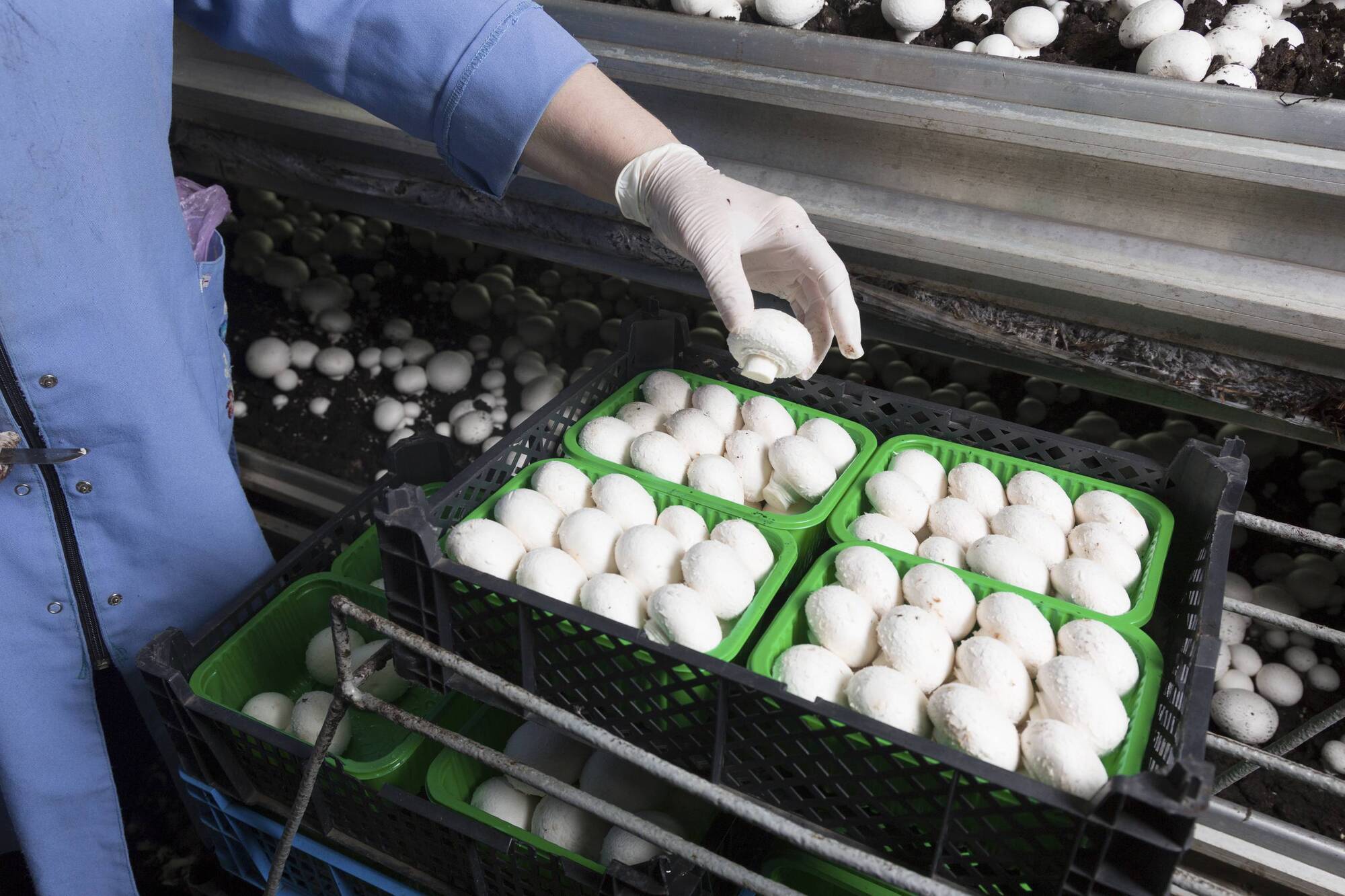
Few Irish farming sectors have been on crazy a Brexit and Covid roller-coaster ride as the mushroom growers.
Right now, they are on a high, with their product much in demand for the home cooking which boomed during the lockdown, further boosted by mushrooms being the only vegetable source of vitamin D, which consumers now seek in their food, after research showed vitamin D’s positive impact in preventing and lessening the effects of Covid 19.
It’s a far cry from 2016, when mushroom farms were going out of business after the UK voted for Brexit, and sterling slumped, leaving mushroom contracts with UK retailers delivering a much-reduced return.
The first 100 days after the Brexit vote saw three farms closing.
Irish mushroom marketing companies went into battle with UK retailers to get new contracts, while fighting off stiff competition from continental European producers. At the time, sending lorry loads of their highly perishable fresh product to the UK, exporters were in an unenviable position, having incurred a reduction of up to 18% in price within a few weeks.
Fast forward to 2021, and mushroom sales in the UK have increased to an all-time high, a trend that shows no signs of abating, according to Bord Bia Sector Manager for Horticulture Michal Slawski. That’s tremendous news for the Irish exporters who supply approximately 33% of the mushroom market in the UK, and for Irish-owned growing companies in the UK supplying another 25- 30%. Irish-controlled mushroom companies supply about 60% of the UK supermarket mushroom trade.
Recent retail figures from Kantar illustrate the effect the Covid pandemic had on mushroom sales in the UK.
Sales increased all though in 2020. Closed cup, portobellos and brown mushrooms all grew at over 20% by volume over the year. The major factor driving this growth (sales were up 17% year-on-year in the 52 weeks to February 21) is the increase in home cooking due to lockdowns, and due to working from home.
According to Bord Bia, Irish mushroom exports were valued at €115m in 2020, having increased in value by 14% from 2019, despite a 4% reduction in the total volume of exports.
Now, volumes to the UK have jumped again, and with consumers increasingly turning to more expensive mushroom varieties.
According to Bord Bia’s Michal Slawski, mushroooms are purchased for their taste, their versatility, and health benefits, and are one of only a few vegetables that can be eaten at breakfast, lunch and dinner.
They are a natural source of B Vitamins and minerals, and specially treated mushrooms can be a source of Vitamin D as well.
Over 80% of Irish mushroom production is destined for the UK, and the industry has adapted well to the changes in the trading arrangements with the UK, with procedures in place to deal with customs and logistical issues.
To date, the industry has been able to navigate all the changes successfully, said Mr Slawski.
However, there’s never a dull moment in the mushroom industry.
The threatened loss of “deep-dug” peat is an “immediate problem” for the mushroom industry, said Mel O’Rourke of CMP, Ireland’s largest mushroom producer organisation, representing 90% of Irish mushroom production and growers. The impending end of Irish peat extraction due to court actions leaves the industry searching for alternatives to the two-inch layer of peat casing put on mushroom beds, with 20cm of compost underneath.
The peat “is the vital part for the mushrooms to fruit,” said Mr O’Rourke. “I do not believe any alternatives are readily available.”